
Andreessen Horowitz Taps Former U.S. Ambassador Edgard Kagan to Steer Indo-Pacific Technology Strategy
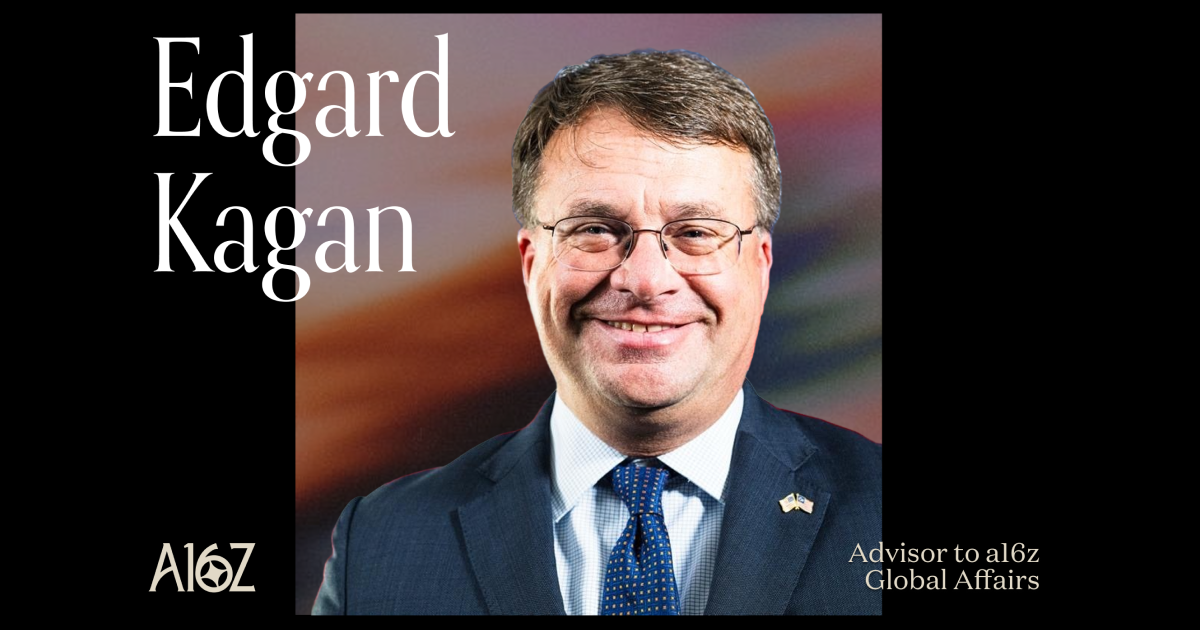
Venture capital firm Andreessen Horowitz has appointed former U.S. Ambassador Edgard Kagan as an advisor to its Global Affairs division, signaling a deepening effort by American technology investors to align private-sector innovation with the strategic priorities of Indo-Pacific nations.
The move, announced by General Partner Anne Neuberger, places a career diplomat with three decades of regional experience at the intersection of venture capital and statecraft, where decisions about artificial intelligence infrastructure, cybersecurity, and defense technology are increasingly shaped by geopolitical competition.
A Diplomat for the Digital Age
Kagan’s résumé reads like a map of modern U.S. engagement in Asia. He served as Ambassador to Malaysia under both the Biden and Trump administrations, held the senior East Asia portfolio at the National Security Council, and directed Korean affairs at the State Department. His postings span New Delhi, Beijing, Canberra, Kuala Lumpur, and Mumbai.
In Washington, he oversaw policy for Australia, New Zealand, and the Pacific Islands. Since leaving government, he has held the Freeman Chair in China Studies at the Center for Strategic and International Studies.
Why this matters: Venture capital firms traditionally focus on product-market fit and financial returns. But when portfolio companies build dual-use technologies — systems with both commercial and military applications — success depends on understanding how foreign governments evaluate risk, sovereignty, and alliance structures. Kagan’s role is to translate those calculations for founders.
The Indo-Pacific Technology Frontier
The Indo-Pacific is no longer just a theater of trade; it is the primary arena where the standards for next-generation technology will be set. Countries across the region are choosing which cloud providers, semiconductor supply chains, and AI governance frameworks to adopt. Those choices lock in dependencies for decades.
For American firms, winning those decisions requires more than a superior product. It demands fluency in each capital’s threat perceptions, regulatory red lines, and domestic political constraints.
Plainly put: A cybersecurity startup selling to Singapore faces different questions than one selling to India or Australia. Kagan helps founders anticipate those questions before the first meeting.
From Portfolio Support to Strategic Alignment
a16z’s Global Affairs team, led by Neuberger — herself a former deputy national security advisor for cyber and emerging technology — has been building a bridge between Silicon Valley’s speed and Washington’s deliberation. The firm’s recent writings frame technology as a pillar of collective security: secure infrastructure, resilient supply chains, and defense capabilities that strengthen allies.
Kagan’s appointment extends that logic into the diplomatic corridors of Jakarta, Tokyo, Hanoi, and beyond.
The Trust Deficit in Tech Diplomacy
Trust is the scarcest resource in cross-border technology transfer. Governments worry about data sovereignty, intellectual property leakage, and hidden backdoors. Companies worry about arbitrary regulation and political retaliation. Diplomats like Kagan have spent careers managing that tension. His advisory role suggests a16z wants its portfolio companies to approach foreign markets not as vendors but as long-term partners whose success is tied to the host nation’s strategic autonomy.
Implications for the Innovation Ecosystem
The hire reflects a broader trend: the most consequential technology decisions are no longer made solely in boardrooms or labs. They are negotiated in ministerial offices, written into national security strategies, and tested in joint military exercises. Venture firms that ignore this reality risk backing companies that cannot scale where it matters most.
Those that embed diplomatic expertise gain a competitive edge — not through lobbying, but through legitimate insight into how partner nations think.
A Model for the Sector?
Other major investors are watching. If a16z’s model proves effective — translating diplomatic nuance into faster market entry, stronger partnerships, and more resilient companies — the venture capital playbook may permanently expand to include former ambassadors, intelligence officials, and defense planners as core operating partners. The line between foreign policy and product strategy is dissolving.
For now, Kagan begins his advisory work with a clear mandate: help American founders build technologies that Indo-Pacific nations trust enough to adopt at scale. In a region where the next decade’s technological order is being written, that trust may be the most valuable currency of all.
Was this clear?
library_booksSource
Andreessen Horowitz
20 Nov 2026
- funding model
- venture capital (LP/GP fund structure)
- jurisdiction
- USA
- owner
- Andreessen Horowitz (a16z, founded by Marc Andreessen and Ben Horowitz)
Was the source link correct?
topicRelated Articles

FSSAI Authorizes Second Prosecution Against Bisleri in a Week Over Bacterial Contamination

Gemini Rolls Out Enhanced Investor Protections for UK Users Under New FCA Financial Promotions Rules

Crypto Emerges as Decisive Voting Issue in 2024 US Presidential Election, Survey Finds

Gemini Warns of Web3 Talent Exodus as U.S. Regulatory Uncertainty Deepens at Consensus 2024

Gemini's Legal Chief Calls for Clean-Slate Crypto Regulation, Rejects Howey Test and Dual SEC-CFTC Oversight

Trump's Crypto Reserve Plan, SEC Task Force, and Senate Vote Signal Major Shift in US Digital Asset Policy

Haryana Panchayat Cyber Fraud Exposes Systemic Vulnerabilities in Government Digital Payment Infrastructure
