
Identity Crisis: US Parties Grapple with Core Questions Ahead of 2028 Election
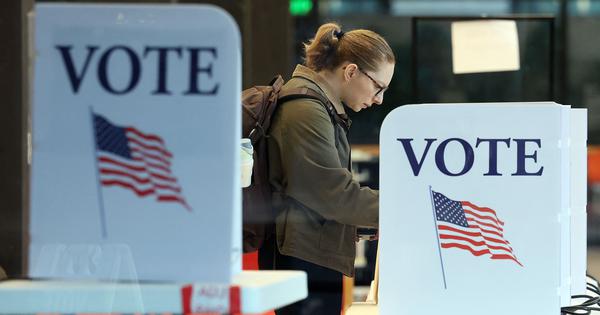
With the 2028 presidential election approaching, both the Democratic and Republican parties are facing fundamental questions about their ideological direction and coalition composition, setting the stage for a volatile primary season. The uncertainty reflects deeper shifts in the American electorate, where traditional alignments are fracturing and new fault lines are emerging around culture, economics, and governance.
The Democratic Search for Cohesion
For Democrats, the central tension lies between the party's progressive wing and its more moderate, institutionalist faction. The coalition that delivered victories in 2020 and 2022 — an alliance of urban professionals, minority voters, and suburban women — has shown signs of strain. Debates over climate policy, criminal justice reform, and the role of government in the economy have exposed philosophical divides that were papered over in the name of unity.
Party identity, in this context, refers to the set of principles, voter bases, and policy priorities that define what a political party stands for. When that identity is contested, the party risks fragmentation, making it harder to articulate a clear message to voters.
The Republican Struggle for Definition
Republicans face a different but equally profound dilemma. The party's identity has been dominated for nearly a decade by the populist, nationalist movement associated with former President Donald Trump. As the 2028 cycle begins, potential candidates are testing whether the GOP can — or should — move beyond that framework. The debate centers on trade policy, foreign intervention, and the party's relationship with democratic institutions.
A political realignment occurs when the core constituencies and issue positions of a party shift durably. The Republican Party is currently navigating whether its current alignment represents a permanent transformation or a temporary aberration.
The Role of Emerging Demographics
Both parties are closely watching demographic trends that could reshape the electoral map. The growing influence of Latino voters, the political maturation of Generation Z, and shifting suburban dynamics are forcing strategists to reconsider long-held assumptions about reliable voting blocs. These changes are not monolithic; they vary significantly by region, education level, and economic circumstance.
Demographic shift refers to changes in the composition of the electorate — such as age, race, education, and geography — that alter the political landscape. Parties that fail to adapt to these shifts risk losing relevance.
Historical Precedents and Party Realignment
American history offers several precedents for the current moment. In each case, the resolution of internal conflict produced a new, durable coalition.
Implications for Governance and Policy
The outcome of these identity struggles will have consequences far beyond the 2028 election. A party that resolves its internal tensions can govern more effectively, passing legislation that reflects a coherent vision. A party that remains divided risks legislative gridlock and policy inconsistency, undermining public trust in democratic institutions.
As the primary season approaches, the questions confronting Democrats and Republicans are not merely tactical. They are existential: What does each party stand for? Whom does it represent? And can it build a majority coalition that endures? The answers will shape American politics for a generation.
Was this clear?
library_booksAll 2 sources
Scroll.in
25 Nov 2026
- funding model
- independent commercial media (revenue from advertising, reader subscriptions and grants)
- owner
- Scroll.in (Scroll Media), an independent digital newsroom founded by Samir Patil
Scroll.in
25 Nov 2026
- funding model
- independent commercial media (revenue from advertising, reader subscriptions and grants)
- owner
- Scroll.in (Scroll Media), an independent digital newsroom founded by Samir Patil
Was the source link correct?
topicRelated Articles

Congress MP Asserts Opposition Unity Against Delimitation Bill, Citing Constitutional Defense

Love as Resistance: Dalit-Feminist Anthology Reframes Intimacy as Political Defiance Against Caste

Rajasthan SOG Busts Interstate Racket Selling Forged Medical Degrees; Class 11 Dropout Posed as Doctor at Safdarjung

Four Killed in Rohtak Hotel Shooting; Police Investigate Alleged Honey-Trap Ambush

Delimitation Bill Framed as Trojan Horse to Reshape India's Electoral Map

Vijay's TVK Labels Stalin 'Savarkar 2.0' in Sharp Delimitation Offensive

Rohit Sharma Reveals Reluctance Behind Mumbai Indians Captaincy Return
