
Beyond the Exchange: Understanding the Architecture and Security of Cryptocurrency Wallets
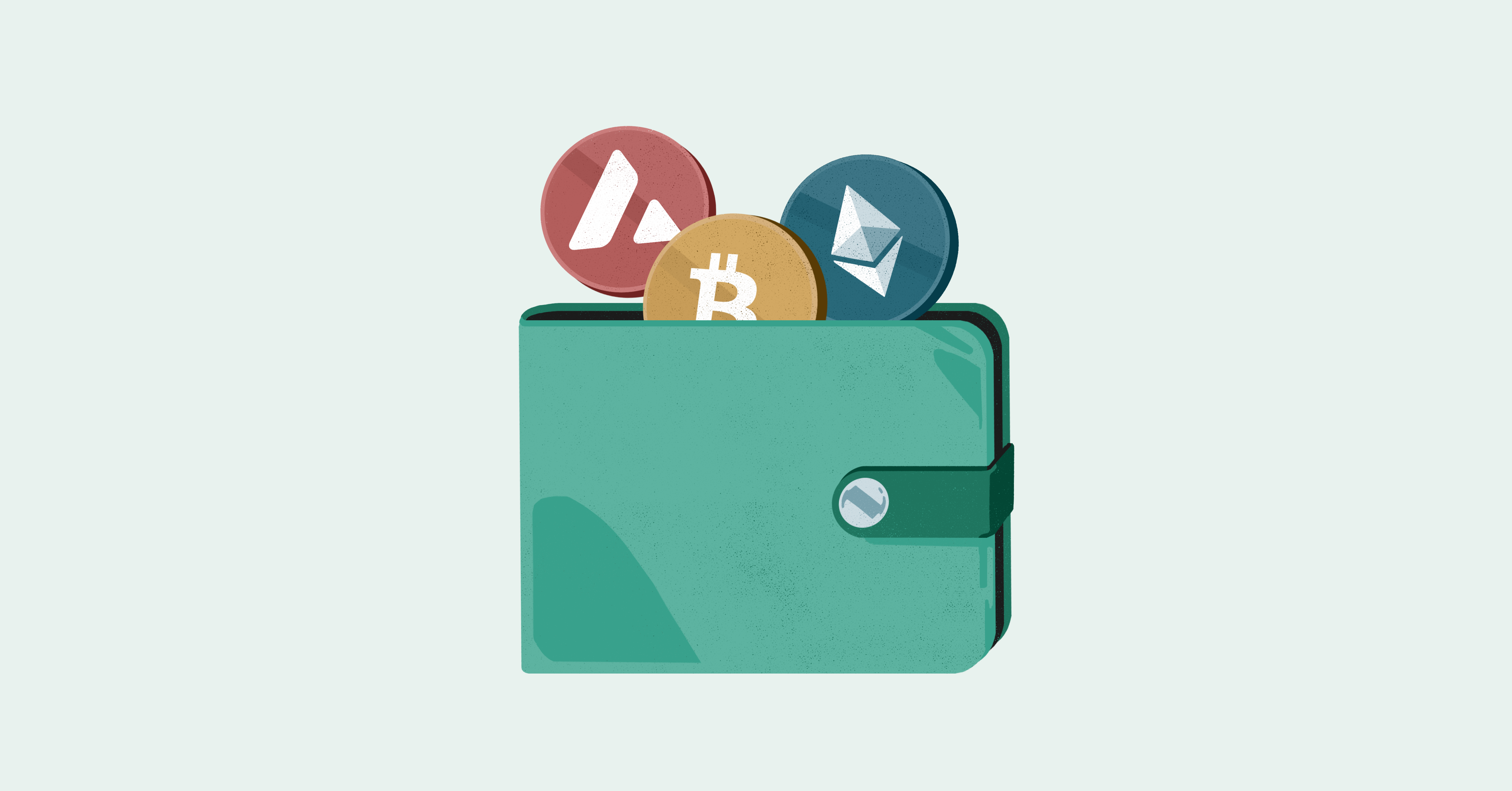
The first rule of cryptocurrency custody is counterintuitive: a crypto wallet does not actually hold any cryptocurrency. Instead, it safeguards the cryptographic keys that prove ownership of assets recorded on a distributed ledger.
As digital asset markets mature and regulatory scrutiny intensifies, the distinction between where a token lives and who controls the keys to move it has become the central fault line in crypto security. A new beginner's guide from digital bank N26 dissects this architecture, mapping the spectrum from exchange-hosted convenience to sovereign, offline cold storage.
The Fundamental Misconception: Wallets Don't Hold Coins
The term "wallet" is a metaphor that obscures more than it reveals. In traditional finance, a leather wallet physically contains cash. In crypto, the assets exist exclusively as entries on a blockchain — a decentralized, append-only database maintained by a network of validators.
What a user possesses is a key pair: a public key, which functions like an account number and can be shared freely to receive funds, and a private key, which authorizes spending. Possession of the private key is the sole determinant of control.
Put simply: the blockchain is the ledger; the wallet is just the key ring. If you lose the keys, you lose the assets. If someone steals the keys, they steal the assets. The coins never leave the ledger.
Public-Key Cryptography: The Engine of Trust
This system relies on asymmetric cryptography. A public key is derived mathematically from a private key, but the reverse operation is computationally infeasible. This allows a user to generate a receiving address (a hashed version of the public key) and share it publicly without exposing the secret required to spend.
When a transaction is signed, the private key creates a digital signature that the network can verify against the public key, confirming authorization without ever revealing the secret itself.
Think of it like a mailbox with a slot (public key) anyone can drop letters into, but only the owner has the physical key (private key) to open the box and retrieve the mail.
The Custody Spectrum: From Exchange Wallets to Cold Storage
The N26 guide categorizes wallets along a continuum of custody — who holds the private key.
At one end sit hosted (custodial) wallets, typically provided by centralized exchanges like Coinbase or Kraken. The exchange manages the private keys on the user's behalf. This mirrors the traditional banking experience: password recovery is possible, and the interface is familiar. However, the user holds an IOU, not the asset.
The exchange's solvency, security practices, and regulatory standing become counterparty risks. Notably, hosted wallets often restrict advanced blockchain interactions, such as participating in decentralized finance (DeFi) protocols or purchasing non-fungible tokens (NFTs).
At the opposite extreme are hardware wallets (cold storage), physical devices resembling USB drives manufactured by firms like Ledger and Trezor. Private keys are generated and stored in a secure element chip, never touching an internet-connected computer. Transactions are signed on the device itself. This air-gapped design renders remote hacking virtually impossible.
The trade-offs are cost (€79–€140 for leading models), physical responsibility (loss or damage requires a recovery seed phrase), and friction (every transaction requires physical confirmation).
Cold storage is the digital equivalent of a safe deposit box: maximum security, but you must physically visit the vault to move funds.
Software Wallets: Convenience vs. Control
Occupying the middle ground are non-custodial software wallets — applications for desktop, mobile, or browser that store encrypted private keys locally. The user retains full control and can interact with the full breadth of blockchain applications: staking, DeFi, NFT marketplaces. But security now depends entirely on the host device's integrity.
Malware, phishing, or a compromised operating system can exfiltrate keys. Mobile wallets add QR-code convenience for in-person payments but inherit the attack surface of smartphones. Web wallets, accessible from any browser, reintroduce server-side risk by storing encrypted credentials online.
Software wallets give you the keys, but you become the bank's security team. Your laptop or phone is now the vault.
Choosing a Wallet: A Risk-Based Framework
The guide argues there is no universal "best" wallet — only the right tool for a specific threat model and use case. Key decision vectors include:
- Security posture: High-value, long-term holdings demand hardware wallets. Active trading capital may tolerate exchange custody for liquidity. Daily spending suits mobile non-custodial apps. - Fee sovereignty: Some wallets allow manual fee adjustment (trading speed for cost); others abstract this away. - Asset breadth: Multi-chain users need wallets supporting diverse ecosystems (Bitcoin, Ethereum, Solana, etc.). - Support infrastructure: Custodial services offer help desks; non-custodial tools offer documentation and community forums — no one can reset a lost seed phrase. - Regulatory environment: The guide notes N26's own integrated crypto product, N26 Crypto, operates via a partnership with Bitpanda GmbH, offering custodial storage within a regulated European banking framework — a hybrid model blending bank-grade UX with crypto access.
Match the wallet to the job: a hardware wallet for your life savings, a mobile app for coffee money, an exchange account for active trading.
The Evolving Custody Landscape
As the industry matures, the binary of custodial vs. non-custodial is blurring. Multi-party computation (MPC) wallets split key shares across devices and institutions. Social recovery mechanisms distribute trust among guardians. Banks like N26 are embedding regulated crypto rails into traditional apps. The infrastructure of ownership is being rewritten in real time.
For the individual, the first principle remains unchanged: not your keys, not your coins. Understanding the cryptographic and operational reality behind that maxim is no longer optional — it is the price of admission for participating in the internet of value.
Was this clear?
library_booksSource
N26
27 Nov 2026
- funding model
- commercial / venture capital
- jurisdiction
- International
- owner
- Private technology company (N26)
Was the source link correct?
topicRelated Articles

Congress MP Asserts Opposition Unity Against Delimitation Bill, Citing Constitutional Defense

Love as Resistance: Dalit-Feminist Anthology Reframes Intimacy as Political Defiance Against Caste

Rajasthan SOG Busts Interstate Racket Selling Forged Medical Degrees; Class 11 Dropout Posed as Doctor at Safdarjung

Four Killed in Rohtak Hotel Shooting; Police Investigate Alleged Honey-Trap Ambush

Delimitation Bill Framed as Trojan Horse to Reshape India's Electoral Map

Vijay's TVK Labels Stalin 'Savarkar 2.0' in Sharp Delimitation Offensive

Rohit Sharma Reveals Reluctance Behind Mumbai Indians Captaincy Return
