
DW Hausa Appoints First All-Female Leadership Duo to Helm Africa's Largest Digital Newsroom
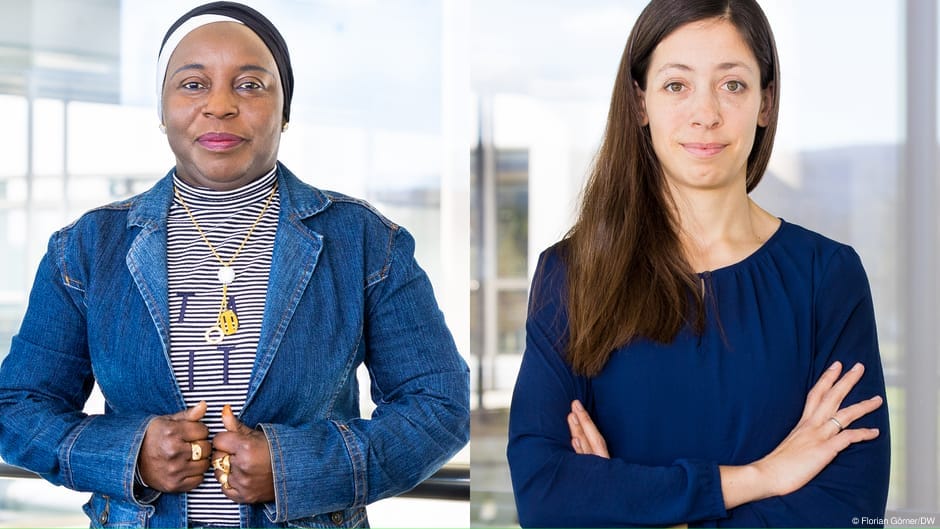
Hilke Fischer and Zainab Mohammed assumed leadership of DW Hausa on November 1, 2026, becoming the first all-female duo to direct the largest editorial team in Deutsche Welle's Programs for Africa department. The appointment marks a milestone for the German international broadcaster, whose Hausa service reaches an estimated 23 million users weekly across Nigeria, Niger, and the wider Sahel region through audio, television, and digital platforms.
A Historic Leadership Transition
The tandem appointment signals a deliberate shift in DW's leadership strategy for its African services. Claus Stäcker, Director of Programs for Africa, emphasized that both journalists have been "instrumental in shaping the digital transformation of DW Hausa and in driving the expansion of our social media offerings." He noted that having two women lead the service "sends a strong signal beyond DW, in a region where women remain underrepresented, particularly in leadership positions."
The transition follows the tenure of Mohammad Awal, who Stäcker credited with laying "important foundations for its current strength" during his years at the helm. The new leadership model reflects DW's broader organizational push toward collaborative, family-friendly management structures.
Digital Transformation Architects
Both Fischer and Mohammed bring deep institutional knowledge to their roles, having served as Deputy Heads of Service and driven the service's evolution from a traditional radio and text operation into a multimedia digital platform. This transformation has been central to DW Hausa's growth into one of the broadcaster's five highest-reaching language services.
The service's weekly audience of approximately 23 million users engages primarily through audio and television content, though its social media presence has expanded significantly. The DW-Hausa TikTok channel exemplifies this digital pivot, reaching younger demographics across West Africa.
Explain it simply: Think of DW Hausa like a major international news network — similar to BBC World Service — but broadcasting specifically in Hausa, a language spoken by tens of millions across West Africa. Until recently, it operated mostly like traditional radio. Fischer and Mohammed led the effort to turn it into a modern digital media company that publishes videos, social media posts, and on-demand content alongside radio broadcasts.
Complementary Expertise in a Tandem Model
Dr. Nadja Scholz, DW's Managing Director of Programming, highlighted how the tandem model "brings together two distinct areas of expertise that complement each other exceptionally well." She described Mohammed as possessing "in-depth knowledge of the target region" while Fischer is "a pioneer in digital innovation."
Mohammed's career began at the Adamawa Broadcasting Corporation in Yola, northeastern Nigeria, before she joined DW in 2002. Her trajectory — from presenter and reporter to senior editor overseeing news coverage — grounds her in the editorial and cultural realities of the service's core audience. She coordinated flagship projects including "Learning by Ear," an edutainment series, and "Kallabi," an Instagram format targeting young women.
Fischer studied African Studies in Hamburg and Paris, with research stays in Tanzania and northern Nigeria. At DW's Africa Desk since 2010, she helped develop successful cross-regional formats such as "The 77 Percent," "GirlZ Off Mute," and "African Roots." As deputy head since 2022, she spearheaded the Hausa Service's social media and video-on-demand strategy.
Explain it simply: The tandem model means two people share one leadership job — like co-CEOs. DW says this allows them to combine Mohammed's deep local knowledge of Nigeria and Niger with Fischer's expertise in building digital products and social media strategies. It also makes the role more manageable for people with caregiving responsibilities.
Reaching Millions Across the Sahel
DW Hausa's audience footprint spans a region facing complex information challenges. The service's 23 million weekly users represent a significant share of the media market in a region where trustworthy, independent journalism competes with misinformation, state-controlled outlets, and extremist narratives.
The service's multi-platform approach — maintaining strong audio and TV offerings while aggressively expanding into social video and on-demand content — reflects a strategic bet on meeting audiences where they are. This is particularly critical for reaching younger demographics who consume news primarily through mobile devices and platforms like TikTok and Instagram.
A Signal for Women's Leadership in the Region
Beyond DW's internal dynamics, the appointment carries symbolic weight in a media landscape where women rarely occupy top editorial roles across West Africa. Stäcker's explicit framing — that the duo "sends a strong signal beyond DW" — positions the decision as both an organizational choice and a public statement.
The tandem model itself offers a practical template for inclusive leadership. By formalizing job-sharing at the highest editorial level, DW demonstrates how structural flexibility can unlock talent that might otherwise be excluded by conventional single-leader models. This approach aligns with broader conversations in global media about retention, diversity, and sustainable newsroom management.
As Fischer and Mohammed begin their tenure, the industry will watch whether their complementary strengths — regional fluency paired with digital fluency — can sustain DW Hausa's audience growth while navigating the economic and political pressures facing international broadcasters in the Sahel.
Was this clear?
library_booksSource
Deutsche Welle (DW)
11 Nov 2026
- funding model
- publicly funded (German federal budget)
- funding model
- publicly funded (German federal budget)
- jurisdiction
- Germany
- jurisdiction
- Germany
- owner
- Deutsche Welle, German public international broadcaster
- owner
- Deutsche Welle, German public international broadcaster
Was the source link correct?
topicRelated Articles

Congress MP Asserts Opposition Unity Against Delimitation Bill, Citing Constitutional Defense

Love as Resistance: Dalit-Feminist Anthology Reframes Intimacy as Political Defiance Against Caste

Rajasthan SOG Busts Interstate Racket Selling Forged Medical Degrees; Class 11 Dropout Posed as Doctor at Safdarjung

Four Killed in Rohtak Hotel Shooting; Police Investigate Alleged Honey-Trap Ambush

Delimitation Bill Framed as Trojan Horse to Reshape India's Electoral Map

Vijay's TVK Labels Stalin 'Savarkar 2.0' in Sharp Delimitation Offensive

Rohit Sharma Reveals Reluctance Behind Mumbai Indians Captaincy Return
