
DW's Fuerza Latina Wins Colombia's Top Journalism Prize for Exposing Female Genital Mutilation in Indigenous Communities
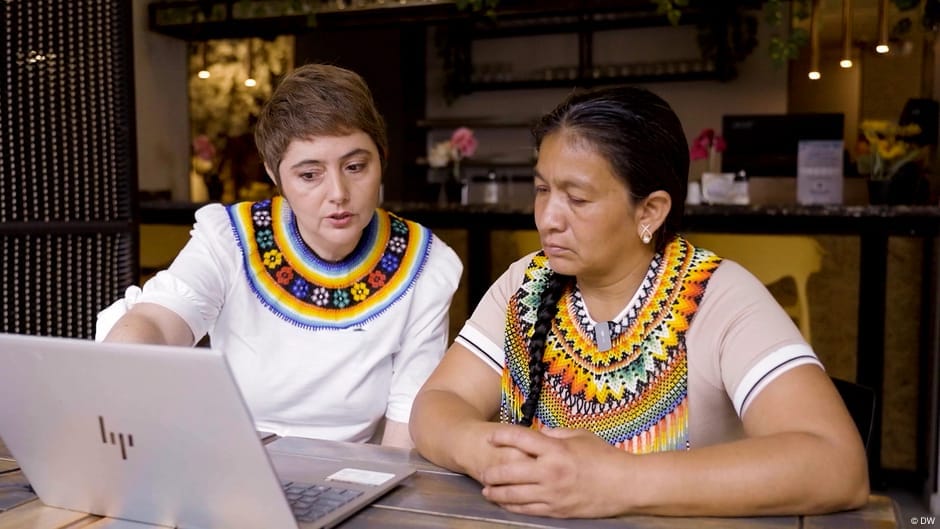
Deutsche Welle's Latin American program Fuerza Latina has been awarded Colombia's most prestigious journalism honor, the Simón Bolívar Journalism Prize, for its groundbreaking report on female genital mutilation within the country's Indigenous Emberá communities. The recognition underscores a growing international focus on harmful traditional practices and the role of sensitive, community-centered reporting in driving social change.
The Award-Winning Investigation
The honored report, "Francia Giraldo: una voz contra la ablación en Colombia" ("Francia Giraldo: A voice against female genital mutilation in Colombia"), examines the practice through three distinct lenses: an Indigenous community leader challenging a deeply rooted tradition, a physician documenting its severe health consequences, and politicians and activists collaborating with affected communities to develop solutions.
The jury specifically praised the report's human rights-based approach and its ability to draw attention to the risks facing Indigenous girls without stigmatizing the Emberá people.
Understanding the context: Female genital mutilation (FGM) involves the partial or total removal of external female genitalia for non-medical reasons. While often associated with parts of Africa and the Middle East, the practice persists in certain Indigenous communities in Colombia, including the Emberá-Chamí.
The World Health Organization classifies FGM as a violation of human rights with no health benefits, causing severe bleeding, infections, complications in childbirth, and long-term psychological trauma.
A Community-Led Approach to Ending a Harmful Practice
At the center of the report stands Francia Giraldo, an Emberá-Chamí leader from Pueblo Rico in Risaralda department, whose own mother was subjected to the procedure. The investigation documents how change is being driven from within the community itself — a crucial distinction that avoids the paternalistic narratives that have historically undermined efforts to end harmful practices.
By amplifying Indigenous voices leading their own cultural transformation, the report demonstrates how sustainable change requires community ownership rather than external imposition.
The report's structure — weaving together testimony from a survivor-advocate, medical evidence, and policy advocacy — creates a comprehensive picture that has informed public and political debate in Colombia. This multi-perspective approach reflects a sophisticated understanding that ending FGM requires simultaneous shifts in cultural norms, medical awareness, and legal frameworks.
Recognition of Ethical, Human Rights-Centered Journalism
"This award is a major recognition of the journalistic work of the entire team," said Uta Thofern, DW Director of Programs for Latin America. "Taboo subjects in particular need public attention and a diversity of perspectives. I'm proud of the sensitivity and depth with which our team has approached female genital mutilation, recognizing the trauma experienced by affected women while also exploring the positive change that is possible – and can only be achieved by working together."
The award was accepted in Bogotá on November 18, 2026, by journalists Natalia Orozco and Andrés Sarmiento. The Premio Nacional de Periodismo Simón Bolívar, established as Colombia's highest journalism distinction, evaluates entries on originality, innovation, public impact, investigative rigor, and journalistic ethics across categories including reportage, investigative journalism, feature writing, interviews, and opinion analysis.
DW's Growing Digital Footprint in Latin America
The recognition comes at a pivotal moment for Deutsche Welle's Latin American operations. In 2026, DW reaches 63 million people weekly across the region — an increase of seven million from the previous year. For the first time, more audiences access DW content through on-demand digital platforms than through traditional television broadcasts, signaling a fundamental shift in media consumption patterns that Fuerza Latina has successfully navigated.
Fuerza Latina, DW's television and on-demand program, specializes in stories from across Latin America with a focus on women driving social change. Its editorial mandate aligns with DW's broader mission to provide independent information that enables audiences to form their own informed opinions — a mission the Simón Bolívar jury explicitly cited in its laudation.
The Simón Bolívar Prize
The Simón Bolívar National Journalism Prize represents the pinnacle of professional recognition in Colombian media. Administered with rigorous judging criteria, the award has historically honored work that combines investigative depth with ethical responsibility and measurable public impact. Past recipients have included landmark investigations into corruption, human rights violations, and environmental degradation.
By honoring a report on a culturally sensitive topic within Indigenous communities, the 2026 prize signals an evolving understanding of journalism's role in Colombia: not merely as a watchdog on power, but as a facilitator of difficult conversations that marginalized communities themselves are leading. The award validates an approach that centers dignity, context, and agency — principles that transcend borders and apply to human rights reporting worldwide.
As Colombia continues to grapple with the legacy of conflict and the rights of its Indigenous peoples, journalism that bridges cultural divides without erasing difference becomes increasingly vital. Fuerza Latina's recognition suggests that the international media community is learning to follow the lead of those most affected — a lesson with implications far beyond a single report or award ceremony.
Was this clear?
library_booksSource
Deutsche Welle (DW)
19 Nov 2026
- funding model
- publicly funded (German federal budget)
- funding model
- publicly funded (German federal budget)
- jurisdiction
- Germany
- jurisdiction
- Germany
- owner
- Deutsche Welle, German public international broadcaster
- owner
- Deutsche Welle, German public international broadcaster
Was the source link correct?
topicRelated Articles

Congress MP Asserts Opposition Unity Against Delimitation Bill, Citing Constitutional Defense

Love as Resistance: Dalit-Feminist Anthology Reframes Intimacy as Political Defiance Against Caste

Rajasthan SOG Busts Interstate Racket Selling Forged Medical Degrees; Class 11 Dropout Posed as Doctor at Safdarjung

Four Killed in Rohtak Hotel Shooting; Police Investigate Alleged Honey-Trap Ambush

Delimitation Bill Framed as Trojan Horse to Reshape India's Electoral Map

Vijay's TVK Labels Stalin 'Savarkar 2.0' in Sharp Delimitation Offensive

Rohit Sharma Reveals Reluctance Behind Mumbai Indians Captaincy Return
