
Egypt’s Legal Labyrinth Strangles Independent Journalism, CPJ Report Reveals
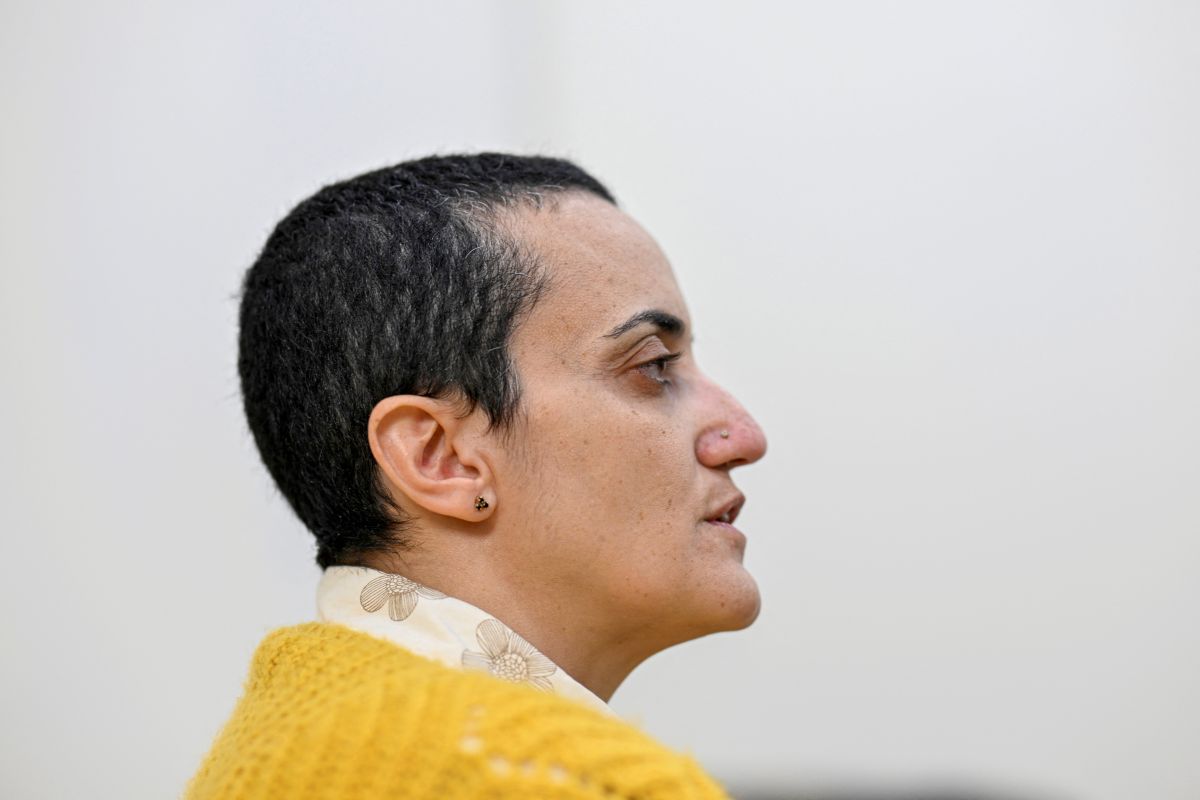
The conviction of Mada Masr editor-in-chief Lina Attalah and the ordered closure of one of Egypt’s last independent news outlets expose a systematic campaign by authorities to weaponize licensing laws and website blocking against critical journalism, despite constitutional guarantees of press freedom.
On October 27, a New Cairo misdemeanor court fined Attalah 3 million Egyptian pounds (about US$54,000), ordered the confiscation of the outlet’s equipment, and mandated its shutdown for operating without a license — a license the outlet says it has repeatedly applied for but never received.
The case illustrates how Egypt has constructed a legal framework that effectively criminalizes independent reporting.
Constitutional Guarantees vs. Article 70 guarantees the right to establish newspapers by mere notification, and Article 71 prohibits their closure or confiscation except in wartime. However, Media Law 180 of 2018 overrides these protections in practice by requiring all websites to obtain a license from the Supreme Council for Media Regulation (SCMR). Outlets that publish without one face heavy fines, equipment seizure, and closure
In simple terms: The Constitution says you can start a newspaper by telling the government you exist. The media law says you must ask the government for permission first, and they can say no.
The Supreme Judicial Council has rejected allegations of procedural violations in Attalah’s trial, claiming she waived her right to appeal — a claim her defense team denies. Complicating matters further, Attalah discovered during her release procedures that she had been convicted in absentia in 2024 and sentenced to one year in prison on charges of disseminating false news and operating an unlicensed website. A hearing to review that judgment is set for November 11.
The Licensing Trap
The licensing process itself functions as a bottleneck. Executive regulations give the SCMR 90 days to rule on an application, but the clock starts only when the council confirms the file is complete — a confirmation it often withholds indefinitely. Unlike print newspapers, where administrative silence counts as approval, there is no consequence for the council missing its deadline. An outlet can wait years in limbo; if it publishes anyway, it commits a crime.
In simple terms: The government body that grants licenses can simply sit on an application forever. The outlet can’t legally publish, but it also can’t get a clear rejection to challenge in court.
Mohamed Salah, chairman of the independent outlet Fakar Tany, told the Committee to Protect Journalists (CPJ) that his license application was rejected in September 2024 after more than a year of waiting, and his appeal has gone unanswered.
Al-Manassa applied in October 2018 and received no reply; in June 2020, security forces raided its offices and arrested its editor-in-chief, Nora Younis, holding her for two nights on a charge of running an unlicensed website. She was released on bail of 10,000 Egyptian pounds (about US$187). A reapplied application in August 2020 also went unanswered.
An anonymous editor-in-chief of another independent Egyptian outlet told CPJ that dozens of outlets remain unlicensed, with many afraid to speak publicly for fear of jeopardizing their pending requests. Approval, they said, often depends on other state agencies, not the council alone.
Because Fakar Tany was denied a license, Salah explained, its staff face two distinct threats: the legal representative can be charged with running an unlicensed website, and individual journalists can be charged with "impersonating a journalist" because they cannot register with the press syndicate without a licensed outlet.
Blocking as a Complementary Weapon
A denied license also serves as a pretext for blocking. Article 6 of the media law empowers the SCMR to suspend or block any site operating without a license.
Article 19 extends this power to personal websites, blogs, and social media accounts with 5,000 or more followers on grounds such as publishing "false news." A second route comes from Article 7 of Egypt’s Anti-Cybercrime Law, which allows investigating authorities to order the blocking of any website — whether based inside or outside Egypt — if it publishes material deemed a crime that threatens national security or the economy.
In simple terms: The state has two legal tools to take a site offline: the media law (for lacking a permit) and the cybercrime law (for content the government dislikes). They use them together.
Ahmed Gamal Ziada, editor-in-chief of the Brussels-based outlet Zawia 3, told CPJ that the media law gave the state "two complementary tools: licensing and blocking. The state uses them together to decide who has the right to practice journalism." Since 2017, Egypt has blocked several independent outlets, including Mada Masr, Al-Manassa, and most recently Zawia 3.
Extraterritorial Reach
Zawia 3 was established in Brussels and registered under Belgian law in August 2023 precisely because of the risks of operating inside Egypt. Yet Egyptian authorities treat any platform addressing the Egyptian public as subject to their jurisdiction, allowing the SCMR to block foreign outlets.
"So the state demands a license we cannot obtain at all while we are outside the country, then punishes us for lacking it," Ziada said. "Our site is blocked inside Egypt, and we have received no decision, notice, or specific accusation we could respond to."
In simple terms: Even if you set up your newsroom in Europe and follow European laws, Egypt can block your site inside the country and charge you with crimes for not having an Egyptian license you were never eligible to get.
The blocking has a chilling effect beyond audience reach. "When the authorities deem a platform ‘unlicensed’ or ‘hostile,’ working with it becomes potential evidence of a crime," Ziada warned, putting journalists still inside Egypt at direct legal risk.
The Human Cost and Calls for Reform
Salah and Ziada both articulated clear demands. Salah urged the state to approve pending license requests and amend Article 6 of the media law to align with the Constitution, restoring the notification system. Ziada called for an end to licensing as a tool of exclusion, transparency in blocking decisions with stated reasons and the right to judicial challenge, and recognition that journalism produced from abroad for an Egyptian audience is still Egyptian journalism — not a crime.
The Attalah verdict and the broader pattern documented by CPJ reveal a press environment where the law is not a shield for rights but a weapon wielded by the state to decide who may speak. Until the licensing regime is reformed and blocking powers are subjected to independent judicial oversight, independent journalism in Egypt will remain a high-stakes gamble.
Was this clear?
library_booksSource
Committee to Protect Journalists
15 Nov 2026
- funding model
- non-profit (grants, donations)
- jurisdiction
- International
- owner
- Non-governmental organization (Committee to Protect Journalists)
Was the source link correct?
topicRelated Articles

Congress MP Asserts Opposition Unity Against Delimitation Bill, Citing Constitutional Defense

Love as Resistance: Dalit-Feminist Anthology Reframes Intimacy as Political Defiance Against Caste

Rajasthan SOG Busts Interstate Racket Selling Forged Medical Degrees; Class 11 Dropout Posed as Doctor at Safdarjung

Four Killed in Rohtak Hotel Shooting; Police Investigate Alleged Honey-Trap Ambush

Delimitation Bill Framed as Trojan Horse to Reshape India's Electoral Map

Vijay's TVK Labels Stalin 'Savarkar 2.0' in Sharp Delimitation Offensive

Rohit Sharma Reveals Reluctance Behind Mumbai Indians Captaincy Return
