
Europe's Next-Generation Microwave Sounder Begins Operational Service, Boosting Global Weather Forecasts
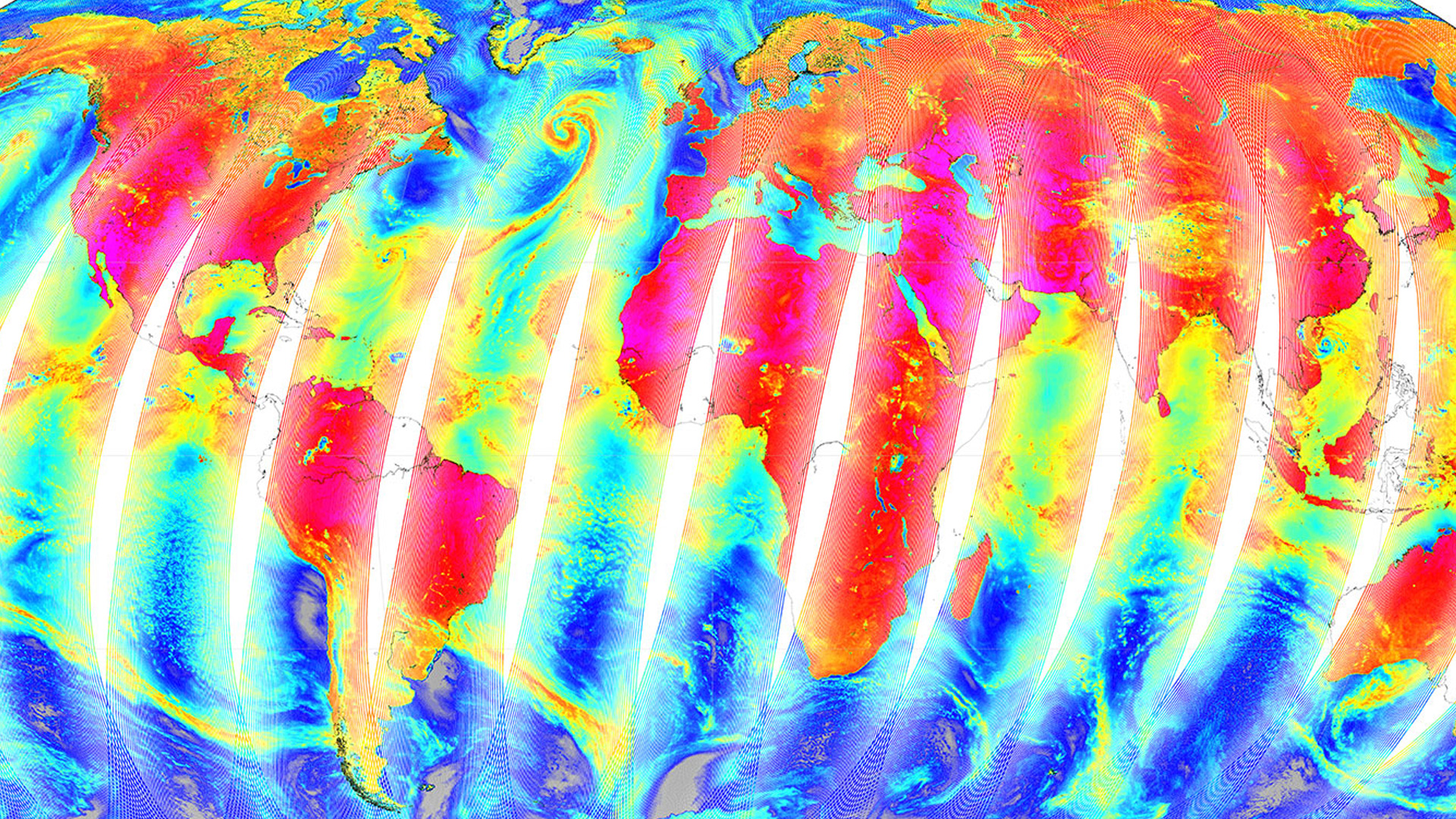
The Microwave Sounder (MWS) aboard the Metop Second Generation satellite A1 (Metop-SGA1) entered operational service on 27 August 2026, delivering a critical new stream of atmospheric temperature and humidity data to weather forecasting centres across Europe and worldwide.
Operated by EUMETSAT, the instrument marks a major milestone in the EUMETSAT Polar System – Second Generation (EPS-SG) programme, promising sharper, more frequent soundings that feed directly into the numerical models underpinning daily and medium-range forecasts used by civil protection agencies, aviation, agriculture, and the public.
A New Generation of Atmospheric Sounding
The MWS is the direct successor to the Advanced Microwave Sounding Unit (AMSU) and the Microwave Humidity Sounder (MHS), which have flown on the first-generation Metop satellites since 2006. Compared with those heritage instruments, the MWS offers improved spatial resolution and a larger number of sounding channels.
That translates into finer vertical detail of temperature and moisture profiles from the upper atmosphere down to near the surface — the fundamental variables that drive weather prediction models.
Beyond core profiling, the sounder also detects convective clouds, precipitation, and ice cloud formation. By maintaining continuity with its predecessors, it extends multi-decadal climate data records, providing a consistent baseline for climate monitoring and trend analysis.
How Microwave Sounders See Through Clouds
Microwave sounders operate like highly calibrated radio receivers tuned to specific frequencies emitted by the Earth-atmosphere system. Instead of music, the signals they capture reveal temperature, humidity, rainfall, sea ice, snow cover, and even the tiny ice crystals inside clouds at different atmospheric heights.
In simple terms: think of the atmosphere as a layered cake. Optical and infrared instruments can only see the top layer (cloud tops) because clouds block their view. Microwave sounders, however, use wavelengths that pass through most clouds largely unimpeded, allowing them to "see" the temperature and moisture structure of the entire cake — day or night, in clear or stormy conditions.
This all-weather capability is why microwave soundings are considered the single most important satellite data type for numerical weather prediction.
From Development to Operational Service
More than a decade of preparation preceded this operational debut. Requirements were shaped in close consultation with the national meteorological services of EUMETSAT member states, its Satellite Application Facilities, and partner organisations, guided by a dedicated science advisory group.
Pre-launch test data were shared with the user community, enabling feedback that refined the data products before the first operational delivery. Early user assessments of pre-operational data have already confirmed a positive contribution to forecast accuracy.
The first MWS images were released in 2025. Channel 2, for example, displayed geolocated brightness temperatures that clearly distinguished land surfaces — shown in reds, oranges, and greens — from open water and sea ice, the latter visible as a sharp transition in blue-green shades north of Antarctica.
Anomaly and Mitigation Strategy
In March 2026, an anomaly affected five channels responsible for measuring water vapour. These channels no longer meet their design specification in clear-sky conditions, though they continue to provide useful data when clouds are present.
EUMETSAT has mitigated the impact by relying on the Microwave Humidity Sounder still operating on the first-generation Metop satellites, which covers the same frequency range and partially offsets the reduced performance. Continuous monitoring remains in place to identify any further deviations promptly.
The remaining MWS channels continue to perform as expected, and the instrument's data are highly complementary to those from the infrared sounder and other payload instruments on Metop-SG, together building a comprehensive picture of the dynamic atmosphere.
Building a Constellation for the 2040s
The recently approved EPS-Sterna constellation of microsatellites, slated to begin launching in 2029, will extend microwave sounding capabilities further. Together, EPS-SG and EPS-Sterna are designed to deliver these critical measurements well into the 2040s, ensuring that meteorologists can continue to produce increasingly accurate, timely forecasts and warnings vital to communities across Europe and beyond.
Was this clear?
library_booksSource
EUMETSAT
27 Aug 2026
- funding model
- public / intergovernmental
- owner
- EUMETSAT
Was the source link correct?
topicRelated Articles
Musk Pledges $18 Billion SpaceX Share Giveaway to US Children Amid Satellite Expansion Push

NASA's $1.3B Lunar Logistics Network, Fission Reactor, and Potato Breakthrough Signal Shift to Permanent Moon Base Infrastructure

NASA's Aging Mars Fleet Suffers Dual Setbacks as Perseverance and Odyssey Halt Science Operations

Congress MP Asserts Opposition Unity Against Delimitation Bill, Citing Constitutional Defense

Love as Resistance: Dalit-Feminist Anthology Reframes Intimacy as Political Defiance Against Caste

Rajasthan SOG Busts Interstate Racket Selling Forged Medical Degrees; Class 11 Dropout Posed as Doctor at Safdarjung

Four Killed in Rohtak Hotel Shooting; Police Investigate Alleged Honey-Trap Ambush
