
Gemini Details Multi-Channel Funding Infrastructure to Bridge Traditional Finance and Crypto Markets
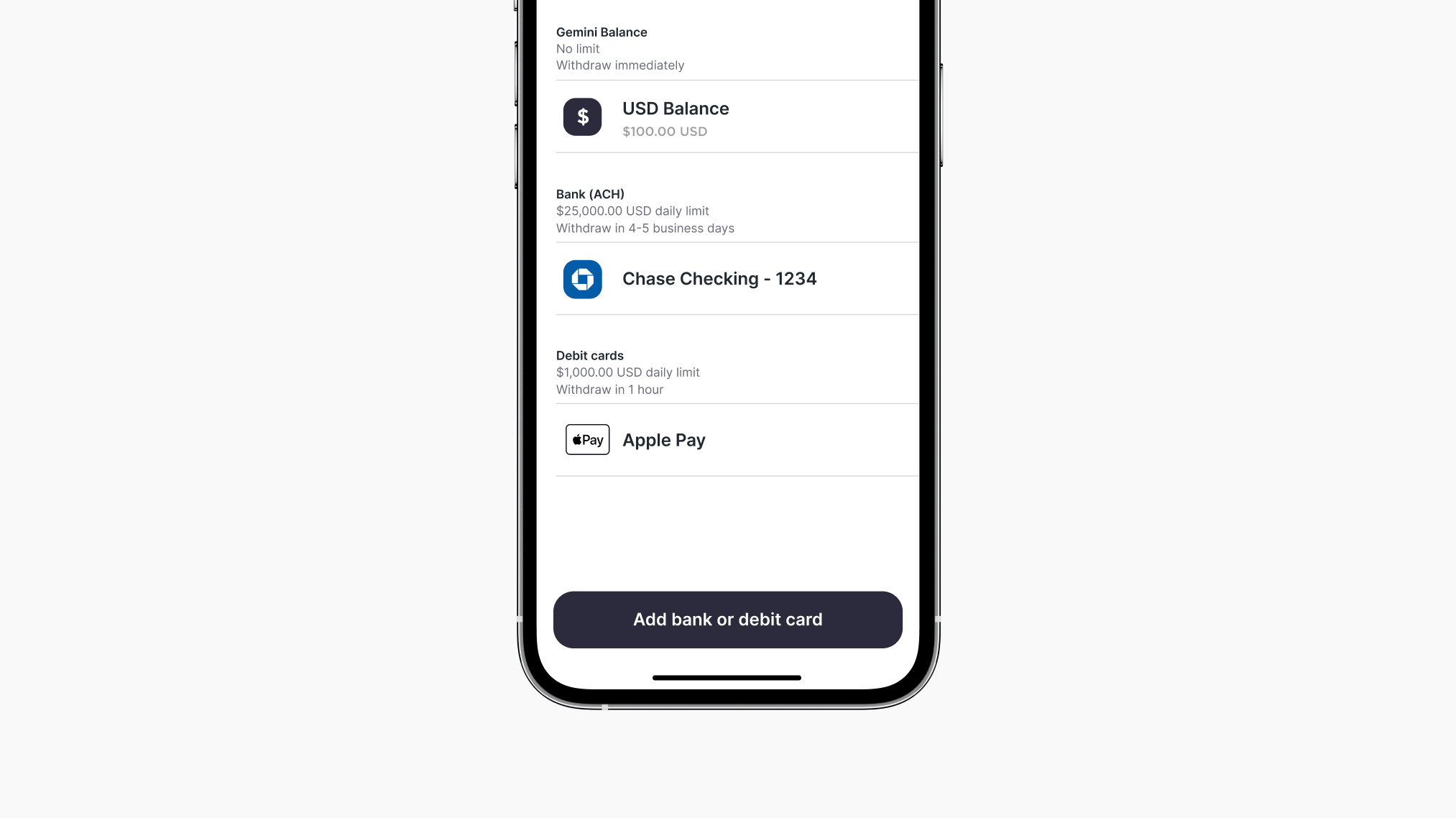
The Evolution of Fiat On-Ramps
Cryptocurrency exchange Gemini has published a comprehensive breakdown of the five primary methods users can employ to fund digital asset purchases on its platform. The guide underscores a critical phase in the industry's maturation: the construction of robust, compliant bridges between the legacy banking system and decentralized asset networks.
By standardizing access via wire transfers, ACH, mobile wallets, debit cards, and crypto-native deposits, the exchange aims to reduce the friction that has historically deterred institutional and retail participation alike.
Put simply: Think of these as five different doors into the same building. Some doors are built for moving large amounts of money slowly but securely (wire transfers), others for speed and convenience (Apple Pay), and one for people who already own crypto and just want to switch platforms (crypto deposits).
Bank Transfers
Wire and bank transfers remain the backbone of large-scale capital entry. Gemini supports a global suite of payment rails, including SWIFT for international wires, SEPA for Euro-zone transfers, FPS and CHAPS for British Pounds, and FAST for Singapore Dollars. This multi-rail approach allows the platform to serve a global user base while adhering to local banking regulations.
Funds sent via U.S. domestic wires before 3:00 PM ET typically settle same-day or next business day, offering a predictable timeline for treasury operations.
Put simply: SWIFT, SEPA, and the others are just the specific highway systems banks use to talk to each other across borders. Gemini has plugged into all the major ones so a user in London or Singapore isn't forced to use a U.S.-centric system.
The process requires users to link a bank account—verified either instantly via Plaid or manually using routing and account numbers—before initiating a deposit. A unique reference code generated by Gemini must be included in the transfer details to ensure automatic reconciliation. This strict naming convention (sender name must match the Gemini account name) is a direct anti-money laundering (AML) control.
ACH Transfers
For U.S. users, Automated Clearing House (ACH) transfers offer a distinct value proposition: immediate trading availability. Unlike wires, where funds must clear before trading, ACH deposits unlock buying power instantly. However, this convenience carries a structural caveat.
While users can trade immediately, withdrawal of those funds—or the crypto purchased with them—is locked for up to five business days until the ACH settlement finalizes. Daily and weekly transfer limits also apply, capping the utility for high-volume actors.
Put simply: ACH is like writing a check that the store lets you spend immediately, but they won't let you take the goods home (withdraw) until the check actually clears the bank a few days later.
Mobile Payment Integration
The integration of Apple Pay and Google Pay represents a significant user experience (UX) upgrade, collapsing the on-ramp into a few taps on a smartphone. Available exclusively via the Gemini mobile app, this method allows users to select a crypto asset, choose a one-time or recurring buy order, and authenticate via Face ID, Touch ID, or device passcode.
It abstracts away the complexity of bank linking and reference codes, targeting the retail demographic accustomed to frictionless consumer fintech apps.
Put simply: It works exactly like buying a coffee with your phone. You pick what you want, double-click the side button, and you own the crypto. The exchange handles the bank connection in the background.
Debit Cards
Debit card purchases offer the fastest route from zero to crypto, with a daily limit of $1,000. The verification flow differs by interface: mobile users scan the card via camera, while web users confirm micro-deposits (small charges between $0.99 and $1.99) to prove ownership. A 3.49% fee is applied to every purchase, a premium priced for immediacy.
Crucially, funds purchased via debit card cannot be withdrawn back to the card; a linked bank account is mandatory for off-ramping, enforcing a one-way valve for this payment rail.
But it's a one-way street: you can put money in with a debit card, but you need a real bank account to get money out.
Crypto-Native Deposits
For users already holding assets in self-custody wallets or other exchanges, Gemini provides unique deposit addresses per asset. The workflow is standard across the industry: generate an address on Gemini, copy it to the sending wallet, and broadcast the transaction. The exchange credits the account once the requisite network confirmations are met, making funds available for immediate trading. This rail is essential for arbitrageurs, DeFi participants, and users migrating between custodians.
Put simply: If you already have Bitcoin in a hardware wallet or another app, you just send it to the specific address Gemini gives you. It's like depositing a check you already have in your pocket.
Implications for Market Structure
By supporting both high-value institutional wires and micro-retail mobile payments, exchanges like Gemini are effectively becoming the universal adapters for the digital asset economy. As stablecoin adoption grows and real-time payment systems like FedNow launch, the distinction between these funding rails may blur, potentially collapsing the five methods into a single, instant, low-cost settlement layer.
Was this clear?
library_booksSource
Gemini
28 Nov 2026
- funding model
- commercial / venture capital
- jurisdiction
- International
- owner
- Private technology company (Gemini)
Was the source link correct?
topicRelated Articles

Congress MP Asserts Opposition Unity Against Delimitation Bill, Citing Constitutional Defense

Love as Resistance: Dalit-Feminist Anthology Reframes Intimacy as Political Defiance Against Caste

Rajasthan SOG Busts Interstate Racket Selling Forged Medical Degrees; Class 11 Dropout Posed as Doctor at Safdarjung

Four Killed in Rohtak Hotel Shooting; Police Investigate Alleged Honey-Trap Ambush

Delimitation Bill Framed as Trojan Horse to Reshape India's Electoral Map

Vijay's TVK Labels Stalin 'Savarkar 2.0' in Sharp Delimitation Offensive

Rohit Sharma Reveals Reluctance Behind Mumbai Indians Captaincy Return
