
Ghost Town: A Dreamlike Documentary Explores Japan's Post-Tsunami Ghost Fare Phenomenon
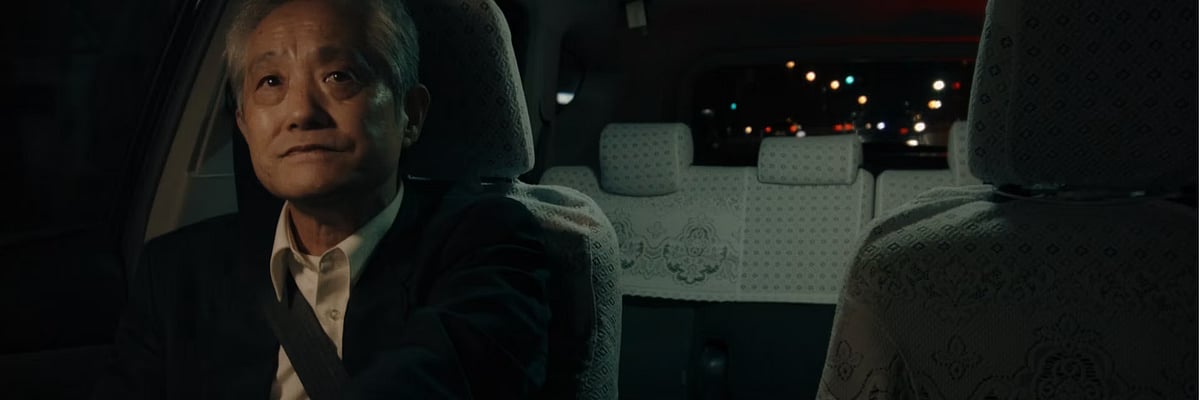
British filmmaker Katherine Round's documentary Ghost Town examines the haunting phenomenon of "ghost fares" reported by taxi drivers in Kamaishi, a port town in Iwate Prefecture devastated by the 2011 Great East Japan Earthquake and tsunami. The 9.0 magnitude quake triggered a 40-metre wall of water that killed nearly 20,000 people and left another 2,500 missing along Japan's Pacific coast.
In the disaster's aftermath, drivers began picking up passengers who vanished mid-journey — spectral riders requesting destinations that no longer existed. Round's film, born from her own encounter with grief, transforms these accounts into a meditative exploration of memory, loss, and the liminal spaces disasters create.
The Ghost Fare Phenomenon
The reports of ghost fares emerged organically within Kamaishi's taxi community. Drivers described picking up sad-faced passengers who asked to be taken to addresses erased by the tsunami. Halfway through the journey, the rear seat would be empty. One driver, recounting the experience to journalist Richard Lloyd Parry in 2014, said he drove on anyway, stopping at the levelled foundations of a destroyed house to politely open the door for his invisible passenger.
What this means simply: In the wake of catastrophic loss, a community's shared grief manifested as a collective narrative — taxi drivers, navigating streets that no longer matched their mental maps, encountered passengers who seemed to embody the missing. These weren't hallucinations in a clinical sense but a cultural expression of unresolved mourning, where the boundary between the living and the dead grew permeable.
A Taxi as Mobile Confession Booth
Round rigged the cabs of four Kamaishi drivers — Konno, Iwasaki, Goto, and Koike — with cameras and invited local residents to ride. The taxi became what she calls a "mobile confession booth." Mostly filmed at night, the documentary captures spontaneous conversations about lives, fears, hopes, and regrets. The drivers are real; the passengers may be residents, actors, or something deliberately ambiguous. The truth is never explained.
What this means simply: By turning a taxi into a rolling interview space, Round creates a private sphere where people speak freely. The vehicle's motion through deserted streets mirrors the psychological state of a community in transit between a past that was erased and a future that feels uncertain.
Blurring Documentary and Dream
Ghost Town rejects conventional narrative structure. There is no clear arc, no exposition, no resolution. Instead, the film moves ghost-like between four taxis over a single night. Long stretches of silence are punctuated by the hum of electric engines, the rhythmic tick of indicators, and radio static. The audience occupies the same liminal space as the passengers — between one place and another, witnessing what passes by.
What this means simply: "Liminal space" refers to a threshold — a state of being betwixt and between. Round uses the taxi's interior as a physical manifestation of this psychological threshold. Viewers feel dislocated, suspended between documentary realism and something more dreamlike, mirroring how disaster survivors often describe their own experience: the world before the wave, and the world after, with no solid ground in between.
Disaster Recovery and Cultural Memory
The Kamaishi shown in the film has been physically reconstructed with modern buildings and roads. Yet it appears deserted, haunted, its communities "broken, interrupted and forever changed." Regular sirens and preparation drills remind viewers that the threat persists. In one striking scene, a driver does sudoku at his favourite spot overlooking the water — the same ocean that delivered the destruction now rendered calming and benign.
Disaster recovery expert Lucy Easthope, speaking on The Death Studies Podcast, notes how surprisingly similar disasters are worldwide: "big, life changing, and traumatic, they offer 'brutal teachings'." There is a world before the disaster, and a world after. Ghost Town functions as both a document and a retelling, preserving individual lives that statistics — 20,000 dead, 2,500 missing — cannot capture.
The Wind Phone and Rituals of Grief
One driver mentions "a phone box filled with spirits trying to get through." This echoes Japan's "wind phone" phenomenon: disconnected phone booths where the living speak to the dead. In Ōtsuchi, a retired garden designer installed a rotary phone in his garden after his cousin's death; thousands have since visited to "call" lost loved ones.
The wind phone, like the ghost fares, represents a cultural technology for processing grief that Western psychiatry might pathologize but that Japanese tradition accommodates.
Journalist and filmmaker Shiori Ito — whose Black Box Diaries catalyzed Japan's Me Too movement — collaborated on Ghost Town, ensuring an inclusive process locals could trust. She also appears as a passenger, providing an outsider's perspective. The film's technique recalls Jafar Panahi's Taxi Tehran (2015), where a car's interior becomes a lens on society.
Ghost Town does not offer closure. It offers witness. In its hypnotic quiet, the film insists that the dead are not gone — they are passengers in the back seat, addresses on a vanished map, voices on a disconnected line. The taxi keeps driving. The siren sounds. The water remains.
Was this clear?
library_booksSource
The News Minute
25 Nov 2026
- funding model
- independent commercial media (revenue from subscriptions, advertising and reader contributions)
- owner
- The News Minute, an independent digital newsroom co-founded by Dhanya Rajendran (Editor-in-Chief)
Was the source link correct?
topicRelated Articles

Congress MP Asserts Opposition Unity Against Delimitation Bill, Citing Constitutional Defense

Love as Resistance: Dalit-Feminist Anthology Reframes Intimacy as Political Defiance Against Caste

Rajasthan SOG Busts Interstate Racket Selling Forged Medical Degrees; Class 11 Dropout Posed as Doctor at Safdarjung

Four Killed in Rohtak Hotel Shooting; Police Investigate Alleged Honey-Trap Ambush

Delimitation Bill Framed as Trojan Horse to Reshape India's Electoral Map

Vijay's TVK Labels Stalin 'Savarkar 2.0' in Sharp Delimitation Offensive

Rohit Sharma Reveals Reluctance Behind Mumbai Indians Captaincy Return
