
Harnessing the Wisdom of Crowds: Navigating Social Networks for Smarter Investment Decisions
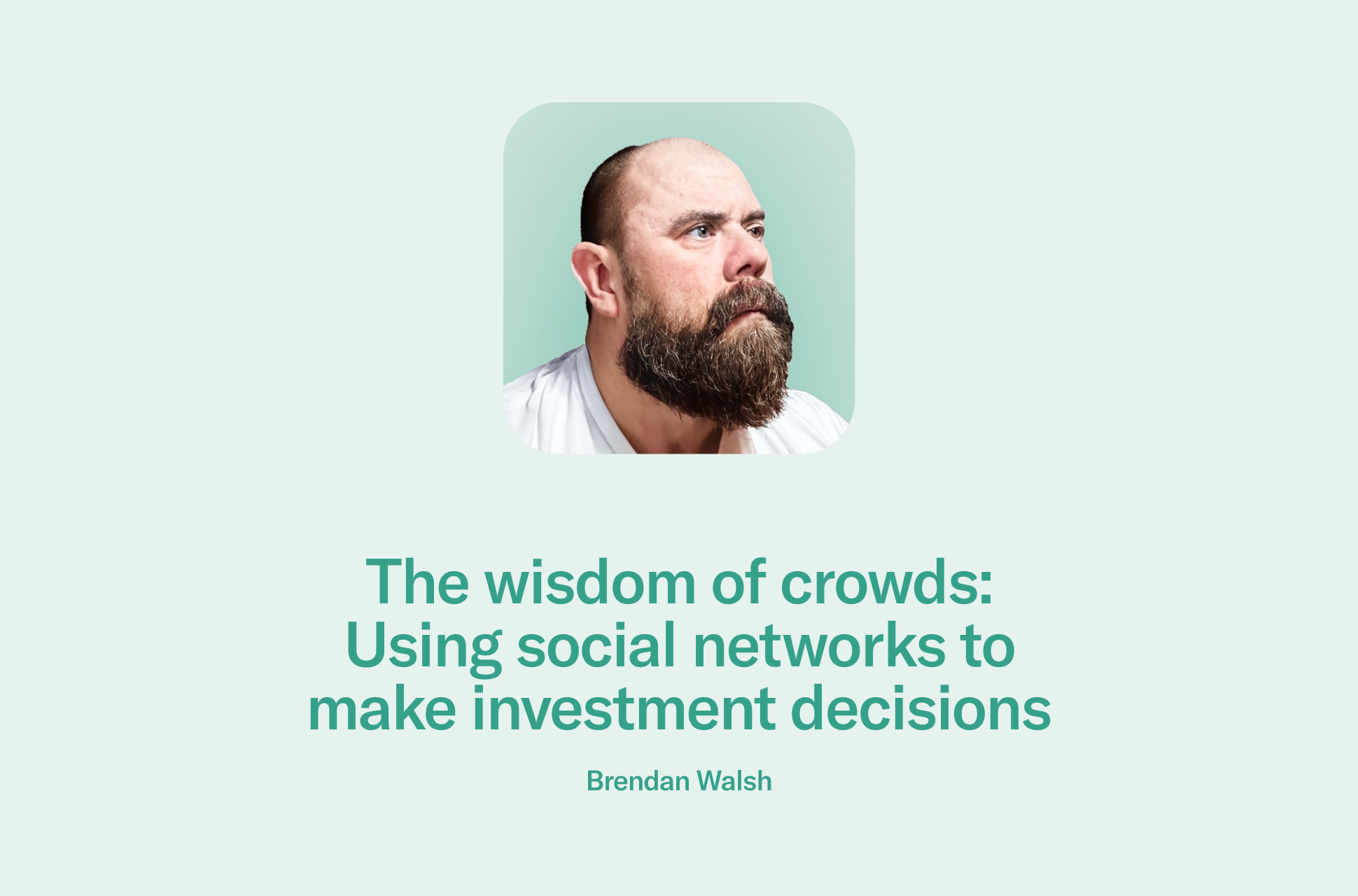
Veteran investor Brendan Walsh dissects how social networks have become pivotal arenas for investment idea generation, warning that while the wisdom of crowds can surface valuable insights, it equally fuels speculative bubbles when narratives detach from fundamentals. In a detailed guide published this week, Walsh draws on two decades of portfolio management to map the psychological and structural dynamics that differentiate productive collective intelligence from dangerous herd behavior.
The Power and Peril of Collective Intelligence
The concept of the wisdom of crowds suggests that aggregated, diverse judgments often converge on surprisingly accurate outcomes. The classic illustration is the jelly-bean jar experiment: individual guesses scatter widely, yet their average frequently lands near the true count. In financial markets, this principle implies that open communities debating thesis and counter-thesis can produce more robust estimates than any single analyst.
Put simply: When many independent people each bring a different piece of information or perspective, their combined view tends to cancel out individual errors, yielding a collectively smarter assessment than most experts could achieve alone.
History, however, offers a cautionary ledger. Charles Mackay’s 1841 chronicle Extraordinary Popular Delusions and the Madness of Crowds documents bubbles from the South Sea Company to Dutch tulip mania. The 2021 GameStop episode added a modern chapter: retail traders on Reddit’s r/WallStreetBets coordinated a short squeeze that drove shares far beyond any fundamental valuation, illustrating how social platforms can amplify narratives into self-fulfilling price spirals.
Communities vs. Influencers
Not all social aggregation is equal. Walsh draws a sharp line between communities and influencers. Communities — such as FinTwit on X, the Motley Fool forums, or Discord channels dedicated to fundamental analysis — operate around shared goals. Participants challenge each other’s assumptions, stress-test theses, and collectively refine ideas. The friction of debate is the feature, not a bug.
Influencers, by contrast, build personal brands. Their incentive is audience growth, which can reward sensationalism over rigor. A loud, confident prediction garners more engagement than a nuanced, probabilistic assessment. Walsh advises treating influencer content as a potential input, never a substitute for due diligence.
Behavioral Dynamics
Why do crowds so often detach from reality? George Soros’s theory of reflexivity provides a framework: investors’ perceptions alter market fundamentals, which in turn reinforce those perceptions, creating a feedback loop.
Daniel Kahneman’s work on cognitive biases compounds the risk. Confirmation bias leads participants to overweight evidence supporting the prevailing story; overconfidence makes them underestimate tail risks. In an echo chamber, these biases compound, turning a diverse crowd into a monolithic herd.
Practical Frameworks for Engaging with Crowd Wisdom
Walsh offers a tactical checklist for investors:
Evaluate Community Tone
Scan how newcomers are treated. Patience, willingness to explain, and constructive criticism signal a learning-oriented culture. Hype, dismissal of questions, and uniform bullishness are red flags.
Participate Actively
Passive consumption yields little.
Treat Copy Trading as Tuition, Not Strategy
Platforms like eToro let users replicate a single trader’s moves. Walsh warns this concentrates risk on one person’s judgment. However, allocating a trivial amount to observe a successful trader’s decision-making in real time can be an educational tool, provided the capital at risk is truly negligible.
The Investor's Responsibility
The final arbiter remains the individual. Social networks excel at surfacing ideas, flagging sentiment shifts, and explaining market moves after the fact. They cannot replace a disciplined process anchored in personal financial goals, risk tolerance, and independent analysis. Moving with the herd is acceptable only if you have already mapped the exit routes before the cliff appears.
Walsh’s synthesis is ultimately a call for epistemic humility: use the crowd as a sensor, not a compass. In an era where narratives travel at the speed of a retweet, the competitive edge belongs to those who can separate the signal from the story.
Was this clear?
library_booksSource
N26
26 Nov 2026
- funding model
- commercial / venture capital
- jurisdiction
- International
- owner
- Private technology company (N26)
Was the source link correct?
topicRelated Articles

Congress MP Asserts Opposition Unity Against Delimitation Bill, Citing Constitutional Defense

Love as Resistance: Dalit-Feminist Anthology Reframes Intimacy as Political Defiance Against Caste

Rajasthan SOG Busts Interstate Racket Selling Forged Medical Degrees; Class 11 Dropout Posed as Doctor at Safdarjung

Four Killed in Rohtak Hotel Shooting; Police Investigate Alleged Honey-Trap Ambush

Delimitation Bill Framed as Trojan Horse to Reshape India's Electoral Map

Vijay's TVK Labels Stalin 'Savarkar 2.0' in Sharp Delimitation Offensive

Rohit Sharma Reveals Reluctance Behind Mumbai Indians Captaincy Return
