
How Matriliny Shaped the Medieval Cochin Dynasty: New Research Unveils Perumpadappu Swaroopam's Origins
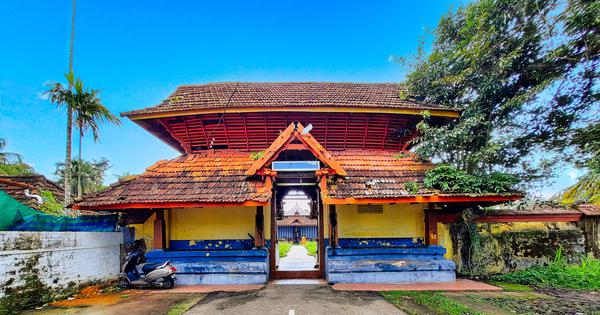
A newly published royal chronicle has reconstructed the founding of the Perumpadappu Swaroopam — the medieval dynasty that ruled Cochin — revealing a sophisticated matrilineal political order that governed succession, territory, and sacred authority for centuries.
Drawing on temple records, copper-plate grants, and family tradition, the research traces the dynasty's emergence to the 12th century, when a Perumal emperor partitioned his realm and installed his sister's son as ruler, establishing a lineage that endured into the 20th century.
In the matrilineal system that underpinned the Swaroopam, descent and inheritance flowed through the maternal line. A child belonged to the mother's kin-group, not the father's. Thus, when a Namboothiri Brahmin from Perumpadappu married the sister of the last Perumal, their son was considered a Kshatriya of his mother's royal lineage, not a Brahmin of his father's.
This principle made the nephew, not the Perumal's own son, the legal heir to the central portion of the kingdom, including the capital at Mahodayapuram and the overlordship of the Thiruvanchikulam Temple.
The Matrilineal Foundation of a Dynasty
The Perumpadappu family tradition holds that the Namboothiri bequeathed his vast estates to his Kshatriya wife and their son, who adopted the Perumpadappu name.
When the Perumal kingdom fragmented, the monarch granted the heartland — stretching from Pookaitha near the Bharathappuzha River in the north to Kannetti near the Pallikkal River in the south — to his sister's son, appointing him Valiya Thampuran, Raja of Perumpadappu Swaroopam. The geographic span aligns with later estimates by C.
Achyuta Menon in the Cochin State Manual, which placed the northern limit at Vanneri and the southern boundary at Purakkad, encompassing roughly 4,000 square miles including tributary states.
Matriliny, as defined by Encyclopaedia Britannica, is a system where descent is traced through the maternal rather than paternal line, with distinct rules for family, marriage, inheritance, and succession.
In practice, this meant the Perumpadappu Raja's sisters became the progenitors of distinct branches, each evolving into a thavazhi — a separate family unit with its own palace (kovilakam), titles, revenue lands, armed retinue, and temple rights.
The five recorded thavazhis — Mootha, Elaya, Palluruthy, Muringur, and Chazhur — operated as semi-autonomous power centers within the broader Swaroopam.
Epigraphic Evidence and the 12th Century Origins
The earliest documentary mention of both Perumpadappu Swaroopam and Cochin appears in the Elankunnapuzha Kshethra Grandhavari, a temple chronicle recording the construction of the Elankunnapuzha Temple on Vypeen Island. The island itself formed after the great Periyar flood of 1341. A chronogram (kalidinam) in the text — "Visvesa Sakti Maya" — dates the idol's installation to 1185–86 CE.
The entry notes that after the consecration by Uliyannur Mekatt Namboothiri, a temple official traveled to Cochin to inform the Raja, identified as Valiya Thampuran, and records that the territory from the Vypeen River mouth northward to Munambam belonged to the Swaroopam.
A chronogram is a phrase where specific letters correspond to numerical values in the traditional Indian katapayadi system, yielding a precise date. This method was commonly used in Kerala's temple records to encode years without using numerals.
Further corroboration comes from the Syrian Christian copper plates of 1225 CE, which record privileges granted to the merchant Iravikorttan by "the glorious Vira-Raghava-Chakravartin" ruling from Magodaiyarpattinam — identified by historians as Mahodayapuram, the Perumpadappu capital. The plates trace his lineage to "Vira-Kerala-Chakravartin," possibly the dynasty's founder.
The Thavazhi System and Succession Protocols
Succession within the Swaroopam followed a strict seniority principle across thavazhis. The most senior male became Valiya Thampuran (Senior Raja), the next in line Elaya Thampuran (Junior Raja). Similarly, the senior female held the title Valiyamma Thampuran (Senior Rani), followed by Kunjamma Thampuran. If a thavazhi lacked heirs, adoption from another thavazhi was standard practice, ensuring continuity.
A unique abdication tradition further stabilized power: a Raja could retire due to age or illness, entering religious seclusion while the heir assumed rule. If the regent and heir belonged to the same thavazhi, the regent would also withdraw to seclusion upon the former Raja's death, preventing dual power centers. This institutionalized renunciation reflects a political culture where authority was exercised as stewardship rather than personal possession.
Sacred Geography and Dynastic Legitimacy
The dynasty's legitimacy was anchored in a network of deities tied to its history. The title "Perumpadappu Gangadhara Trikkovil Adhikarikal" links the Raja to Gangadhara (Shiva) of the Thiruvanchikulam Mahadeva Temple at Mahodayapuram — the Perumals' patron deity, whose supervision passed to the Perumpadappu Raja with the capital. Professor M.G.S.
The family's kuladevatha (ancestral deity), Pazhayannur Bhagavathy, originally tutelary to the Perumpadappu Namboothiri, was adopted by the Swaroopam and traveled with them. Shrines to the goddess stand at Pazhayannur (Thrissur), Mattancherry Palace (Cochin), Chazhur, and Tripunithura — marking the dynasty's physical and spiritual trajectory.
The Bhagavathy witnessed the 1663 treaty with the Dutch, recorded in the Paliyam copper plates, where the Raja lamented the loss of Vanneri and Chitrakutam — the original coronation site where the Ariyittuvazhcha (sprinkling of raw rice) was performed — and urged his nephews to recover "Perumpadappu and other lost territories."
Local deities of each residence became paradevathas (family deities): Koippilly Thevar at Perumpadappu, Thiruvanchikulam Appan at Kodungallur, and Sree Poornathrayeesa at Tripunithura. The royal household continues to fund rituals at these shrines, maintaining a living connection to the dynasty's sacred geography.
The convergence of epigraphy, temple chronicles, family tradition, and colonial records confirms that Perumpadappu in Vanneri was the Swaroopam's cradle, and that its matrilineal architecture — unusual in medieval Indian polity — provided a durable framework for governance, succession, and cultural memory that survived centuries of upheaval.
Was this clear?
library_booksSource
Scroll.in
24 Nov 2026
- funding model
- independent commercial media (revenue from advertising, reader subscriptions and grants)
- owner
- Scroll.in (Scroll Media), an independent digital newsroom founded by Samir Patil
Was the source link correct?
topicRelated Articles

Congress MP Asserts Opposition Unity Against Delimitation Bill, Citing Constitutional Defense

Love as Resistance: Dalit-Feminist Anthology Reframes Intimacy as Political Defiance Against Caste

Rajasthan SOG Busts Interstate Racket Selling Forged Medical Degrees; Class 11 Dropout Posed as Doctor at Safdarjung

Four Killed in Rohtak Hotel Shooting; Police Investigate Alleged Honey-Trap Ambush

Delimitation Bill Framed as Trojan Horse to Reshape India's Electoral Map

Vijay's TVK Labels Stalin 'Savarkar 2.0' in Sharp Delimitation Offensive

Rohit Sharma Reveals Reluctance Behind Mumbai Indians Captaincy Return
