
How Titan Overcame Licensing Hurdles to Become India's Watchmaking Pioneer
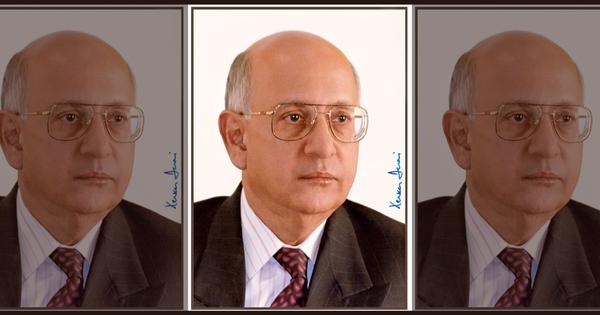
The founding of Titan in 1984 stands as a landmark case study in Indian industrial history, illustrating how a determined group of executives navigated the labyrinth of the License Raj to create a consumer brand that would eventually dominate the market.
The venture emerged from a six-year struggle against a reservation policy that restricted watch manufacturing to the small-scale sector, a barrier only dismantled by the incremental economic reforms of the early 1980s. Today, Titan's origin story offers a rare window into the mechanics of corporate persistence amid state-controlled industrial policy.
The Licensing Labyrinth
In the 1970s, the Indian watch market was a near-monopoly held by Hindustan Machine Tools (HMT), a public sector undertaking that sold roughly one million units annually. Smaller players like Allwyn accounted for another half-million.
The market potential was evident, yet the Tata Group—despite its industrial heft—found itself blocked by a regulatory regime that reserved watchmaking exclusively for small-scale and public sector enterprises. This reservation was a pillar of the License Raj, a system of elaborate permits and quotas designed to protect small industries and control private sector expansion.
Plainly put: The government had legally ring-fenced the watch industry, allowing only small, often artisanal factories to produce watches. Large corporate houses like the Tatas were legally prohibited from entering, regardless of their capital or technical capability.
The resistance was explicit. In 1982, the Secretary of the Ministry of Commerce and Industry told Tata Sons Chairman Minoo Mody point-blank: "Take it from me, Mr Mody, the Tatas will never make watches." Internal opposition was equally fierce. Senior director Nani Palkhivala reportedly begged Mody to abandon the project, citing the group's previous unhappy experience with precision engineering.
The Trio Behind the Venture
The project survived because of an unusual alliance between three professionals from vastly different backgrounds. Xerxes Desai, a Tata Administrative Services alumnus with stints at Tata Chemicals and Taj Hotels, was the driving force. His colleague Anil Manchanda, a statistician from the Indian Statistical Institute, brought analytical rigor. The third, Iravatham Mahadevan, was a senior IAS officer and a noted scholar of the Indus Valley script.
Their paths converged at Tata Press in the late 1970s. Desai had been sent there to turn around the ailing division, with a promise from Mody that success would earn him a venture of his choosing. Manchanda joined him, and together they revived the press. Mahadevan entered the picture as a client seeking high-quality printing for his epigraphic research. Over six months of collaboration, the trio forged a bond that would later catalyze the watch project.
Plainly put: A corporate turnaround specialist, a data-driven strategist, and a bureaucrat-scholar became unlikely partners, united by a shared ambition to build something new within the Tata Group.
A French Connection and a Bureaucratic Wall
By 1979, Mahadevan had become Chairman of the Tamil Nadu Industrial Development Corporation (TIDCO). He revealed that TIDCO was negotiating with France Ébauches, a French movement manufacturer, for a technology tie-up and needed a joint venture partner. The Tatas stepped in. By June 1983, the Tata Group, TIDCO, and France Ébauches signed an agreement in France.
The celebration was short-lived. The central government rejected the proposal, reiterating that watchmaking remained reserved for the small-scale sector. Six years of groundwork—technology scouting, failed acquisition attempts like the bid for Bangalore-based Hegde & Golay, and high-level lobbying—had yielded not a single watch.
Plainly put: Even with a state-level partner (TIDCO) and a global technology provider (France Ébauches), the central government's industrial licensing authority vetoed the project because the rules still forbade large private companies from making watches.
Reforms by Stealth and the Birth of Titan
The breakthrough came not from a dramatic policy announcement but from what historians call "reforms by stealth." Under Prime Minister Rajiv Gandhi, the 1984 government began quietly relaxing industrial controls, signaling a new openness to private sector participation. The watch reservation was effectively lifted without fanfare.
Seizing the moment, Desai, Manchanda, and Mody formed an investment vehicle named Questar Investments to apply for the license. The application sailed through "no questions asked." The Tata Group later acquired Questar via a rights issue, formalizing its stake. The new company was christened Titan—an acronym for Tata Industries and TAN for Tamil Nadu.
Plainly put: The government didn't pass a new law; it simply stopped enforcing the old restriction. The Tata team moved instantly, using a temporary holding company to secure the license before the bureaucracy could reverse course.
Assembling the Machine
With approval in hand, execution was swift. The plan: produce two million quartz analogue watches at a project cost of Rs 54 crore. Ownership was split nearly equally between TIDCO (28%) and the Tata Group (25%), with the remainder held by the public (via a 1987 IPO), institutions like the Unit Trust of India, and strategic investors including the International Finance Corporation and France Ébauches.
TIDCO nominated A.L. Mudaliar as Chairman, Minoo Mody became Vice-Chairman, and Xerxes Desai took the helm as Managing Director. The founding management team—including B.G. Dwarkanath, I.K. Amitha, Bhaskar Bhat, and Vibha Paul—would go on to define the company's culture and product strategy for decades.
Plainly put: Titan launched as a true joint venture between a state agency and a private conglomerate, backed by global capital and technology, with a professional management team given unusual autonomy.
Legacy of a Star-Crossed Quest
Desai later reflected that the name Questar was chosen because the project had been "a star-crossed quest." The phrase captures the essence of Indian entrepreneurship in the pre-liberalization era: vision constrained by policy, sustained by personal networks, and ultimately realized through a mix of timing, tenacity, and top-level patronage—most critically, the backing of J.R.D. Tata himself.
Titan's incorporation in July 1984 marked not just the birth of a brand, but the cracking of a regulatory dam that would eventually reshape India's consumer goods landscape.
Was this clear?
library_booksSource
Scroll.in
20 Nov 2026
- funding model
- independent commercial media (revenue from advertising, reader subscriptions and grants)
- owner
- Scroll.in (Scroll Media), an independent digital newsroom founded by Samir Patil
Was the source link correct?
topicRelated Articles

Congress MP Asserts Opposition Unity Against Delimitation Bill, Citing Constitutional Defense

Love as Resistance: Dalit-Feminist Anthology Reframes Intimacy as Political Defiance Against Caste

Rajasthan SOG Busts Interstate Racket Selling Forged Medical Degrees; Class 11 Dropout Posed as Doctor at Safdarjung

Four Killed in Rohtak Hotel Shooting; Police Investigate Alleged Honey-Trap Ambush

Delimitation Bill Framed as Trojan Horse to Reshape India's Electoral Map

Vijay's TVK Labels Stalin 'Savarkar 2.0' in Sharp Delimitation Offensive

Rohit Sharma Reveals Reluctance Behind Mumbai Indians Captaincy Return
