
ICRC Details Humanitarian Operations Amid Russia-Ukraine Conflict, Calls for Unfettered Access to Prisoners of War
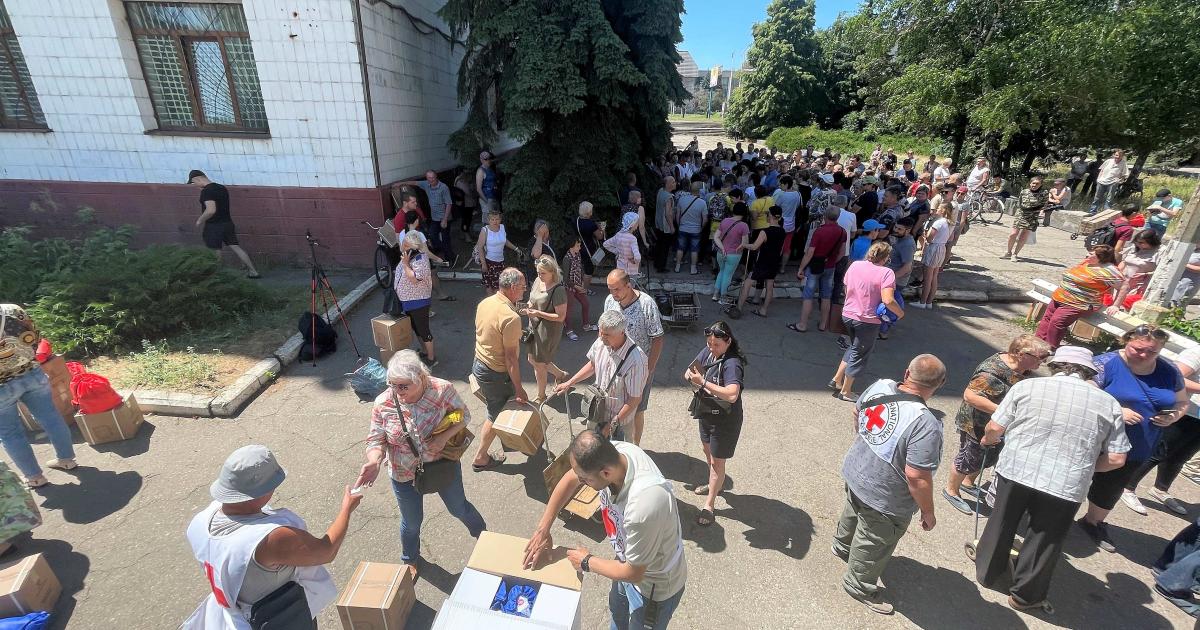
The International Committee of the Red Cross (ICRC) has published a comprehensive update on its humanitarian response to the international armed conflict between Russia and Ukraine, revealing the vast scale of its operations while underscoring persistent gaps in access to prisoners of war and civilians in Russian-controlled territories.
The update, released in September 2026, marks more than two years since the conflict's escalation in February 2022 and offers a rare, detailed window into the operational realities facing the world's primary guardian of international humanitarian law (IHL).
Scaling Up Presence in a Protracted Conflict
Since 2014, the ICRC has maintained a continuous presence in Ukraine, but the organization dramatically expanded its footprint after the 2022 escalation. Today, roughly 750 staff members — predominantly Ukrainian nationals, many personally affected by the war — operate across the country.
They are supported by a broader team of over 1,000 personnel based in key cities including Kyiv, Odesa, Kharkiv, Lviv, Dnipro, Donetsk, Luhansk, and Moscow. From these hubs, mobile teams deploy to dozens of locations, often near front lines, to deliver food, water, medicine, and shelter.
What this means: The ICRC acts as a neutral intermediary in war zones. Its staff are not soldiers; they are humanitarian professionals — doctors, engineers, protection specialists — who negotiate with all warring parties to reach victims on both sides of the front line. Their nationality is deliberately diverse to ensure no delegation is seen as aligned with a belligerent state.
Coordination extends beyond Ukraine's borders. The ICRC works with Red Cross and Red Crescent societies in Russia, Hungary, Moldova, Poland, and Romania to support displaced persons and refugees. In parallel, a dedicated bureau within the Central Tracing Agency — the ICRC's global mechanism for restoring family links — has been established specifically for this conflict to centralize information on the fate of prisoners of war (POWs) and civilians who have fallen into enemy hands.
The Prisoner of War Access Gap
The most striking disclosure concerns access to detainees. These visits are not cursory; delegates assess conditions of internment, treatment, and provide a vital lifeline: transmitting family news, delivering warm clothing, hygiene items, and books.
The Geneva Conventions explained: The Third Geneva Convention grants the ICRC a explicit right to visit all POWs and civilian internees, in all places of detention, as often as necessary. The detaining power is obligated to grant this access. It is not a privilege granted by the captor; it is a legal obligation under treaty law.
However, the ICRC confirms it has not had full access to all POWs. Its last visit to detention facilities in Russia occurred in 2024. The organization states it is actively seeking to resume visits there. This asymmetry — regular access in Ukraine, none in Russia — leaves thousands of POWs and their families in a prolonged state of anguish and uncertainty. The ICRC emphasizes that every day of delay deepens the suffering of detainees and their relatives.
Navigating Access in Contested Regions
The update clarifies the ICRC's geographic reach. Teams operate in Donetsk and Luhansk, coordinating with local partners to assist populations enduring years of hostilities. Conversely, the ICRC is not present in the Kherson and Zaporizhzhia regions under Russian control.
The situation in Oleshky, a town near the front line, illustrates the complexity: the ICRC is in dialogue with both Russian and Ukrainian authorities to address dire humanitarian needs, particularly for the wounded, sick, elderly, and children.
It stands ready to conduct civilian evacuations but stresses that such operations require binding security guarantees from both parties — guarantees that go far beyond a simple ceasefire.
The Imperative of Confidential Dialogue
A significant portion of the FAQ addresses the ICRC's choice to prioritize confidential dialogue over public condemnation. The organization acknowledges public frustration at its perceived silence but defends its methodology as an operational necessity, not a moral stance.
Why confidentiality works: By speaking privately with warring parties, the ICRC builds the trust required to gain access to victims, negotiate safe passage for civilians, and secure the release of detainees. Public shaming often hardens positions and can lead to the expulsion of humanitarian actors, cutting off aid entirely. The ICRC cites past successes — facilitating POW releases in Yemen, evacuating civilians from Aleppo and Mariupol — as proof that quiet diplomacy saves lives.
The organization reserves public denunciation for exceptional cases where all private avenues are exhausted and publicity is deemed the only way to protect victims. It also firmly denies allegations that its staff participated in or facilitated the mistreatment of POWs, reiterating that delegates are bound by strict rules of neutrality and independence, selected precisely because they hold no nationality of the warring states.
Addressing Family Separation and Misinformation
The conflict has separated countless children from their families. The ICRC registers unaccompanied minors, traces relatives, and facilitates reunification when both parties consent and conditions allow. It urges families to file official tracing requests. Simultaneously, the organization warns against the spread of misinformation, which it says hampers operations and endangers staff. It asks the public to verify dubious claims before sharing them.
A Humanitarian Principle, Not a Political Equivalence
Responding to criticism that its reporting on suffering in Russia equates the experiences of the two populations, the ICRC clarifies that acknowledging civilian suffering wherever it occurs is a core humanitarian principle, not a political judgment. Neutrality, the ICRC argues, is the only way to remain present on both sides of the front line and to continue advocating for the respect of IHL by all parties.
Was this clear?
library_booksSource
International Committee of the Red Cross
10 Nov 2026
- funding model
- non-profit (grants, donations)
- jurisdiction
- International
- owner
- Non-governmental organization (International Committee of the Red Cross)
Was the source link correct?
topicRelated Articles

Congress MP Asserts Opposition Unity Against Delimitation Bill, Citing Constitutional Defense

Love as Resistance: Dalit-Feminist Anthology Reframes Intimacy as Political Defiance Against Caste

Rajasthan SOG Busts Interstate Racket Selling Forged Medical Degrees; Class 11 Dropout Posed as Doctor at Safdarjung

Four Killed in Rohtak Hotel Shooting; Police Investigate Alleged Honey-Trap Ambush

Delimitation Bill Framed as Trojan Horse to Reshape India's Electoral Map

Vijay's TVK Labels Stalin 'Savarkar 2.0' in Sharp Delimitation Offensive

Rohit Sharma Reveals Reluctance Behind Mumbai Indians Captaincy Return
