
ICRC Facilitates Transfer of Human Remains Across Yemen Front Lines in Landmark Humanitarian Operation
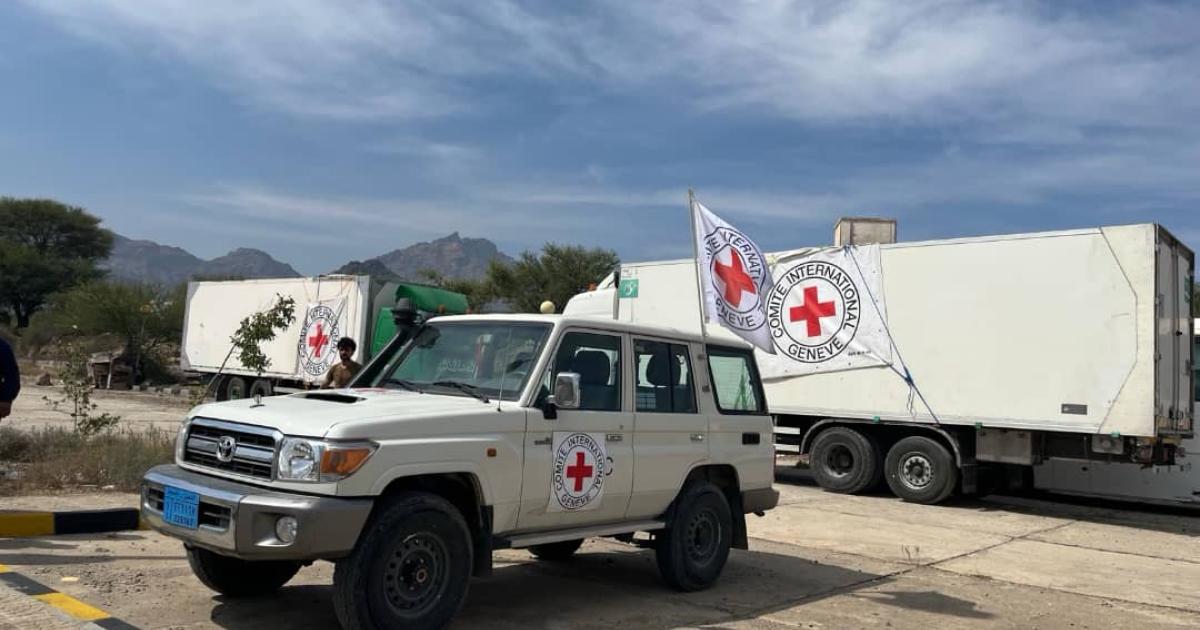
The International Committee of the Red Cross (ICRC) has completed a significant humanitarian operation in Yemen, transferring human remains across active front lines between November 24 and 26, 2026.
Acting as a neutral intermediary at the request of the warring parties, the ICRC moved the remains of those killed in recent hostilities from Dhamar to Lahj and from Lahj to Sana'a, handing them over to the respective authorities.
The operation marks a concrete implementation of the Joint Declaration of Principles on the Dignified Management of the Dead, signed in Muscat, Oman, in December 2025, and underscores the critical role of neutral humanitarian actors in mitigating the human cost of protracted conflict.
The Operation
The transfer involved meticulous planning and strict adherence to humanitarian protocols. The remains were handed over to the ICRC and transported across front lines in sealed refrigerated vehicles, ensuring preservation and dignity throughout the journey.
Ahmed Zaroug, ICRC protection coordinator in Yemen, emphasized the complexity of such operations: "Behind these human remains, there are families waiting to lay a loved one to rest. Operations across frontlines like this are complex and require the agreement and cooperation of the parties.
As a neutral intermediary, our role is to help make these transfers possible, so that families can eventually bury their loved ones with dignity and in accordance with their cultural and religious traditions."
Explain it simply: A "neutral intermediary" means the ICRC does not take sides in the conflict. It acts as a trusted go-between that both warring parties agree to let handle sensitive humanitarian tasks, like moving dead bodies across battle lines, because they trust the ICRC to be impartial and professional.
Role of Neutral Intermediary
The ICRC's mandate as a neutral intermediary is rooted in the Geneva Conventions. Its unique status allows it to operate in conflict zones where other organizations cannot, facilitating dialogue and practical humanitarian actions between opposing forces. In this case, the ICRC's acceptance by all parties enabled the physical crossing of front lines — a feat that would be impossible without mutual trust and explicit agreements on security guarantees for the convoy.
Legal and Diplomatic Framework
The operation did not occur in a vacuum. It flows directly from the Joint Declaration of Principles on the Dignified Management of the Dead, signed in Muscat in December 2025 by the parties to the Yemen conflict. Under this framework, the ICRC was entrusted with facilitating the transfer of human remains across front lines whenever called upon by the parties.
Explain it simply: The Joint Declaration is a formal agreement where the warring sides promised to treat dead bodies with respect and allow them to be returned to families. They asked the ICRC to help carry out this promise when needed.
International Humanitarian Law Obligations
International humanitarian law (IHL) obliges parties to armed conflict to take all possible measures to search for, collect, and recover the dead without adverse distinction. The deceased must be treated with respect, and every effort must be made to identify them. These obligations are not optional; they are binding legal requirements designed to alleviate the suffering of families and uphold human dignity even in war.
This helps families know what happened to their loved ones and give them a proper burial.
Humanitarian Impact and Family Closure
For families on all sides, the return of remains is a crucial step toward closure. The inability to recover a loved one's body prolongs grief and uncertainty, often for years. The ICRC operation directly addresses this anguish by enabling dignified burial according to cultural and religious traditions — a fundamental human need that transcends political divides.
Dignified Burial and Cultural Traditions
In Yemen, as in many societies, burial rites are deeply significant. The ICRC's emphasis on "cultural and religious traditions" reflects an understanding that humanitarian action must be culturally sensitive. The use of sealed refrigerated vehicles preserves the bodies until they can be handed over for proper rites, respecting both the dead and the living.
Identification Process
The process of identifying the remains will be managed by the relevant authorities. This step is vital: without identification, families cannot be notified, and the cycle of missing persons persists. The ICRC often supports such efforts through forensic expertise and family tracing services, though the primary responsibility rests with the parties.
Broader Context
This transfer is part of a series of humanitarian breakthroughs facilitated by the ICRC in Yemen. In November 2026 alone, the organization supported the release of 600 conflict-related detainees in Sana'a. In October, it facilitated the release of 159 detainees. Earlier in November, it delivered a shipment of vital medical supplies to health facilities in Taiz city. These operations demonstrate a pattern of incremental trust-building between the parties, mediated by the ICRC.
Previous Detainee Releases and Medical Aid
The detainee releases, like the transfer of remains, rely on the ICRC's role as a neutral intermediary. They involve complex negotiations, security guarantees, and logistical coordination. The medical supply delivery to Taiz — a city that has suffered severe blockade and bombardment — highlights the ICRC's broader mandate to protect and assist civilians affected by conflict.
ICRC's Ongoing Role
The ICRC has maintained a continuous presence in Yemen throughout the conflict, providing protection, assistance, and prevention activities. Its ability to operate across front lines stems from decades of engagement with all parties and a reputation for strict neutrality, impartiality, and independence.
Implications for Future Humanitarian Operations
The successful completion of this transfer sets a precedent for future operations. The ICRC has stated it "stands ready to facilitate similar humanitarian operations at the request and with the agreement of the parties, whenever conditions allow." This readiness signals that the Muscat framework is functional and that the parties can translate commitments into action.
However, each operation remains contingent on the agreement of the parties and the security situation on the ground. The Yemen conflict, now in its second decade, continues to generate humanitarian needs of staggering scale. While discrete operations like this one provide tangible relief to specific families, they do not substitute for a comprehensive political solution.
The transfer of human remains across front lines is a powerful reminder that even amid entrenched hostility, shared humanity can create space for cooperation. It affirms the enduring relevance of international humanitarian law and the indispensable role of neutral intermediaries in giving effect to its most basic principles: dignity for the dead, solace for the living, and a measure of humanity in the midst of war.
Was this clear?
library_booksSource
International Committee of the Red Cross
25 Nov 2026
- funding model
- non-profit (grants, donations)
- jurisdiction
- International
- owner
- Non-governmental organization (International Committee of the Red Cross)
Was the source link correct?
topicRelated Articles

Congress MP Asserts Opposition Unity Against Delimitation Bill, Citing Constitutional Defense

Love as Resistance: Dalit-Feminist Anthology Reframes Intimacy as Political Defiance Against Caste

Rajasthan SOG Busts Interstate Racket Selling Forged Medical Degrees; Class 11 Dropout Posed as Doctor at Safdarjung

Four Killed in Rohtak Hotel Shooting; Police Investigate Alleged Honey-Trap Ambush

Delimitation Bill Framed as Trojan Horse to Reshape India's Electoral Map

Vijay's TVK Labels Stalin 'Savarkar 2.0' in Sharp Delimitation Offensive

Rohit Sharma Reveals Reluctance Behind Mumbai Indians Captaincy Return
