
India Launches SCO Civilisational Dialogue Forum to Reframe Cultural Diplomacy as Strategic Statecraft
Opinion. This story was written from a named writer’s column in Indian Express — Opinion of 25 November 2026. We report what was argued, not our own view — the publisher’s ownership is shown below.
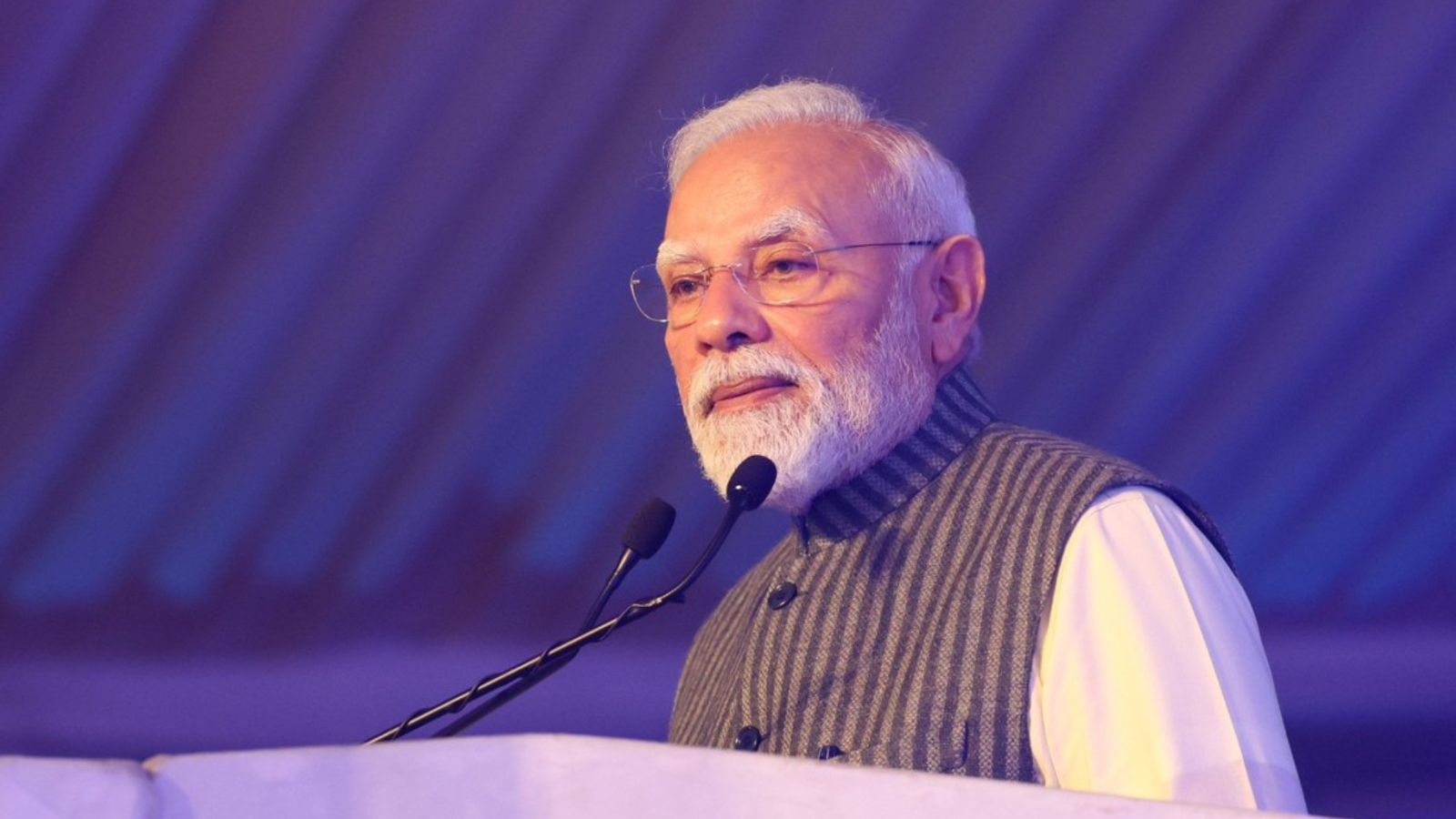
India has formally inaugurated the first Shanghai Cooperation Organisation (SCO) Civilisational Dialogue Forum in New Delhi, marking a deliberate shift from passive heritage showcasing to active cultural statecraft.
The forum, proposed by Prime Minister Narendra Modi at the 2025 SCO summit in Tianjin, produced the Indraprastha Communiqué — a framework that translates civilisational goodwill into concrete mechanisms for manuscript preservation, joint UNESCO nominations, digital repositories, and scholar exchanges.
From Heritage Display to Diplomatic Instrument
For decades, India’s cultural outreach relied on festivals, exhibitions, and bilateral cultural agreements — valuable but often episodic. The SCO forum represents a structural upgrade: it embeds civilisational dialogue within a major regional security and economic bloc, giving it institutional weight and a recurring mandate.
The Communiqué’s emphasis on collaborative UNESCO nominations, for instance, moves beyond symbolic gestures to shared custodianship of heritage sites across the SCO space, which spans from the Baltic to the Pacific.
What is civilisational dialogue?
In plain terms, it is state-sponsored engagement that treats distinct historical cultures not as obstacles to cooperation but as reservoirs of shared values, intellectual traditions, and artistic practices. Instead of negotiating borders or trade tariffs, participants exchange manuscripts, co-curate digital archives, and fund joint archaeological research — building trust through scholarly and creative collaboration that outlasts political cycles.
The Tianjin Proposal and Its Strategic Logic
Modi’s 2025 proposal in Tianjin was not spontaneous. The SCO’s member states — China, Russia, India, Pakistan, Iran, and the Central Asian republics — share millennia of overlapping Buddhist, Islamic, Persian, and Turkic influences. The Silk Road was as much a conduit for ideas and scripts as for silk and spices. By formalising this historical density into a standing forum, India claims intellectual leadership over a narrative that Beijing and Moscow have also sought to shape.
The Indraprastha Communiqué
The Communiqué’s six pillars — collaborative UNESCO nominations, joint cultural projects, manuscript preservation, digital repositories, institutional partnerships, and scholar-artist exchanges — are designed to be self-reinforcing.
A joint nomination for a transnational Silk Road site, for example, requires shared research, coordinated conservation standards, and sustained diplomatic coordination. Digital repositories make fragile manuscripts accessible to global scholars without physical transfer, while institutional partnerships between Indian universities and their SCO counterparts create long-term academic pipelines.
Why digital repositories matter
Many SCO nations hold complementary fragments of the same textual traditions — Sanskrit Buddhist texts in Central Asia, Persian chronicles in India, Turkic epics in Xinjiang. Digitising and linking these collections allows a scholar in Samarkand to study a manuscript held in New Delhi alongside a related folio in Beijing, reconstructing intellectual histories that colonial-era borders fragmented.
Cultural Economy as Development Strategy
Shekhawat explicitly links the forum to Viksit Bharat 2047 — the vision of a developed India by the centenary of independence. Heritage tourism, traditional crafts, performing arts, and cultural entrepreneurship are framed not as nostalgia but as growth sectors. The minister cites employment, innovation, and community development as measurable outcomes.
Young filmmakers, researchers, and cultural entrepreneurs are targeted for exchange programmes, betting that personal networks forged through creative collaboration will prove more resilient than elite diplomatic contacts.
Challenges and Credibility Tests
The forum’s credibility will hinge on three factors. First, whether Pakistan — an SCO member with a contested historical narrative — engages substantively or treats the platform as performative. Second, whether India’s own institutions — the Archaeological Survey of India, the National Mission for Manuscripts, universities — can deliver sustained funding and expertise beyond inaugural enthusiasm.
Third, whether the forum avoids becoming a talk shop by producing tangible outputs: a jointly conserved site, a published critical edition of a shared text, a functional digital portal.
A Model for Multipolar Cultural Governance
If successful, the SCO Civilisational Dialogue Forum could become a template for other regional blocs — ASEAN, the African Union, the Community of Latin American and Caribbean States — to institutionalise cultural cooperation without waiting for consensus on security or trade.
India’s bet is that its civilisational depth, combined with its current diplomatic confidence, allows it to convene this experiment credibly. The world will watch whether the Indraprastha Communiqué becomes a living framework or a ceremonial document — and whether vasudhaiva kutumbakam can migrate from philosophical axiom to geopolitical operating system.
Was this clear?
library_booksSource
Indian Express — Opinion
25 Nov 2026
- funding model
- family-owned commercial media (revenue from advertising and subscriptions)
- owner
- Indian Express (P) Ltd, controlled by the Goenka family; Viveck Goenka is Chairman & Managing Director
Was the source link correct?
topicRelated Articles

Congress MP Asserts Opposition Unity Against Delimitation Bill, Citing Constitutional Defense

Love as Resistance: Dalit-Feminist Anthology Reframes Intimacy as Political Defiance Against Caste

Rajasthan SOG Busts Interstate Racket Selling Forged Medical Degrees; Class 11 Dropout Posed as Doctor at Safdarjung

Four Killed in Rohtak Hotel Shooting; Police Investigate Alleged Honey-Trap Ambush

Delimitation Bill Framed as Trojan Horse to Reshape India's Electoral Map

Vijay's TVK Labels Stalin 'Savarkar 2.0' in Sharp Delimitation Offensive

Rohit Sharma Reveals Reluctance Behind Mumbai Indians Captaincy Return
