
India's 2030 Malaria Elimination Target Clashes with Ground Realities in Tribal Andhra Pradesh
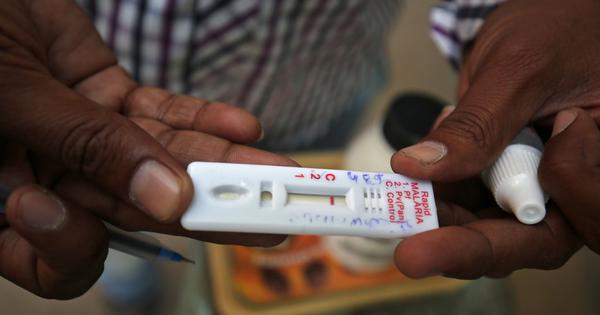
A 14-year-old girl's week-long ordeal across broken roads and understocked hospitals exposes the chasm between New Delhi's malaria elimination rhetoric and the daily reality in Andhra Pradesh's Eastern Ghats. In Alluri Sitharamaraju district, where tribal communities comprise over 80% of the population, systemic drug shortages, absent prevention measures, and geographic isolation have turned a treatable disease into a recurring crisis that official statistics barely capture.
The Human Cost
When Vaishnavi developed a severe headache after a lightning strike near her hamlet of Peddaporlu, the nearest Primary Health Centre dismissed it as unrelated. Days later, with fever and plummeting platelets, her family faced a 45-kilometre journey to the district hospital in Paderu — a trip repeated three times on a two-wheeler over washed-out mud roads.
The hospital lacked inpatient facilities, forcing the critically ill girl to travel back and forth for tests. Only after 270 kilometres of travel and Rs 1,000 in fuel costs — a staggering sum for a family earning Rs 7,500 monthly — did a private clinic correctly diagnose falciparum malaria and begin effective treatment.
Why distance kills: In this terrain, "no road means no medical services." The physical infrastructure gap transforms a curable infection into a logistical nightmare that bankrupts families and delays care until it is nearly too late.
Systemic Failures
The district recorded 3,513 malaria cases in 2025 — nearly half the state's total despite holding less than 2% of its population. The dominant parasite, Plasmodium falciparum, is resistant to chloroquine, yet government guidelines mandate Artemisinin-based Combination Therapies (ACT) as first-line treatment. Health workers report receiving less than 20% of requested ACT doses.
The science simply put: Plasmodium falciparum has evolved to survive chloroquine. ACT combines fast-acting artemisinin with a partner drug to clear parasites and prevent resistance. Prescribing chloroquine for falciparum malaria is clinically equivalent to giving a sugar pill — the parasite survives, the patient deteriorates, and trust in the health system erodes.
Prevention Vacuum
Vector control, the backbone of malaria elimination, has collapsed. Residents report no insecticide-treated bed net distribution or indoor residual spraying since 2019. Technical standards require annual net retreatment and spraying coverage of at least 80% of households. "I have never seen indoor spraying," said Sanjiv Rao, a Kondh Adivasi from the hills.
Without these barriers, the female Anopheles mosquito breeds unchecked in the forested terrain that officials cite as the cause of high incidence.
Data vs. Reality
In February, the state government claimed a 71.57% reduction in malaria cases, positioning Andhra Pradesh on track for the 2030 elimination goal. Yet in September, a seven-year-old girl died and over 50 villagers were hospitalized after receiving chloroquine as a preventive measure — twelve tested positive for malaria. Many deaths go unrecorded, attributed locally to "chali-jwaram" (chills-fever).
The discrepancy suggests surveillance captures only those who reach facilities, missing the majority who cannot.
Trust Deficit
When a four-year-old girl in a seven-household village fell ill, her parents chose a guru-guniya (faith healer) over a distant health centre. She died after five days. "Very few Adivasis believe their disease can actually be treated by going to a doctor," said health volunteer Chandrasekar Rao.
Repeated therapeutic failures — caused by wrong drugs, not wrong diagnoses — have taught communities that the formal system offers no reliable cure. The guru-guniya offers immediate presence and cultural resonance; the hospital offers absent doctors, missing medicines, and ruinous travel costs.
The path to elimination runs not through targets set in capital cities, but through the mud roads of Peddaporlu. Until ACT stocks match guidelines, spray teams reach every hamlet, and health centres function as more than referral outposts, the 2030 goal will remain a statistical mirage — while the real burden of malaria continues to fall on those least equipped to bear it.
Was this clear?
library_booksSource
Scroll.in
24 Nov 2026
- funding model
- independent commercial media (revenue from advertising, reader subscriptions and grants)
- owner
- Scroll.in (Scroll Media), an independent digital newsroom founded by Samir Patil
Was the source link correct?
topicRelated Articles

H5N1 Avian Influenza Spreads to Coimbatore Wild Birds as Tamil Nadu Intensifies Poultry Culling in Cuddalore
The Neuroscience of Letting Go: How Cultivating Good Wishes Rewires the Brain for Resilience

Congress MP Asserts Opposition Unity Against Delimitation Bill, Citing Constitutional Defense

Love as Resistance: Dalit-Feminist Anthology Reframes Intimacy as Political Defiance Against Caste

Rajasthan SOG Busts Interstate Racket Selling Forged Medical Degrees; Class 11 Dropout Posed as Doctor at Safdarjung

Four Killed in Rohtak Hotel Shooting; Police Investigate Alleged Honey-Trap Ambush

Delimitation Bill Framed as Trojan Horse to Reshape India's Electoral Map
