
Infant Denied Birth Certificate After Father's Name Purged From Voter Rolls in West Bengal
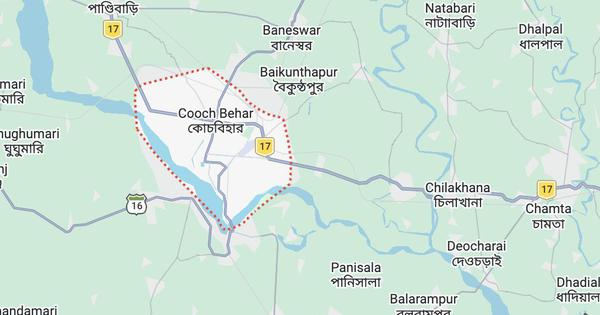
An infant girl in West Bengal's Cooch Behar district has been denied a birth certificate because her father's name was removed from the electoral rolls during the Election Commission's Special Intensive Revision, exposing how administrative decisions on voter eligibility are cascading into the denial of basic identity documents and welfare rights.
The Immediate Case
On September 9, Amina Khatun gave birth to a daughter at Dinhata Sub-Divisional Hospital in Khatamari village. When she and her husband, Abdul Habib, sought a birth certificate, local authorities demanded residential verification from the panchayat head or the local MLA. The office of Dinhata MLA Ajoy Roy refused, stating that Habib's name had been deleted from the electoral rolls and labelling him a Bangladeshi citizen who must first register under the National Register of Citizens.
Habib, who says his family has lived in the village for generations and that his grandfather built their home, has produced all available documents. Yet his name — along with those of his three sisters — was struck off during the revision. The names of his parents, wife, and another sister remain on the rolls.
The Special Intensive Revision
The Special Intensive Revision (SIR) is an Election Commission exercise launched in June 2025 to scrutinise voter lists for what it terms "logical discrepancies." These include mismatches in the spelling of parents' names, unreasonably low age gaps between parents and children, or households with more than six children. The Commission summoned Habib and his sisters for hearings based on such criteria.
In plain terms, the SIR is a targeted audit of the electoral roll designed to catch anomalies that might indicate fraudulent entries. But the criteria — such as family size or spelling variations — can ensnare genuine citizens, especially in communities with low literacy or inconsistent record-keeping.
Logical Discrepancies and the Burden of Proof
The concept of a "logical discrepancy" shifts the burden of proof onto the voter. A household with seven children, a common occurrence in parts of rural India, becomes a red flag. A spelling mismatch between a father's name on his child's record and his own voter card — often a result of transliteration or clerical error — triggers a summons. The voter must then appear before officials and prove their legitimacy.
For Habib, the discrepancy remains unexplained in the public record. His appeal is pending before an appellate tribunal, one of several bodies established after a Supreme Court order on March 10 mandated that panels headed by former High Court chief justices and judges hear exclusion appeals. The tribunals began hearings in April.
Judicial Oversight and the Tribunal System
The Supreme Court upheld the legality of the SIR in May but drew a critical line: the exercise does not empower the Election Commission to determine citizenship. That distinction, however, has not prevented downstream consequences. In Bharatiya Janata Party-ruled states, the SIR has been cited to deny ration cards to those removed from the rolls. In some instances, police have refused passport renewals on the same grounds.
The tribunal system was designed as a safeguard — a judicial check on administrative deletion. But with appeals pending and the revision ongoing, the backlog leaves individuals like Habib in limbo, unable to access documents that require proof of residence or identity.
Wider Consequences
The Cooch Behar case illustrates a growing pattern: electoral roll purification is being treated as a proxy for citizenship verification. Since October 2, protests have erupted across the country against Chief Election Commissioner Gyanesh Kumar, driven by concerns over the Commission's functioning and alleged irregularities in the revision process.
Demonstrators argue that the SIR, as implemented, risks disenfranchising legitimate voters and weaponising administrative procedure against marginalised communities.
For the infant in Khatamari, the stakes are immediate. Without a birth certificate, she cannot be enrolled in school, access public health schemes, or eventually prove her own citizenship. Her father's absence from a voter list has become a barrier to her legal existence.
As the tribunals work through appeals and the Supreme Court's boundaries are tested in practice, the question remains whether the machinery of electoral integrity can operate without severing the link between a citizen and the state's most basic recognition of their life.
Was this clear?
library_booksSource
Scroll.in
25 Nov 2026
- funding model
- independent commercial media (revenue from advertising, reader subscriptions and grants)
- owner
- Scroll.in (Scroll Media), an independent digital newsroom founded by Samir Patil
Was the source link correct?
topicRelated Articles

Congress MP Asserts Opposition Unity Against Delimitation Bill, Citing Constitutional Defense

Love as Resistance: Dalit-Feminist Anthology Reframes Intimacy as Political Defiance Against Caste

Rajasthan SOG Busts Interstate Racket Selling Forged Medical Degrees; Class 11 Dropout Posed as Doctor at Safdarjung

Four Killed in Rohtak Hotel Shooting; Police Investigate Alleged Honey-Trap Ambush

Delimitation Bill Framed as Trojan Horse to Reshape India's Electoral Map

Vijay's TVK Labels Stalin 'Savarkar 2.0' in Sharp Delimitation Offensive

Rohit Sharma Reveals Reluctance Behind Mumbai Indians Captaincy Return
