
Jharkhand's Foundation Day Delay Risks Erasing Birsa Munda's Legacy of Tribal Self-Rule
Opinion. This story was written from a named writer’s column in Indian Express — Opinion of 23 November 2026. We report what was argued, not our own view — the publisher’s ownership is shown below.
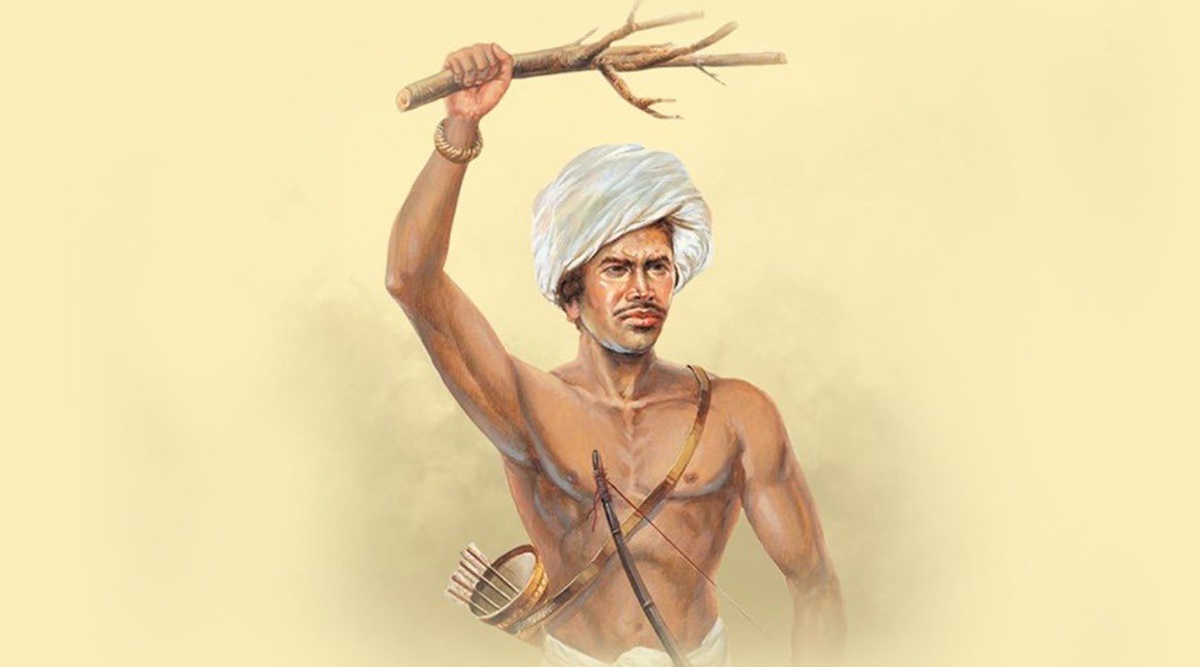
The Jharkhand government's decision to postpone the state's foundation day celebrations from November 15 to November 28 — citing a clash with Chhath Puja — has ignited a debate that cuts far deeper than administrative scheduling. Critics argue that moving the celebration untethers the state's political identity from its historical roots, reducing a hard-won assertion of self-rule to a movable bureaucratic event.
The Historical Anchor
The creation of Jharkhand on November 15, 2000, carved out of southern Bihar, was the culmination of a decades-long movement demanding a separate administrative unit for the region's tribal majority. His rebellion, known as the Ulgulan, was not merely an anti-colonial uprising; it was a comprehensive demand for Abua Disom, Abua Raj — "our land, our rule."
His vision went beyond driving out the British; he wanted tribal communities to control their own territory, resources, and governance systems. The phrase "Abua Disom, Abua Raj" encapsulates this demand for sovereign self-rule on ancestral lands.
By anchoring the new state's birthday to Birsa's, the founders signaled that Jharkhand was more than a redrawn map — it was a political acknowledgment of Adivasi agency. The state's foundation day became an annual reaffirmation of that promise.
The Gap Between Statehood and Self-Rule
Twenty-six years later, the gap between formal statehood and substantive self-rule remains stark. The Chota Nagpur Tenancy (CNT) Act and the Santhal Parganas Tenancy Act were enacted to shield Adivasi land from alienation. Yet mining projects, legal loopholes, and weak enforcement have fueled persistent land conflicts. The protective framework exists on paper, but its erosion in practice has left communities vulnerable to displacement.
Explain it simply: Special laws were passed to prevent non-tribals from buying tribal land. However, mining companies and other interests have found ways around these laws, and the government often fails to enforce them strictly. As a result, tribal people continue to lose their land despite legal protections.
The disconnect extends to language and knowledge systems. Jharkhand has established a dedicated tribal languages department and programs like PALASH (Promotion of Adivasi Languages and Scripts). But observers question whether these languages are embedded in the daily functioning of schools, courts, and government offices — or confined to ceremonial occasions. True self-rule, the argument goes, requires that Adivasi epistemologies shape policy, not just cultural festivals.
Administrative Convenience vs. Historical Memory
The government maintains that the date shift was a routine administrative adjustment to accommodate Chhath Puja, a major festival in the region. No political motive has been alleged. Yet for communities whose histories have been marginalized in mainstream narratives, the calendar is not neutral. Moving the commemoration severs the symbolic link between the state's legal birth and the revolutionary vision that demanded it.
Explain it simply: Chhath Puja is an important Hindu festival dedicated to the sun god, widely celebrated in Bihar and Jharkhand. The government says it moved the statehood celebration to avoid a scheduling conflict. But critics say this treats a historically significant date as just another appointment that can be rescheduled, ignoring its deep emotional and political resonance for tribal people.
For Adivasis, the foundation day is not merely a holiday; it is a moment of collective remembrance and reaffirmation of identity. When that date is moved, it feels like history itself is being rescheduled to suit majority convenience.
The Unfinished Project of Abua Sarkar
The concept of Abua Sarkar — "our government" — remains a benchmark against which the state's performance is measured. It implies a political space where control over land, the language of administration, the knowledge systems guiding leadership, and the voices prioritized in decision-making all reflect Adivasi aspirations. The postponement decision, however well-intentioned, raises a pointed question: whose government is this, and whose calendar does it follow?
Explain it simply: "Abua Sarkar" means a government that truly belongs to and is run by tribal people — where they decide how land is used, what languages are spoken in offices, and whose knowledge counts in making laws. The delay in celebrating the state's birthday on its historically significant date suggests the government may still be operating on someone else's schedule.
A Socio-Historical Anchor That Must Hold
Birsa Munda's legacy is not a museum piece; it is a living framework for evaluating the present. The Ulgulan was a demand for agency — the capacity to shape one's own future within a political and administrative framework rooted in Adivasi worldviews. A separate state was the institutional vehicle for that agency.
When the commemoration of that state's birth is detached from the date that honors its inspiration, the signal sent is that the vehicle can run on any schedule, regardless of the driver's intent.
The date matters because it is a socio-historical anchor. It contextualizes the ongoing struggle for land, language, and decision-making power. Jharkhand's distinctive meaning derives from Birsa's Ulgulan; separating the two risks turning a rebellion's hard-won institutional recognition into a hollow ritual.
For a community that has long resided at the margins of national narratives, the calendar is one of the few places where history is officially inscribed. Moving the date does not just change a holiday — it rewrites the terms of remembrance.
Was this clear?
library_booksSource
Indian Express — Opinion
23 Nov 2026
- funding model
- family-owned commercial media (revenue from advertising and subscriptions)
- owner
- Indian Express (P) Ltd, controlled by the Goenka family; Viveck Goenka is Chairman & Managing Director
Was the source link correct?
topicRelated Articles

Congress MP Asserts Opposition Unity Against Delimitation Bill, Citing Constitutional Defense

Love as Resistance: Dalit-Feminist Anthology Reframes Intimacy as Political Defiance Against Caste

Rajasthan SOG Busts Interstate Racket Selling Forged Medical Degrees; Class 11 Dropout Posed as Doctor at Safdarjung

Four Killed in Rohtak Hotel Shooting; Police Investigate Alleged Honey-Trap Ambush

Delimitation Bill Framed as Trojan Horse to Reshape India's Electoral Map

Vijay's TVK Labels Stalin 'Savarkar 2.0' in Sharp Delimitation Offensive

Rohit Sharma Reveals Reluctance Behind Mumbai Indians Captaincy Return
