
Kolkata Police Seal Under-Construction TMC Headquarters Over Missing Clearance, Sparking Political Row
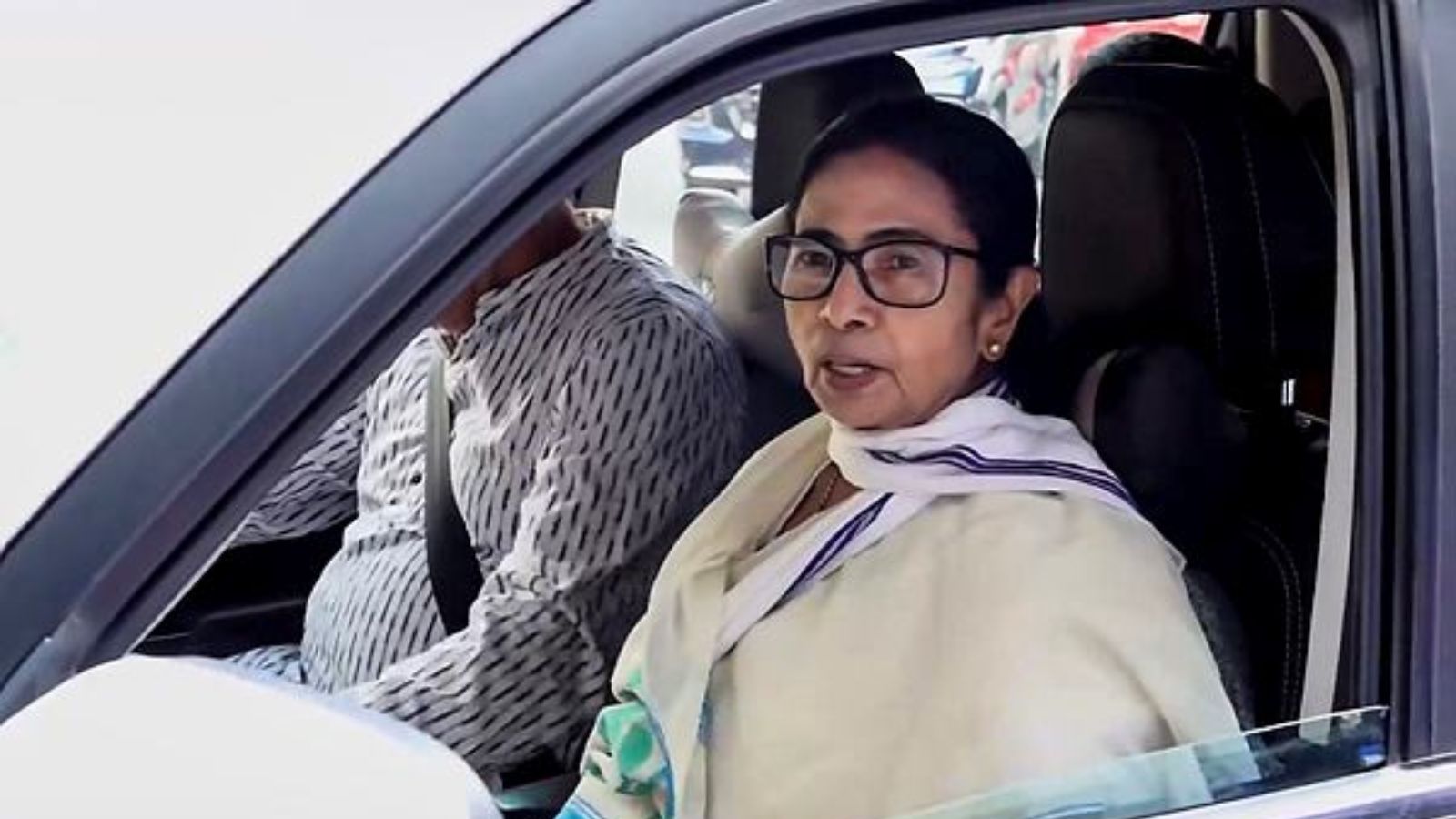
Kolkata police sealed the under-construction Trinamool Congress (TMC) headquarters in Topsia on Friday evening, citing the absence of a mandatory municipal clearance certificate. The action barred all political gatherings at the site and restricted entry to construction personnel only, triggering an immediate confrontation between the ruling party and the opposition Bharatiya Janata Party (BJP).
Police Action and Administrative Rationale
Officers from the Anandapur police station moved in late Friday after learning that the TMC’s Mahila wing and IT cell had been mobilizing party workers to gather at the unfinished building for meetings.
According to police sources, the building remains under renovation, and under municipal law, a clearance certificate — often called an occupancy or completion certificate — is legally required before any structure can be occupied or used for public assembly. Without this document, the administration argued it was compelled to seal the premises to prevent unauthorized use and ensure public safety.
Explain it simply: A municipal clearance certificate is an official sign-off from the local civic body confirming that a building has been constructed according to approved plans and safety norms. Until this certificate is issued, the building cannot legally host events or be occupied, even by its owners.
By Saturday morning, security was significantly tightened. Barricades blocked the access road from the EM Bypass, and police demanded identity proof from anyone attempting to enter. The TMC had temporarily shifted its daily operations to a new building elsewhere in the metropolitan area, but the Topsia site — known as the old Trinamool Bhavan — retains symbolic and organizational importance.
TMC Leadership Protests Legality
Senior TMC leaders, including South Kolkata district president Debasish Kumar, Baiswanor Chattopadhyay, and North Kolkata district president Kunal Ghosh, rushed to the site Friday night. In a heated exchange with police, Chattopadhyay questioned the legal basis for the barricades. "Under what law did the police put up the barricades?" he asked. "If you put barricades there so no one can enter, that is completely illegal. Under what law are you doing this, at whose word, on whose instructions?"
Chattopadhyay insisted no political program was underway, only supervision of ongoing construction work by party workers. He warned against what he termed a "police state" dynamic, alleging a pattern of the administration targeting TMC offices. "One after another, you are occupying our party offices," he said.
BJP's Counter
BJP spokesperson Debjit Sarkar dismissed the TMC’s outrage, framing the sealing as a routine administrative decision. "The matter is an administrative matter; the administration has taken a decision. Construction work has not been stopped," he told a news channel. Sarkar then directed a pointed barb at Chief Minister Mamata Banerjee, a lawyer by profession: "She herself is an advocate, their supreme leader; she is a big advocate. Go to court, go to court and figure it out."
Sarkar added that the TMC had engaged in "illegal acts one after another" during its 15 years in power, implying the sealing was a consequence of the party’s own disregard for regulations.
Internal TMC Faction Distances Itself
The episode also exposed fault lines within the TMC. Akhruzzaman, an MLA aligned with the Ritabrata Banerjee faction — a breakaway group critical of the current leadership — distanced his camp from the controversy. "What do they even have that people will be vindictive against them? We have not even the slightest connection with this. This is an administrative matter, their matter," he said.
His supporters have occasionally clashed with the mainstream leadership headed by Mamata Banerjee.
Implications for State Political Dynamics
The sealing of a major political party’s headquarters — even an under-construction one — is a rare escalation in West Bengal’s already charged political environment. It underscores the increasing use of municipal and police powers as instruments of political contestation.
While the administration maintains the action was purely procedural, the TMC’s allegations of selective targeting and the BJP’s mocking invitation to seek judicial remedy suggest the incident will fuel narrative warfare ahead of upcoming electoral cycles.
For now, the Trinamool Bhavan in Topsia remains locked behind police barricades, a physical manifestation of the deepening institutional mistrust between the state’s ruling establishment and the opposition, as well as within the ruling party itself.
Was this clear?
library_booksSource
The Indian Express
28 Nov 2026
- funding model
- family-owned commercial media (revenue from advertising and subscriptions)
- owner
- Indian Express (P) Ltd, controlled by the Goenka family; Viveck Goenka is Chairman & Managing Director
Was the source link correct?
topicRelated Articles

Congress MP Asserts Opposition Unity Against Delimitation Bill, Citing Constitutional Defense

Love as Resistance: Dalit-Feminist Anthology Reframes Intimacy as Political Defiance Against Caste

Rajasthan SOG Busts Interstate Racket Selling Forged Medical Degrees; Class 11 Dropout Posed as Doctor at Safdarjung

Four Killed in Rohtak Hotel Shooting; Police Investigate Alleged Honey-Trap Ambush

Delimitation Bill Framed as Trojan Horse to Reshape India's Electoral Map

Vijay's TVK Labels Stalin 'Savarkar 2.0' in Sharp Delimitation Offensive

Rohit Sharma Reveals Reluctance Behind Mumbai Indians Captaincy Return
