
Legal Expert Urges Robust Framework to Tackle India's Lead Poisoning Crisis
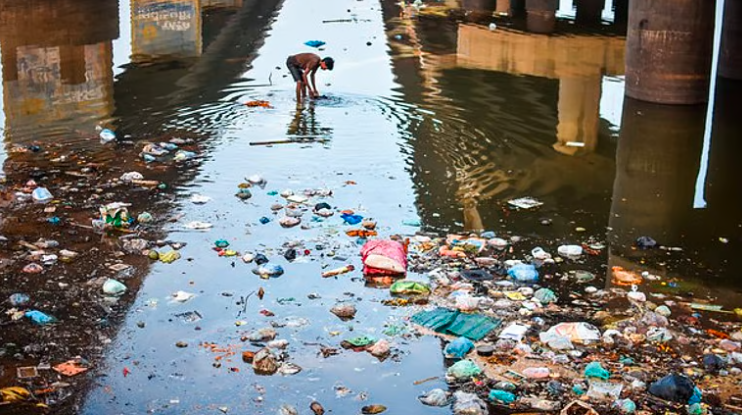
A prominent legal scholar has called for a comprehensive legislative response to lead poisoning, arguing that India's current regulatory patchwork is insufficient to address the scale of exposure threatening millions. Writing in The New Indian Express, Aditya Prasanna Bhattacharya, Lead at Vidhi Centre for Legal Policy in Bengaluru, contends that only a dedicated, enforceable legal framework can coordinate the multi-sectoral action required to curb a silent public health emergency.
Lead poisoning occurs when the toxic heavy metal accumulates in the body, typically through contaminated water, paint, soil, or informal recycling of batteries. Even low levels of exposure can cause irreversible neurological damage, particularly in children, impairing cognitive development and reducing lifetime earning potential.
In adults, it contributes to cardiovascular disease and kidney damage. The World Health Organization identifies lead as one of ten chemicals of major public health concern.
The Opinion Piece
Bhattacharya's opinion piece, published on November 9, 2024, does not merely highlight the problem; it diagnoses a structural failure in governance. He argues that existing rules — scattered across environmental protection laws, factory regulations, and consumer safety standards — lack the teeth and coordination to address the full lifecycle of lead use.
From informal lead-acid battery recycling to adulterated spices and cosmetic products, the pathways of exposure are diverse and poorly monitored. A unified statute, he suggests, would establish clear liability, mandate surveillance, and empower agencies to act across supply chains.
The Author's Credentials
The argument carries weight because of the author's background. Bhattacharya is a Senior Resident Fellow who has advised central ministries on drafting legislation ranging from tribunal reforms to nuclear energy regulation. He holds an LLM with distinction from the University of Cambridge, where he won faculty prizes for Advanced Public Law and Comparative Legal History.
Currently a part-time PhD candidate at Cambridge studying universal adult franchise, he brings a rigorous legal lens to a problem often treated as purely technical. His affiliation with Vidhi, an independent think tank focused on legal reform, positions him at the intersection of academic research and practical policy design.
The Lead Poisoning Challenge in India
India bears a disproportionate share of the global lead burden. CDC recommends intervention. Sources are pervasive: informal recycling of used lead-acid batteries, which supplies much of the country's lead demand, often operates in residential areas with no pollution controls. Lead-based paints remain widely sold despite voluntary phase-out pledges.
Adulteration of spices like turmeric with lead chromate to enhance color has been documented in multiple states. Each pathway reflects a regulatory gap.
The Case for Legal Reform
Bhattacharya's prescription goes beyond tightening standards. He advocates for a framework law that defines lead as a hazardous substance across its entire lifecycle — mining, manufacturing, use, recycling, and disposal.
Such a law would create a central authority with the mandate to set exposure limits, require biomonitoring programs, and enforce extended producer responsibility for lead-containing products.
Crucially, it would integrate the currently siloed efforts of the Ministry of Environment, Forest and Climate Change, the Ministry of Health, the Bureau of Indian Standards, and state pollution control boards. Without legislative backing, coordination remains voluntary and accountability diffuse.
Implications for Public Health Policy
The call arrives as India revisits its public health architecture. The National Health Mission has expanded screening for non-communicable diseases, but heavy metal surveillance remains absent from routine primary care.
A legal mandate could institutionalize blood lead level testing in high-risk districts, trigger mandatory remediation of contaminated sites, and finance the transition of informal recyclers to formal, safe facilities.
It would also align India with the Minamata Convention model — though lead is not covered by that treaty, the principle of lifecycle management for neurotoxic metals is established internationally. For a country aiming to eliminate preventable child morbidity, the cost of inaction, measured in lost IQ points and future productivity, far exceeds the investment in a robust legal regime.
Was this clear?
library_booksSource
Vidhi Centre for Legal Policy
2 Nov 2026
- jurisdiction
- India
- jurisdiction
- India
- jurisdiction
- India
- jurisdiction
- India
- jurisdiction
- India
- jurisdiction
- India
- jurisdiction
- India
- jurisdiction
- India
- jurisdiction
- India
- jurisdiction
- India
- jurisdiction
- India
- jurisdiction
- India
- jurisdiction
- India
- jurisdiction
- India
- jurisdiction
- India
- jurisdiction
- India
- jurisdiction
- India
- jurisdiction
- India
- jurisdiction
- India
- jurisdiction
- India
- jurisdiction
- India
- jurisdiction
- India
- jurisdiction
- India
- jurisdiction
- India
- jurisdiction
- India
- jurisdiction
- India
Was the source link correct?
topicRelated Articles

H5N1 Avian Influenza Spreads to Coimbatore Wild Birds as Tamil Nadu Intensifies Poultry Culling in Cuddalore
The Neuroscience of Letting Go: How Cultivating Good Wishes Rewires the Brain for Resilience
Global Experts Publish Updated Consensus Statement on ADHD, Affirming Strong Genetic Basis and Clarifying Environmental Risks

Congress MP Asserts Opposition Unity Against Delimitation Bill, Citing Constitutional Defense

Love as Resistance: Dalit-Feminist Anthology Reframes Intimacy as Political Defiance Against Caste

Rajasthan SOG Busts Interstate Racket Selling Forged Medical Degrees; Class 11 Dropout Posed as Doctor at Safdarjung

Four Killed in Rohtak Hotel Shooting; Police Investigate Alleged Honey-Trap Ambush
