
Legal Scholar Examines Judicial Accountability in New Times of India Opinion
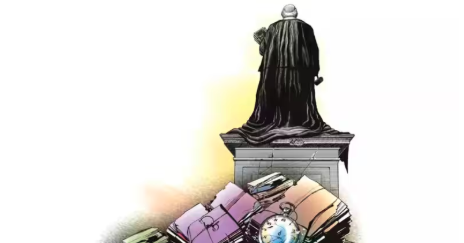
Aditya Prasanna Bhattacharya, Lead at Vidhi Centre for Legal Policy's Bengal office, has published an opinion piece in the Times of India titled "When Judges Turn Their Back," raising questions about judicial conduct and institutional accountability.
The piece, published on April 13, 2024, draws on Bhattacharya's extensive experience advising central government ministries on legislative drafting across sectors including tribunal reforms, nuclear energy regulation, and the repeal of obsolete laws.
Author Background and Institutional Context
Bhattacharya brings a distinctive combination of practical policy experience and academic rigor to the analysis. As a former Senior Resident Fellow at Vidhi's Research Director's Office, he worked directly on legislative frameworks that shape India's regulatory architecture.
His current doctoral research at the University of Cambridge, supported by the Wright Rogers and Lucy Cavendish Law Enrichment scholarships, focuses on universal adult franchise in India — a subject that sits at the intersection of constitutional law, democratic theory, and institutional design.
Vidhi Centre for Legal Policy, where Bhattacharya leads the Bengal team, is an independent think tank dedicated to improving laws and governance structures through research and engagement with government institutions. The organization's work spans legislative drafting, judicial reform, and regulatory policy, positioning its fellows at the frontlines of India's legal reform debates.
Thematic Significance
The title "When Judges Turn Their Back" suggests an examination of moments when judicial institutions may be perceived as declining to engage with certain constitutional questions, marginalized communities, or systemic challenges. In the Indian context, such discussions often center on issues of access to justice, the scope of judicial review, and the balance between judicial independence and accountability.
Bhattacharya's prior contributions to national dailies including the Times of India and Hindustan Times have addressed public law and policy questions ranging from tribunal restructuring to the regulation of emerging technologies.
His academic credentials — including Faculty Prizes for Advanced Public Law and Comparative Legal History at Cambridge, and the Emmeline Pankhurst Prize for contributions to Lucy Cavendish College — underscore a scholarly approach grounded in both Indian constitutional practice and comparative legal traditions.
Broader Implications for Legal Discourse
Opinion pieces by practitioners who straddle government advisory roles, think tank research, and academic scholarship serve a vital function in India's public sphere. They translate complex institutional dynamics into accessible analysis, informing both policy debates and citizen understanding of the legal system's evolving challenges.
As India's judiciary navigates questions of case backlogs, technological integration, and expanding constitutional jurisprudence, contributions from voices like Bhattacharya's help frame the terms of reform discussions.
The publication in a major national daily ensures reach beyond academic circles, contributing to a public conversation about the judiciary's role in a constitutional democracy — a conversation that remains essential to the health of India's democratic institutions.
Was this clear?
library_booksSource
Vidhi Centre for Legal Policy
2 Nov 2026
- jurisdiction
- India
- jurisdiction
- India
- jurisdiction
- India
- jurisdiction
- India
- jurisdiction
- India
- jurisdiction
- India
- jurisdiction
- India
- jurisdiction
- India
- jurisdiction
- India
- jurisdiction
- India
- jurisdiction
- India
- jurisdiction
- India
- jurisdiction
- India
- jurisdiction
- India
- jurisdiction
- India
- jurisdiction
- India
- jurisdiction
- India
- jurisdiction
- India
- jurisdiction
- India
- jurisdiction
- India
- jurisdiction
- India
- jurisdiction
- India
- jurisdiction
- India
- jurisdiction
- India
- jurisdiction
- India
- jurisdiction
- India
Was the source link correct?
topicRelated Articles

Congress MP Asserts Opposition Unity Against Delimitation Bill, Citing Constitutional Defense

Love as Resistance: Dalit-Feminist Anthology Reframes Intimacy as Political Defiance Against Caste

Rajasthan SOG Busts Interstate Racket Selling Forged Medical Degrees; Class 11 Dropout Posed as Doctor at Safdarjung

Four Killed in Rohtak Hotel Shooting; Police Investigate Alleged Honey-Trap Ambush

Delimitation Bill Framed as Trojan Horse to Reshape India's Electoral Map

Vijay's TVK Labels Stalin 'Savarkar 2.0' in Sharp Delimitation Offensive

Rohit Sharma Reveals Reluctance Behind Mumbai Indians Captaincy Return
