
Mallorca Fog Scene Wins Royal Meteorological Society's Weather Photographer of the Year 2026
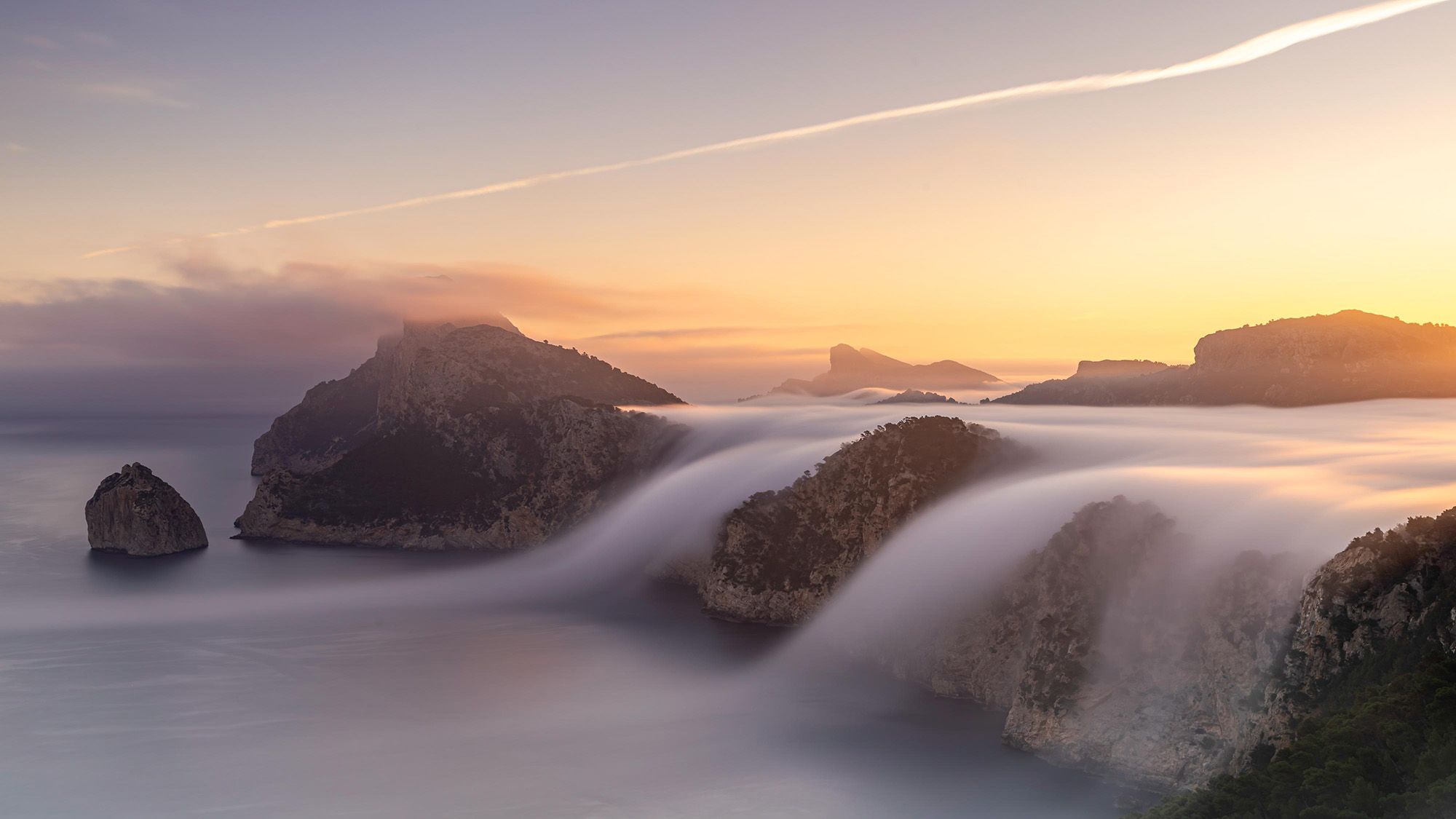
A photograph capturing a sea of fog spilling over the rugged cliffs of Mallorca at dawn has been crowned the overall winner of the Royal Meteorological Society's Weather Photographer of the Year 2026 competition. The image, titled "Mares de Niebla (Seas of Fog)," was taken by Spanish photographer Francisco Bailón Rodríguez from the Albercutz Watchtower looking toward the Formentor Peninsula.
The competition attracted more than 5,500 entries from photographers around the world, celebrating the fleeting moments when weather transforms ordinary landscapes into extraordinary scenes.
The Winning Image
Rodríguez's winning photograph documents a specific meteorological phenomenon: radiation fog formed after several days of high pressure and humid nights. Under clear, calm conditions, the ground loses heat rapidly through radiation, cooling the air directly above it to its dew point.
When the air temperature drops to this threshold, water vapor condenses into tiny droplets, creating a dense layer of fog that hugs the terrain. In this case, the fog filled the valleys and spilled dramatically over the coastal cliffs, illuminated by the first light of dawn.
Put simply: High pressure brings clear skies and calm winds. At night, the ground cools down, chilling the air touching it. That cold air can't hold as much moisture, so the water vapor turns into fog. The fog acts like water, flowing downhill and over the cliffs, creating the "waterfall" effect seen in the photo.
Main Category Runners-Up Showcase Dramatic Weather
Second place in the main category went to Weilu Chen for "Sunrise and Morning Glow," capturing golden light bathing the Hong Kong-Zhuhai-Macao Bridge. The 55-kilometer crossing spans the Pearl River estuary in southern China.
The image highlights how low-angle sunlight interacts with atmospheric particles and humidity to produce intense color saturation — a phenomenon familiar to meteorologists as Mie scattering, where larger particles like water droplets scatter all wavelengths of light more evenly, creating vivid whites and golds.
Third place was awarded to Laura Hedien for "A Supercell in the Sandhills of Nebraska." The photograph shows a brilliant lightning bolt illuminating an arcus cloud — a low, horizontal cloud formation with a distinct shelf-like shape that marks the leading edge of a thunderstorm's outflow boundary.
Supercells are rotating thunderstorms characterized by a deep, persistent rotating updraft called a mesocyclone. They are the most severe class of thunderstorm and can produce large hail, damaging winds, and tornadoes. Hedien noted in a statement that the storm provided both the supercell structure and nighttime lightning, a combination that reveals the storm's internal dynamics.
Put simply: A supercell is a powerful, rotating thunderstorm. The shelf cloud (arcus cloud) forms at its front edge where cold air rushes out and pushes under warm, moist air. Lightning inside lights up the cloud structure, showing its shape.
Public Vote and Mobile Categories Highlight Global Perspectives
The public vote category drew attention to atmospheric beauty across continents. First place went to Mahmudul Hasan for "Misty Sunrise over the Long Coc Tea Hills" in Vietnam. The image shows rolling tea plantations emerging through layers of valley fog — a classic example of orographic fog formation, where moist air is lifted over terrain, cools adiabatically, and condenses.
Second place in the public vote went to Dan Martland's "Triple Strike NYC," captured from Bayonne, New Jersey. The photograph freezes three distinct lightning channels striking above New York City simultaneously, illustrating the branching nature of negative cloud-to-ground lightning as it seeks the path of least resistance through the atmosphere.
In the mobile category — demonstrating that compelling weather photography is accessible without specialized equipment — Aung Soe Min won with "A Winter Morning," showing Myanmar's Kuthodaw Pagoda emerging through morning mist as sunlight filters through trees. Anthony Bird took second place with "A Rainbow over Loch Duck" in the Scottish Highlands, capturing a primary rainbow formed by sunlight refracting, reflecting, and dispersing within raindrops at the antisolar point.
Put simply: Rainbows happen when sunlight enters a raindrop, bends (refracts), bounces off the back (reflects), and bends again as it exits. Different colors bend by different amounts, spreading into the familiar arc. You see it opposite the sun.
Climate Award Documents Environmental Extremes
The competition's climate award category underscores the increasing visibility of extreme weather events. First place went to Erfan Samanfar for "Fire," a haunting 2025 image of a farmer attempting to protect farmland from a raging wildfire in Marvdasht, Iran.
The photograph documents the human dimension of fire weather — the combination of high temperatures, low humidity, and strong winds that drives rapid fire spread. Second place was awarded to Andres Miraglia for "Castles in the Wind," capturing a tabular iceberg at sunset in Antarctica's Paradise Harbor.
The image speaks to polar processes: iceberg calving from glaciers and ice shelves, driven by warming ocean currents and atmospheric temperatures, contributing to global sea-level rise.
Put simply: Fire weather is when hot, dry, windy conditions make fires start easily and spread fast. In Antarctica, warming waters melt ice shelves from below, causing huge icebergs to break off — a visible sign of climate change.
A Platform for Scientific Communication
The Royal Meteorological Society's competition serves a dual purpose: celebrating photographic excellence and fostering public engagement with atmospheric science. Each winning image is accompanied by meteorological context, transforming aesthetic appreciation into scientific literacy.
With over 5,500 entries, the 2026 competition demonstrates growing global interest in documenting and understanding the weather phenomena that shape our planet — from the gentle spill of valley fog to the violent energy of supercells and wildfires.
Was this clear?
library_booksSource
Live Science
20 Nov 2026
- funding model
- commercial media
- owner
- Future plc
Was the source link correct?
topicRelated Articles

Nifty Gateway's Summer 2020 Drops Signal Maturation of Blockchain-Based Art Market

Gemini Engineers Dynamic 3D NFT Badges for Employee Onboarding Using Three.js

Gemini Security Analyst Reveals How AiTM Phishing Bypasses MFA and How Simple Fixes Stop Attackers

Gemini's Hyperdrive Architecture Unifies Blockchain Wallet Infrastructure for Speed and Security

Gemini Unveils Low-Latency WebSocket API to Court Institutional Crypto Traders

Cryptocurrency Wallets Decoded: The Cryptographic Infrastructure Securing Digital Assets

Congress MP Asserts Opposition Unity Against Delimitation Bill, Citing Constitutional Defense
