
Navi Pillay Awarded 2026 Nobel Peace Prize for Lifetime Defending Human Rights and International Law
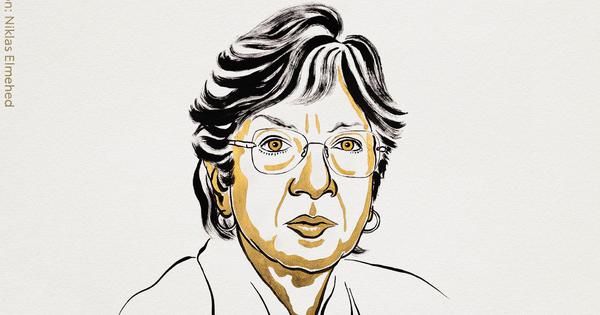
South African jurist Navi Pillay has been awarded the 2026 Nobel Peace Prize, honoring a career that began in the crucible of apartheid and reshaped the architecture of global justice.
The Norwegian Nobel Committee recognized her lifelong dedication to international law and the protection of human rights, a journey that took her from a segregated Durban courtroom to the highest judicial bodies of the United Nations.
As the first Black woman to open a law practice in South Africa, the first Black female judge on the country's Supreme Court, and a pivotal figure in defining rape as a weapon of genocide, Pillay's work has fundamentally altered how the world prosecutes atrocity crimes.
From Apartheid South Africa to the Global Stage
Born in 1941 in Clairwood, a working-class suburb of Durban, Pillay's origins were steeped in the structural violence of colonialism and apartheid. Her grandparents arrived as indentured laborers from Tamil Nadu, India, in the late 19th century. When apartheid was codified into law in 1948, Pillay was seven years old. The regime denied quality education to Black South Africans, yet her community rallied to fund her legal studies, leading to a doctorate from Harvard University.
In simple terms: Apartheid was a system of institutionalized racial segregation and discrimination enforced by the white minority government in South Africa from 1948 to 1994. It stripped Black citizens of basic rights, including access to education and the legal profession. Pillay's rise through this system required extraordinary community support and personal resilience.
In 1967, she became the first Black woman in South Africa to establish her own law practice. She immediately used it to defend anti-apartheid activists, including African National Congress member Phyllis Naidoo, and secured legal representation for political prisoners on Robben Island.
In 1986, she co-founded the Advice Desk for Abused Women, addressing gender-based violence long before it was a global policy priority. The transition to democracy in 1994 saw Nelson Mandela appoint her as the first Black female judge on the Supreme Court, a symbolic and substantive breakthrough.
Transforming International Criminal Law
Pillay's most profound legal legacy was forged at the International Criminal Tribunal for Rwanda (ICTR), where she served as a judge from 1995 and later as its president. Witnesses testified to systematic sexual violence, yet the indictment contained no charges for rape.
In simple terms: Before this case, international law treated rape primarily as a byproduct of war or a violation of personal honor, not as a strategic tool of genocide. The ICTR was the first court to legally establish that sexual violence, when committed with intent to destroy a group, constitutes genocide itself.
Pillay posed a direct question to the prosecution: what should judges do with evidence of sexual violence when no such charges exist? Her intervention forced an amended indictment, leading to the historic ruling that rape can be an act of genocide. This precedent was later codified into the Rome Statute of the International Criminal Court. As Pillay later reflected, "From time immemorial, rape has been regarded as spoils of war. Now it will be considered a war crime."
A Career Defined by Firsts
After the ICTR, Pillay joined the International Criminal Court in The Hague before being appointed UN High Commissioner for Human Rights in 2008. In that role, she brought the same rigorous scrutiny to state powers worldwide, criticizing human rights abuses in Sri Lanka, Syria, and the occupied Palestinian territories. Her tenure was marked by a willingness to challenge powerful nations, including the United States and Israel, on issues ranging from drone strikes to the blockade of Gaza.
In simple terms: The UN High Commissioner for Human Rights is the principal human rights official of the United Nations, mandated to promote and protect human rights globally. The role involves investigating violations, advocating for victims, and pressuring governments to comply with international standards — often putting the office at odds with powerful member states.
In 2009, Forbes named her the 64th most powerful woman in the world, only the second African to make the list. Yet colleagues and biographer Sam Naidu describe a person defined not by accolades but by a "steely grit" and a "wicked sense of humour." Naidu, who interviewed Pillay in Geneva in 2009, recalls her joking, "Ah, but you are only a young one. I was expecting an old person like me." Beneath the warmth lay an unyielding commitment to accountability.
The Personal Roots of a Universal Quest
Pillay's drive for justice traces back to a childhood memory. At age six, she testified in a Durban court after her father was robbed by a colleague. The thief was convicted, but the court failed to order restitution. "Where is my father's money? Is this justice?" she asked. That question — procedural correctness versus substantive fairness — has animated her entire career.
In simple terms: This distinction highlights the difference between procedural justice (following the rules of a legal process) and substantive justice (achieving a fair and equitable outcome). Pillay's work consistently pushed legal systems to bridge that gap, ensuring laws protect the vulnerable rather than merely ratifying power.
Her biography, Navi Pillay: Realising Human Rights for All, written by Professor Sam Naidu of Rhodes University, explores this continuity. Naidu, who shares Pillay's Indian diasporic heritage in Durban, notes that Pillay's identity as a Black woman of Tamil descent in apartheid South Africa gave her a unique vantage point: she understood oppression as intersectional — shaped by race, gender, class, and colonial history — long before the term entered academic discourse.
Legacy and Continuing Relevance
At 85, Pillay remains a vocal critic of impunity. Her recent condemnations of the genocide in Gaza demonstrate that her moral compass has not wavered. The Nobel Committee's choice signals a recognition that the architecture of international justice — fragile, contested, and often ignored — requires guardians who understand both its legal mechanics and its human stakes.
The award also shines a light on the Indian diaspora's contribution to global human rights. Pillay's grandparents arrived in chains of indenture; their granddaughter now stands among the world's most honored peacemakers. As Naidu observes, history unravels in surprising ways: the white supremacist Jan Smuts drafted the preamble to the UN Charter; the prisoner Nelson Mandela became president; the girl who asked for her father's money won the Nobel Peace Prize.
Pillay's career offers a template for legal activism: infiltrate the system, master its rules, and then use them to expand the circle of protection. In an era of resurgent authoritarianism and eroding international norms, her life's work stands as both a precedent and a challenge.
Was this clear?
library_booksSource
Scroll.in
22 Nov 2026
- funding model
- independent commercial media (revenue from advertising, reader subscriptions and grants)
- owner
- Scroll.in (Scroll Media), an independent digital newsroom founded by Samir Patil
Was the source link correct?
topicRelated Articles

Congress MP Asserts Opposition Unity Against Delimitation Bill, Citing Constitutional Defense

Love as Resistance: Dalit-Feminist Anthology Reframes Intimacy as Political Defiance Against Caste

Rajasthan SOG Busts Interstate Racket Selling Forged Medical Degrees; Class 11 Dropout Posed as Doctor at Safdarjung

Four Killed in Rohtak Hotel Shooting; Police Investigate Alleged Honey-Trap Ambush

Delimitation Bill Framed as Trojan Horse to Reshape India's Electoral Map

Vijay's TVK Labels Stalin 'Savarkar 2.0' in Sharp Delimitation Offensive

Rohit Sharma Reveals Reluctance Behind Mumbai Indians Captaincy Return
