
NCI Director Outlines Bold Priorities from AACR 2026: Vaccines, AI, and Faster Trials
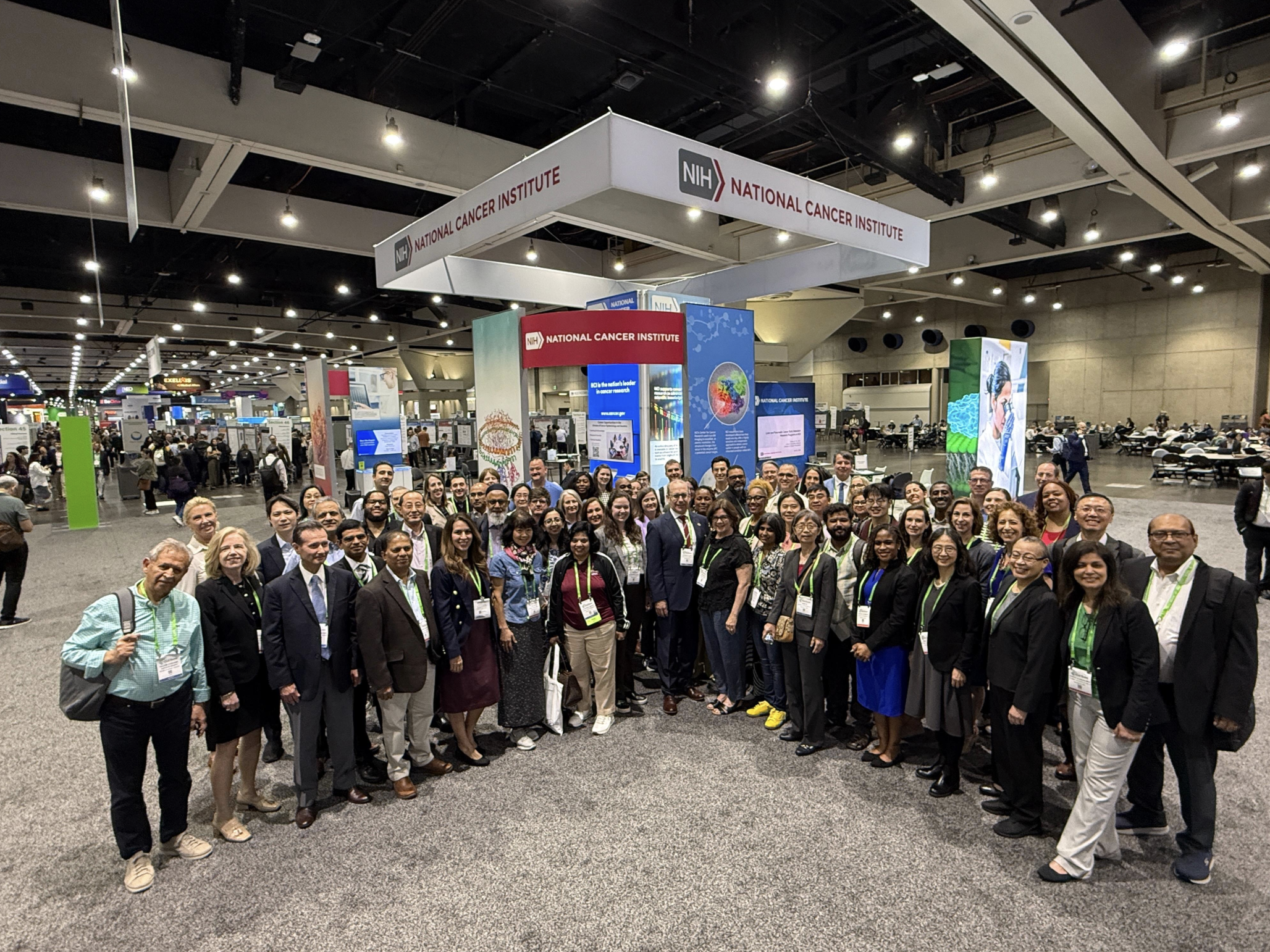
National Cancer Institute Director Anthony Letai, M.D., Ph.D., has identified therapeutic cancer vaccines, functional precision medicine, and artificial intelligence as the research frontiers poised to define the next era of oncology, following the 2026 American Association for Cancer Research Annual Meeting in San Diego.
In his first major public address since assuming the directorship, Letai framed these scientific opportunities within a broader operational mandate: accelerating clinical trial enrollment, expanding equitable access to prevention and screening, and shifting the research enterprise toward human-based models.
The remarks signal a strategic pivot toward translation — moving beyond discovery to ensure that breakthroughs reach patients faster and more fairly.
Immuno-oncology
Checkpoint inhibitors and cellular therapies have transformed outcomes for many cancers, yet a fundamental puzzle persists: why do some patients respond dramatically while others see no benefit? At AACR 2026, this question dominated immuno-oncology sessions.
Researchers presented new data on tumor microenvironment dynamics, T-cell exhaustion markers, and microbiome influences that may predict response. The consensus is that single biomarkers are insufficient; combinatorial signatures — integrating genomics, proteomics, and spatial biology — will be needed to match patients to the right immunotherapy regimen.
In plain terms, scientists are trying to crack the code that tells them which patients will benefit from unleashing the immune system against cancer, and which will not. Right now, it is often a guessing game. The goal is to turn that guesswork into a reliable diagnostic roadmap.
Therapeutic Vaccines
Cancer vaccine research is gaining unprecedented momentum, Letai noted, with early data suggesting vaccines could prevent relapse in cancers where recurrence is common. Unlike preventive vaccines (such as HPV), therapeutic vaccines train the immune system to recognize and attack existing tumor cells or micrometastases after primary treatment.
NCI is partnering with the Foundation for the National Institutes of Health to design a series of rigorous, large-scale trials launching later this year. The aim is to rapidly evaluate multiple vaccine platforms — mRNA, peptide, dendritic cell — across several cancer types using adaptive trial designs that can drop ineffective arms and expand promising ones.
After surgery or chemotherapy removes the bulk of a tumor, microscopic remnants may remain. A therapeutic vaccine shows the immune system exactly what those remnants look like, prompting a targeted search-and-destroy mission before they can grow into new tumors.
Functional Precision Medicine
A standing-room-only session at AACR showcased functional precision medicine: the practice of exposing a patient's living tumor cells to hundreds of drugs in the lab to see which ones actually kill the cancer. Advances in organoid cultures, microfluidic devices, and high-throughput screening have made this feasible at scale.
NCI will convene a workshop this summer to establish standards for reproducibility, data sharing, and clinical integration — critical steps before this approach can guide routine treatment decisions.
Instead of guessing which drug might work based on genetic mutations alone, functional precision medicine runs a real-world audition. Tumor cells from a biopsy are kept alive in a dish and challenged with a panel of therapies. The drugs that kill the cells become the leading candidates for that patient. It is personalized medicine based on empirical evidence, not just inference.
Artificial Intelligence
AI permeated the meeting, from radiology algorithms that detect early pancreatic cancer to generative models designing novel protein binders. Letai emphasized that the bottleneck is no longer algorithm invention but ecosystem coordination. Disparate data formats, siloed computing infrastructure, and inconsistent validation standards prevent tools from generalizing across hospitals.
NCI intends to fund shared benchmarks, federated learning frameworks, and open-source model repositories so that an AI trained at one cancer center performs reliably at another.
The problem is not a shortage of clever AI models; it is that they speak different languages and live in walled gardens. NCI wants to build the plumbing — common data standards, shared validation sets, and interoperable platforms — so that a breakthrough in one lab can be deployed everywhere without reinventing the wheel.
Structural Priorities
Beyond specific scientific domains, Letai highlighted three systemic imperatives. First, clinical trial efficiency: the U.S. lags other nations in time from preclinical proof-of-concept to first-in-human studies.
Second, prevention and access: the newly launched Prevention, Screening, and Early Detection Initiative (PSEDI) will coordinate major U.S. health agencies to expand evidence-based screening in underserved counties, with a goal of national scale-up.
Third, human-based models: while animal models remain valuable, Letai argued that organoids, tumor-on-chip systems, and single-cell atlases now allow direct study of human tumor biology earlier in the pipeline, reducing late-stage attrition.
These are not abstract policy goals. Faster trials mean patients get experimental therapies sooner. Expanded screening means cancers are caught at curable stages in communities that historically lacked access. Human models mean fewer drugs fail in Phase III because they worked in mice but not people.
"Your NCI"
The campaign aims to make the research continuum visible: basic science, translational bridges, clinical trials, and regulatory approval all funded by taxpayers. Additional content rolling out this summer will highlight prevention, survivorship, and the clinical trial participants who make progress possible.
The story of pembrolizumab is the story of patience. Decades later, that basic insight became a drug that has saved hundreds of thousands of lives. "Your NCI" makes that lineage impossible to ignore.
Was this clear?
library_booksSource
NCI
4 May 2026
- funding model
- government funded
- owner
- U.S. National Institutes of Health (NIH) (U.S. federal appropriations)
Was the source link correct?
topicRelated Articles

H5N1 Avian Influenza Spreads to Coimbatore Wild Birds as Tamil Nadu Intensifies Poultry Culling in Cuddalore
The Neuroscience of Letting Go: How Cultivating Good Wishes Rewires the Brain for Resilience
Global Experts Publish Updated Consensus Statement on ADHD, Affirming Strong Genetic Basis and Clarifying Environmental Risks

Congress MP Asserts Opposition Unity Against Delimitation Bill, Citing Constitutional Defense

Love as Resistance: Dalit-Feminist Anthology Reframes Intimacy as Political Defiance Against Caste

Rajasthan SOG Busts Interstate Racket Selling Forged Medical Degrees; Class 11 Dropout Posed as Doctor at Safdarjung

Four Killed in Rohtak Hotel Shooting; Police Investigate Alleged Honey-Trap Ambush
