
Neera Chandhoke's 'Languages of Freedom' Maps Liberty Across Indian Thought, Cinema, and Verse
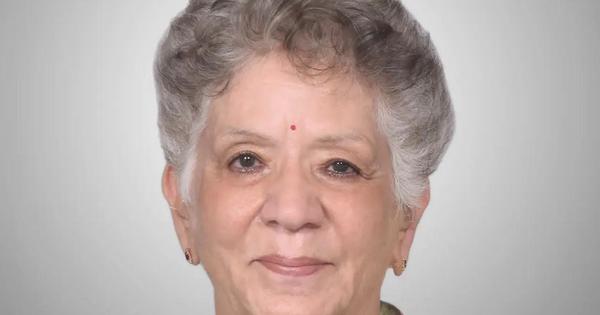
Political theorist Neera Chandhoke’s latest book, Languages of Freedom: The Idea of India in Political Theory, Bombay Cinema and Progressive Urdu Poetry, arrives as a rigorous yet accessible meditation on liberty. Published by Speaking Tiger Books, the work assembles five interconnected essays that refuse to treat freedom as a static legal guarantee.
Instead, Chandhoke traces its contested meanings through Mahatma Gandhi’s concept of swaraj, the syncretic cultural fabric of the subcontinent, the radical verse of the Progressive Writers Association, the social realism of mid-century Hindi cinema, and the delicate dialogue between Indian and Western political philosophy.
The result is a scholarly intervention that argues freedom in India has always been a plural, practiced vocabulary rather than a singular constitutional promise.
The Architecture of Freedom
Chandhoke structures the volume as a deliberate progression from the philosophical to the cultural, ending with a methodological reflection on how Indian political theory ought to be written.
The opening essay, “Swaraj as Freedom,” sets the tone by placing Gandhi’s vision of self-rule — rooted in communal self-sufficiency and a rejection of private property — alongside the utopian blueprints of Plato, Thomas More, and Leo Tolstoy. Swaraj, often translated simply as self-rule, is here revealed as a radical ethical project: a society where individual autonomy is inseparable from collective moral responsibility, a deliberate counterpoint to the possessive individualism Rousseau diagnosed as the source of modern alienation.
In plain terms, Chandhoke shows that Gandhi did not just want political independence from Britain; he wanted Indians to govern themselves through village republics that resembled ashrams, where no one owns land or exploits another’s labour. This is a freedom from want and from domination, not merely a freedom to choose.
Syncretism and the Shared Legacy
Bhattacharya negotiated the tension between indigenous tradition and colonial modernity. She argues that Indian culture has never been a monolith but a layered, syncretic tapestry woven from Hindu, Muslim, Buddhist, and countless local threads. Syncretism here is not a polite tolerance but a deep structural hybridity: the Bhakti and Sufi movements, the Mughal-Rajput alliances, the shared shrines and linguistic cross-pollination that defined everyday life for centuries.
Put simply, the “Indian culture” that nationalists often invoke as pure and ancient is, in Chandhoke’s reading, a living conversation between differences. The freedom to think, she insists, depends on preserving this conversation against any ideology that seeks to impose a single, sanitized narrative.
Poetry and Cinema as Vehicles of Freedom
The middle essays — “The Poetry of Freedom” and “Films as Critiques of Unfreedom” — bring the argument into the public sphere. Chandhoke traces the Progressive Writers Association (PWA) and the Indian People’s Theatre Association (IPTA), two collectives that turned Urdu poetry and Hindi cinema into instruments of anti-colonial resistance and social reform.
From the 1930s through the 1950s, poets like Faiz Ahmed Faiz and Sahir Ludhianvi, and filmmakers behind classics such as Pyaasa and Do Bigha Zameen, articulated a freedom that demanded secularism, gender equality, and economic justice. The Progressive Writers Association was a group of writers who believed literature must engage with the struggles of the poor and oppressed; the Indian People’s Theatre Association brought that ethos to stage and screen, using popular forms to critique feudalism, communalism, and capitalist exploitation.
In everyday language, these artists did not just entertain; they taught millions that freedom means the right to food, dignity, and a voice — and that the nation’s soul is measured by how it treats its most marginalized.
Indian Political Theory in Dialogue with the West
The final essay, “Writing Indian Political Theory,” is a methodological manifesto. Chandhoke engages Raja Rammohan Roy and Swami Vivekananda to show how Indian thinkers have historically borrowed from Western liberalism — rights, representation, secularism — while reinterpreting them through indigenous categories like dharma and seva.
She warns against two traps: nativist isolation that rejects universal norms, and derivative mimicry that ignores local context. The freedom to theorize, she concludes, requires a “fine balance” — the very quality that defines her own prose.
A Timely Intervention
In an era where majoritarian politics weaponizes history and narrows the public sphere, Languages of Freedom performs a quiet but vital service. It reminds readers that the Indian idea of liberty was forged in poetry readings, film studios, village councils, and philosophical debates — all at once. Chandhoke’s scholarship does not merely describe this heritage; it equips citizens to reclaim the freedom to think, the prerequisite, she writes, for being "truly cognizant of our humanity."
Was this clear?
library_booksSource
Scroll.in
22 Nov 2026
- funding model
- independent commercial media (revenue from advertising, reader subscriptions and grants)
- owner
- Scroll.in (Scroll Media), an independent digital newsroom founded by Samir Patil
Was the source link correct?
topicRelated Articles

Congress MP Asserts Opposition Unity Against Delimitation Bill, Citing Constitutional Defense

Love as Resistance: Dalit-Feminist Anthology Reframes Intimacy as Political Defiance Against Caste

Rajasthan SOG Busts Interstate Racket Selling Forged Medical Degrees; Class 11 Dropout Posed as Doctor at Safdarjung

Four Killed in Rohtak Hotel Shooting; Police Investigate Alleged Honey-Trap Ambush

Delimitation Bill Framed as Trojan Horse to Reshape India's Electoral Map

Vijay's TVK Labels Stalin 'Savarkar 2.0' in Sharp Delimitation Offensive

Rohit Sharma Reveals Reluctance Behind Mumbai Indians Captaincy Return
