
Putin's 'Third Rome' Revival: How Russian Messianism Reshapes Global Geopolitics
Opinion. This story was written from a named writer’s column in Indian Express — Opinion of 24 November 2026. We report what was argued, not our own view — the publisher’s ownership is shown below.
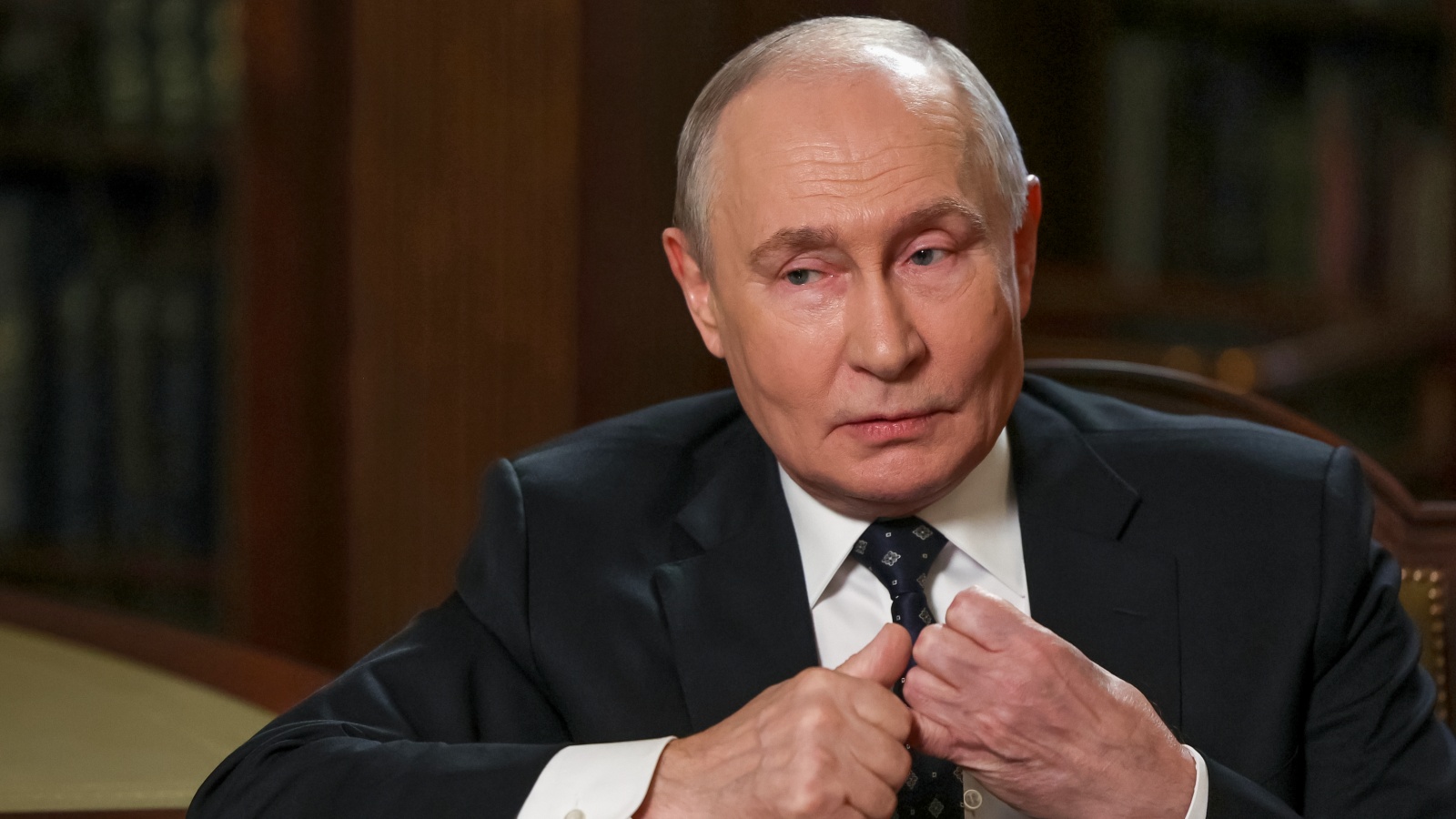
Russian President Vladimir Putin's explicit embrace of the "Third Rome" doctrine — the centuries-old idea that Moscow is the final guardian of true Christianity — has moved from theological abstraction to the center of Kremlin statecraft, framing the war in Ukraine as a spiritual crusade against a decadent West and forging unlikely alliances with conservative movements across Europe and America.
In a revealing interview with Serbian filmmaker Emir Kusturica released last week, Putin affirmed that Russia could serve as an "ark" for all believers, signaling a deliberate pivot toward Christian internationalism that challenges the post-Cold War order and demands urgent attention from capitals like New Delhi that once looked to Moscow through the lens of Soviet socialism.
The Theology Behind the Geopolitics
The "Third Rome" concept originates with Filofei, a 16th-century monk near Pskov, who wrote to Grand Prince Vasily III that the first Rome had fallen into heresy, the second — Constantinople — had fallen to the Ottomans in 1453, and Moscow alone remained the keeper of Orthodox truth. Put simply: the theory claims Russia inherits a divine mandate to protect the one true faith after the historical failures of Rome and Byzantium. What began as a call to spiritual vigilance acquired expansionist overtones in later centuries, merging religious destiny with imperial ambition.
Putin's invocation is selective. In the Kusturica interview, he downplayed theology — "the theology was not the main point; what mattered was the present" — while simultaneously declaring Russia an ark for global Christians.
From Valdai to the Culture War
Putin's turn dates to at least September 2013, when he told the Valdai Discussion Club that many Euro-Atlantic nations had rejected their Christian roots.
Within days, American paleoconservative Pat Buchanan asked whether Putin was "one of us" in the culture war. In plain terms: Putin positioned Russia as the defender of traditional values — opposition to abortion, same-sex marriage, gender fluidity — attracting evangelicals, Orthodox hierarchs, and right-wing populists who now see Moscow as the "Christian Bear" standing against "woke" Western decay.
This convergence is striking. The Bolsheviks once exported revolution through the Communist International (Comintern), the "Third International" that philosopher Nikolai Berdyaev called a secularized Third Rome. Today, the Kremlin exports a different universalism: a reactionary Christian nationalism that finds fellow travelers from Budapest to Nashville. The war in Ukraine, blessed by Patriarch Kirill as a "holy war" against a Satanic West, has become the armed vanguard of this ideology.
The Ukrainian Fracture
Yet Ukraine exposes the doctrine's fatal flaw. Both nations trace their baptism to 988 CE in Kyivan Rus', share the Orthodox faith, and claim the same spiritual heritage. In 2019, the Ecumenical Patriarch of Constantinople — first among equals in Orthodoxy — recognized an independent Orthodox Church of Ukraine.
After the 2022 invasion, even the Ukrainian branch long loyal to Moscow broke ties and condemned Kirill's war blessing. Simply put: the very people Putin claims to save spiritually have rejected his church's authority, turning a unifying myth into a weapon of division.
Putin acknowledged this tension when Kusturica asked how victory serves Ukrainians. He replied that unity need not mean a single state, leaving territorial compromise possible if other issues are resolved, and urged Ukrainian soldiers to cross to the "right side of history." But sovereignty, once awakened, rarely yields to shared faith — a lesson the Kremlin appears to have underestimated.
India's Strategic Blind Spot
For Indian policymakers, the shift is consequential. Generations of Indian leaders identified with Soviet internationalism — anti-imperialism, socialism, the Non-Aligned Movement. That vocabulary is obsolete. Today's Russia speaks the language of civilizational exceptionalism, not class struggle. Its partnerships with China, Iran, and the Global South are increasingly framed through a lens of traditionalist sovereignty against Western hegemony, not Marxist liberation.
New Delhi's comfort with the old idiom risks misreading Moscow's motives. The "Third Rome" narrative suggests Russia's confrontation with the West is existential and open-ended, not merely transactional. It implies that any settlement in Ukraine will be shaped by a messianic self-image that survives battlefield outcomes.
India's "pivot to Europe" — the subject of Raja Mohan's recent book — must account for a Russia that sees itself as the spiritual counterweight to both Western liberalism and, potentially, a rising Sinic order.
A Long Shadow Beyond the Battlefield
The guns in Ukraine will eventually fall silent. The idea that Moscow is the Third Rome, guardian of a sacred mission, will not. It has survived Mongol yoke, Romanov empire, Bolshevik atheism, and Soviet collapse. Putin has made it a pillar of the modern Russian state, fusing Orthodox identity with great-power ambition in a way that resonates far beyond Russia's borders.
For analysts in New Delhi, Washington, and Brussels, the challenge is not merely to parse Putin's tactics but to understand a civilizational claim that refuses the secular categories of modern diplomacy. The Third Rome, as Filofei warned, admits no fourth. The world must reckon with what that means for the first, second, and all the rest.
Was this clear?
library_booksSource
Indian Express — Opinion
24 Nov 2026
- funding model
- family-owned commercial media (revenue from advertising and subscriptions)
- owner
- Indian Express (P) Ltd, controlled by the Goenka family; Viveck Goenka is Chairman & Managing Director
Was the source link correct?
topicRelated Articles

Congress MP Asserts Opposition Unity Against Delimitation Bill, Citing Constitutional Defense

Love as Resistance: Dalit-Feminist Anthology Reframes Intimacy as Political Defiance Against Caste

Rajasthan SOG Busts Interstate Racket Selling Forged Medical Degrees; Class 11 Dropout Posed as Doctor at Safdarjung

Four Killed in Rohtak Hotel Shooting; Police Investigate Alleged Honey-Trap Ambush

Delimitation Bill Framed as Trojan Horse to Reshape India's Electoral Map

Vijay's TVK Labels Stalin 'Savarkar 2.0' in Sharp Delimitation Offensive

Rohit Sharma Reveals Reluctance Behind Mumbai Indians Captaincy Return
