
Cow Slaughter Bans Exacerbate Agrarian and Ecological Crisis in Drought-Hit Bandipur
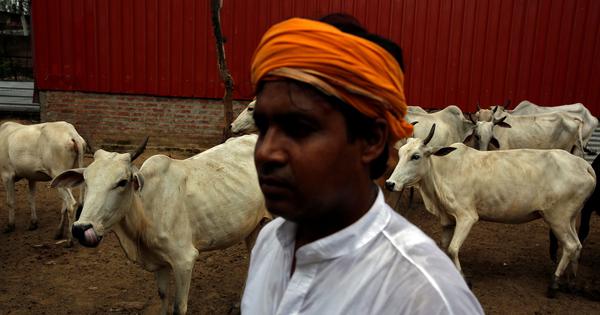
In a severe drought year, the ripple effects of cow slaughter prohibitions are surfacing with stark clarity in the forest-fringe villages of Bandipur, where abandoned cattle compete with wildlife for dwindling fodder and water, threatening both rural livelihoods and fragile ecosystems.
A resident's testimony published in Scroll.in illustrates how policy decisions made far from the forest edge are converging with climate stress to produce unintended consequences for farmers, forests, and wildlife alike.
The Bandipur Testimony
Anupama Arun, a resident of Bandipur in Karnataka, describes a compounding crisis. Villagers already face significant livelihood losses from tiger and leopard predation on cattle. The added burden of caring for old, unproductive animals — which can no longer be sold or slaughtered due to stringent anti-slaughter laws — has become unsustainable. In this drought year, the situation has escalated: cattle are being abandoned in the forests themselves.
Explain it simply: When laws ban the slaughter of cows, farmers cannot sell aging or unproductive cattle for meat or leather. In normal times, this creates a financial burden. During a severe drought, when fodder and water vanish, keeping these animals alive becomes impossible. Farmers turn them loose in nearby forests, where they become an extra pressure on already stressed ecosystems.
Cattle Abandonment and Forest Degradation
The abandoned cattle do not simply vanish; they enter protected areas and forest fringes in search of sustenance. There, they compete directly with wild herbivores — deer, gaur, elephants — for the limited grass and water that remain in a drought-degraded landscape. This competition is not abstract. It reduces the prey base for carnivores like tigers and leopards, potentially pushing them toward livestock depredation and increasing human-wildlife conflict.
Explain it simply: Forests have a carrying capacity — the number of animals they can support. Drought lowers that capacity. Adding thousands of abandoned domestic cattle pushes the system past its breaking point. Wild animals starve or move into villages; predators follow.
The Human-Wildlife Conflict Intensifies
Arun's account highlights a vicious cycle. Villagers lose cattle to predators. Laws prevent them from disposing of unproductive animals economically. Drought forces abandonment. Abandoned cattle degrade the forest, weakening wild prey populations. Predators, finding less wild prey, turn more frequently to village livestock. The villainer's loss deepens, and tolerance for wildlife erodes.
This dynamic is well-documented in conservation literature but rarely linked so directly to livestock policy. The Bandipur case suggests that cattle preservation laws, without complementary provisions for animal welfare, fodder security, and predator compensation, can inadvertently undermine the very communities and ecosystems they exist within.
Invasive Species Compound the Crisis
The testimony also notes that the forests around Bandipur are overrun with invasive species like lantana and senna. These plants, unpalatable to most herbivores, replace native grasses and reduce the land's effective grazing area. When drought strikes, the remaining palatable biomass is even smaller. Abandoned cattle accelerate the spread of invasives by overgrazing native vegetation and dispersing weed seeds.
Explain it simply: Invasive plants are like weeds on steroids — they take over, crowd out the grass animals eat, and are hard to remove. Drought helps them win. Cattle grazing on the last good grass gives the weeds even more room to spread.
Broader Policy Implications
The Bandipur situation is not isolated. Similar dynamics play out across India's forest peripheries, where agrarian economies abut protected areas. Cow slaughter bans, enacted in various forms across multiple states, create a surplus of unproductive cattle. Without robust gaushala (cow shelter) infrastructure, fodder banks, or insurance schemes for predator losses, the burden falls on the poorest farmers and the most vulnerable forests.
The letters section of Scroll.in also carried responses on other topics — the Sassoon family's commercial history, a retrospective on scabies eradication in Wayanad, debates over Sanskrit-speaking villages, and sharp exchanges on India-Israel relations — but the Bandipur letter stands out for its grounded, systems-level observation. It connects a specific cultural-political policy to measurable ecological and economic outcomes.
The Gap Between Reverence and Welfare
Arun's closing question cuts to the core: "Do self-proclaimed cow lovers understand the harmful impacts of their reverence on the cattle themselves?" Abandoned animals face starvation, thirst, and predation — outcomes that hardly align with the welfare rhetoric surrounding cow protection. The policy, as implemented, appears to prioritize symbolic value over the lived reality of both animals and the humans who tend them.
Addressing this requires moving beyond prohibition toward comprehensive livestock management: subsidized fodder during drought, functional shelters for aging cattle, fair and timely compensation for predator kills, and invasive species control in buffer zones. Without these, the law remains a blunt instrument that strikes hardest at the ecological and economic margins.
As climate variability increases, the intersection of cultural policy and environmental stress will only grow more consequential. Bandipur's drought-year crisis offers a clear warning: policies that ignore ecological carrying capacity and agrarian economics risk producing outcomes that serve neither faith nor nature.
Was this clear?
library_booksSource
Scroll.in
22 Nov 2026
- funding model
- independent commercial media (revenue from advertising, reader subscriptions and grants)
- owner
- Scroll.in (Scroll Media), an independent digital newsroom founded by Samir Patil
Was the source link correct?
topicRelated Articles

Congress MP Asserts Opposition Unity Against Delimitation Bill, Citing Constitutional Defense

Love as Resistance: Dalit-Feminist Anthology Reframes Intimacy as Political Defiance Against Caste

Rajasthan SOG Busts Interstate Racket Selling Forged Medical Degrees; Class 11 Dropout Posed as Doctor at Safdarjung

Four Killed in Rohtak Hotel Shooting; Police Investigate Alleged Honey-Trap Ambush

Delimitation Bill Framed as Trojan Horse to Reshape India's Electoral Map

Vijay's TVK Labels Stalin 'Savarkar 2.0' in Sharp Delimitation Offensive

Rohit Sharma Reveals Reluctance Behind Mumbai Indians Captaincy Return
