
Samit Basu's 'The Pictures of Darpan Ray' Dissects Bollywood's Two-Decade Metamorphosis Through a Dark Comic Lens
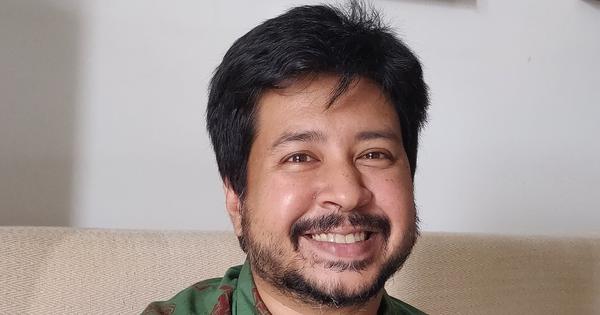
Samit Basu's latest novel, The Pictures of Darpan Ray, arrives as a sharp, sprawling satire that uses the rise and fall of a manufactured Bollywood star to map the Hindi film industry's turbulent evolution from 2004 to 2024.
Published by HarperCollins India, the book frames its narrative through a loose, inventive riff on Oscar Wilde's The Picture of Dorian Gray, substituting a cursed portrait for a Faustian bargain struck on a film set: eternal youth and beauty in exchange for a renunciation of "sin." What unfolds is less a gothic horror than a ruthless, often hilarious anatomy of an industry that has always treated human beings as disposable assets.
The novel's central conceit — a protagonist who does not age while his moral decay remains hidden — serves as a perfect metaphor for Bollywood's obsession with preserving youth at the cost of substance. In Wilde's original, the portrait bears the physical marks of Dorian's corruption while he remains outwardly pristine.
Basu transposes this mechanism onto a film industry where cosmetic preservation is literal currency, and where the "portrait" is the carefully curated public image maintained by publicists, managers, and the star's own denial.
The Outsider's Entry and the Machinery of Stardom
The story opens in 2004, a pre-social-media era when Bollywood's gates were still guarded by a mix of nepotism and genuine gambles on outsiders. Darpan, a Bengali newcomer with "a boring, old-fashioned name" and poor Hindi, is "discovered" by Vishal Alwar, a director in his flop era desperate for a comeback.
Vishal rebrands him as Vikram Rai, initiating a process the novel depicts with insider precision: the grooming, the strategic friendships, the manufactured narratives. Basu, a former filmmaker himself (his credits include the Netflix film House Arrest), renders this machinery with the authority of someone who has watched the sausage being made.
The early sections contrast Darpan's passive ascent with the active struggles of his friends Rishi and Diya, writers attempting to crack the industry on merit.
Their perspective grounds the satire in a recognizable reality: the humiliation of being told "only one kind of writing matters — movie scripts," the absurdity of a Thai shoot that devolves into a Bigg Boss-style pressure cooker, the moment a forgettable rom-com becomes a hit through sheer force of marketing and star power.
Basu's prose captures the specific texture of that period — the "pure human comedy" of an industry still running on personal relationships and gut instinct rather than algorithms and corporate mandates.
The Dorian Bargain and the Cost of Eternal Youth
This is not a sudden transformation but a gradual hollowing out. Darpan begins to believe his own hype — that he is "superhuman," that "the body is more valuable than the heart and the soul." The horror here is not supernatural but industrial: a system that rewards the suppression of self in favor of a marketable facade. The novel suggests that every Bollywood star makes a version of this bargain, trading authenticity for longevity.
Basu's decision to never inhabit Darpan's point of view is crucial. We see him only through others' eyes — Rishi's cynicism, Diya's worry, Vishal's calculation, rival producer Harry Verma's greed. This mimics the actual condition of stardom: the star is a projection, a surface onto which others project desire, envy, and investment.
The "pictures" of the title are not just the Dorian portrait but the countless frames of film, the publicity stills, the carefully leaked candid shots that construct the persona.
The Industry's Violent Restructuring
The novel's middle and late sections accelerate through 2006, 2018, and 2024, each jump marking a seismic shift. The "tech and corporate overlords" replace the old feudal producers, and the "chaos of the early aughts" starts to look desirable compared to the new algorithmic efficiency.
By 2024, the "AIpocalypse" has arrived. The novel's final stretch imagines a near-future where writers and actors are increasingly redundant, replaced by synthetic content generation. The AI disruption is simply the logical endpoint of a system that never valued the human element.
A Writer's Revenge and a Reader's Reward
Throughout, Rishi's thwarted romance with Diya and his own failed writing career provide an emotional spine. His perspective — the writer who watches the actor get all the glory, the money, the love — articulates a resentment that Basu clearly knows intimately. Yet the novel never curdles into mere bitterness.
Its satire is tempered by genuine affection for the "sickly beast" that is Bollywood, "lumbering, rasping for breath" but still alive. The closing pages, which bring the Dorian mechanism to a literal and satisfying conclusion, manage a rare feat: they deliver narrative closure while refusing to let the industry off the hook.
The Pictures of Darpan Ray works as a mystery, a romance, an industry exposé, and a speculative fiction — sometimes all in the same chapter. Its 275 pages move with the pacing of a commercial blockbuster, which is entirely the point. Basu understands that the best way to critique the machine is to build a better version of its product.
Was this clear?
library_booksSource
Scroll.in
22 Nov 2026
- funding model
- independent commercial media (revenue from advertising, reader subscriptions and grants)
- owner
- Scroll.in (Scroll Media), an independent digital newsroom founded by Samir Patil
Was the source link correct?
topicRelated Articles

Congress MP Asserts Opposition Unity Against Delimitation Bill, Citing Constitutional Defense

Love as Resistance: Dalit-Feminist Anthology Reframes Intimacy as Political Defiance Against Caste

Rajasthan SOG Busts Interstate Racket Selling Forged Medical Degrees; Class 11 Dropout Posed as Doctor at Safdarjung

Four Killed in Rohtak Hotel Shooting; Police Investigate Alleged Honey-Trap Ambush

Delimitation Bill Framed as Trojan Horse to Reshape India's Electoral Map

Vijay's TVK Labels Stalin 'Savarkar 2.0' in Sharp Delimitation Offensive

Rohit Sharma Reveals Reluctance Behind Mumbai Indians Captaincy Return
