
Sultanpur Court Acquits AAP MP Sanjay Singh in 2021 Panchayat Election Case, Citing Insufficient Evidence
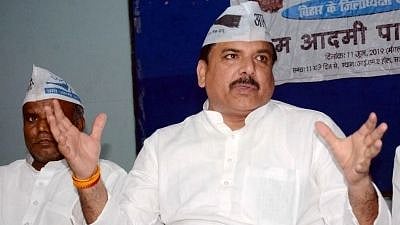
A Sultanpur court has acquitted Aam Aadmi Party Rajya Sabha MP Sanjay Singh and all co-accused in a five-year-old case stemming from alleged violations of the model code of conduct and COVID-19 regulations during the 2021 Uttar Pradesh panchayat elections. The verdict, delivered after a prolonged trial, hinged on the prosecution’s failure to furnish sufficient evidence to prove the charges beyond reasonable doubt.
The model code of conduct is a set of guidelines issued by the Election Commission to regulate political parties and candidates during elections, ensuring a level playing field. In simple terms, it restricts activities like holding public meetings without permission, using government resources for campaigning, and making inflammatory speeches. COVID-19 regulations at the time included strict limits on public gatherings to curb the pandemic’s spread.
Background of the Case
The case originated from a First Information Report (FIR) filed on 13 April 2021 by Praveen Kumar Singh, then Station House Officer of Bandhuakala police station. The complaint alleged that Sanjay Singh and others convened a public meeting in Hasanpur village without prior administrative approval, seeking support for Salma Begum, an AAP-backed candidate for the district panchayat.
Police estimated that 50 to 60 people attended the gathering, which they deemed a breach of both the election code and pandemic-era restrictions.
An FIR is the initial report filed by police when they receive information about a cognizable offence. It sets the criminal justice process in motion. A chargesheet is the formal document police submit to court after completing their investigation, detailing the charges and evidence against the accused.
Investigation and Chargesheet
Following the FIR, police investigated and filed a chargesheet naming Sanjay Singh and ten others: Maqsood Ansari, Salim Ansari, Jagdish Yadav, Sukai, Dharmraj, Zeeshan, Sahban, Sikandar, Jalil, and Ajay.
The Epidemic Diseases Act provides powers to enforce health regulations during outbreaks. The Representation of the People Act governs electoral conduct, including penalties for corrupt practices and code violations.
Trial and Defense Arguments
The trial stretched over several years, during which one accused passed away. The defence consistently argued that the prosecution lacked reliable evidence demonstrating that the meeting violated any rules or that the accused intentionally broke the law. They contended that the mere fact of a gathering did not establish a deliberate breach of the model code or COVID-19 norms, especially given the fluid nature of permissions and enforcement during the pandemic.
In criminal law, the burden of proof rests entirely on the prosecution. They must prove every element of the offence beyond reasonable doubt. If the evidence is insufficient or contradictory, the court must acquit. The defence does not need to prove innocence; it only needs to create reasonable doubt.
Court’s Reasoning and Verdict
After examining all material on record and hearing arguments from both sides, the judge concluded that the prosecution’s evidence was insufficient for conviction. The court accepted the defence’s argument that no credible proof linked the accused to a willful violation of the model code or pandemic restrictions. The acquittal was based solely on the evidence presented and the legal arguments made during the trial.
"The case had been filed against me and my associates five years ago. We fought a long legal battle and finally the court acquitted all of us on the basis of facts and evidence," Sanjay Singh said after the verdict.
Broader Context and Implications
The Sultanpur case highlights the challenges of enforcing electoral and public health regulations simultaneously, particularly in rural areas where administrative oversight can be uneven. The 2021 panchayat elections in Uttar Pradesh occurred amid a devastating second wave of COVID-19, prompting stringent restrictions on public gatherings.
Authorities filed numerous cases against political workers across parties for alleged violations, but securing convictions has proven difficult when evidence relies heavily on police testimony without independent corroboration.
In related developments, election-related legal proceedings and administrative measures continue to draw scrutiny elsewhere. Authorities in Rayalaseema, Andhra Pradesh, have implemented heightened security measures ahead of upcoming panchayat polls, including increased police deployment and surveillance. In Rajasthan, the removal of streetlights in a village following the BJP’s loss in local panchayat elections sparked controversy, with officials citing policy compliance.
These episodes underscore the importance of evidence-based adjudication in cases involving alleged violations of electoral and public health regulations. As the Sultanpur verdict demonstrates, the legal system’s safeguard — the requirement of proof beyond reasonable doubt — remains the ultimate check against arbitrary enforcement, ensuring that the law serves justice rather than political expediency.
Was this clear?
library_booksSource
The Quint
24 Nov 2026
- funding model
- privately held, founder-backed (revenue from advertising and subscriptions; Bahl previously founded Network18, now separately owned)
- owner
- The Quint (Quintillion Media Pvt Ltd), founded by Raghav Bahl and Ritu Kapur
Was the source link correct?
topicRelated Articles

Congress MP Asserts Opposition Unity Against Delimitation Bill, Citing Constitutional Defense

Love as Resistance: Dalit-Feminist Anthology Reframes Intimacy as Political Defiance Against Caste

Rajasthan SOG Busts Interstate Racket Selling Forged Medical Degrees; Class 11 Dropout Posed as Doctor at Safdarjung

Four Killed in Rohtak Hotel Shooting; Police Investigate Alleged Honey-Trap Ambush

Delimitation Bill Framed as Trojan Horse to Reshape India's Electoral Map

Vijay's TVK Labels Stalin 'Savarkar 2.0' in Sharp Delimitation Offensive

Rohit Sharma Reveals Reluctance Behind Mumbai Indians Captaincy Return
