
Tamil Nadu Defies Supreme Court Order on Thiruparankundram Lamp Lighting, Sparking Protests
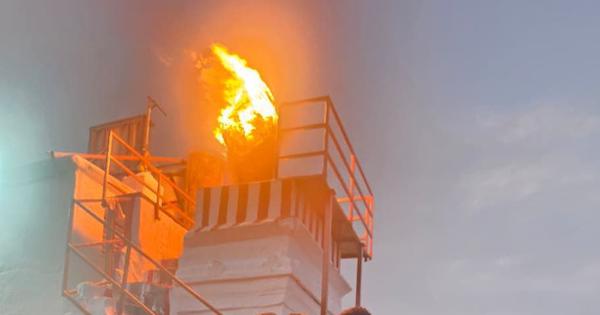
The Tamil Nadu government on Tuesday declined to implement a Supreme Court directive permitting the one-time lighting of a ceremonial lamp at a disputed stone pillar atop Thiruparankundram hill near Madurai during the Hindu festival of Karthigai Deepam, citing the temple administration's refusal to authorize the ritual at the contested site.
The hillock, which hosts the Arulmigu Subramania Swamy temple and the Sikkandar Badhusha dargah, has been the focal point of a protracted legal and communal dispute over the nature and ownership of the pillar. The Supreme Court’s order, issued last Friday, had allowed the lighting as a singular exception for the festival while staying broader High Court observations on the pillar’s character and land title.
The Legal Background
The dispute traces back to a petition by temple devotees seeking permission to light a lamp at the stone pillar. On December 1, Madras High Court judge G.R. Swaminathan ruled that the structure was a deepathoon—a traditional lamp-holding edifice—and directed the temple to restore the practice. Justice Swaminathan also held that the ritual would not infringe upon the religious rights of the adjacent Muslim shrine.
A separate High Court bench upheld this verdict on January 6, affirming that the pillar stands on land belonging to the Subramania Swamy temple. That bench restricted the lighting to members of the temple management, barring public participation. The Tamil Nadu government, led by the Tamilaga Vettri Kazhagam (TVK), challenged the High Court’s order in the Supreme Court on June 11.
*What is a deepathoon? A deepathoon* is a stone or metal pillar designed specifically to hold oil lamps during Hindu festivals. The court’s classification of the disputed structure as such was central to its ruling that the site had a historical Hindu ritualistic purpose.
The Government's Response
On Wednesday, the state informed the Supreme Court that compliance was impossible because the temple administration had declined to authorize the lighting at the pillar, arguing it would violate traditional rituals. Madurai District Collector Nishant Krishn filed an affidavit stating he had made efforts to ensure adherence but the ceremonial lamp was ultimately lit only at the customary spot near the Uchi Pillaiyar temple atop the hill. The collector also tendered an apology to the court.
This stance came a day after the Madurai Bench of the Madras High Court recorded an undertaking from Krishn to abide by the Supreme Court’s directions.
Protests and Security Measures
The decision to confine the ritual to the traditional Uchi Pillaiyar mandapam triggered immediate protests by Bharatiya Janata Party (BJP) leaders and Hindu organisations at the foothills. Demonstrators, including BJP state president Nainar Nagenthran, were detained; some protesters vandalised buses and public property. Those detained were later released.
Anticipating unrest, authorities deployed thousands of police personnel and barricaded the disputed pillar. The district collector imposed prohibitory orders under Section 163 of the Bharatiya Nagarik Suraksha Sanhita—the newly enacted criminal procedure code—effective until Wednesday.
Section 163 explained This provision empowers a district magistrate to issue urgent orders to prevent obstruction, annoyance, or injury to persons lawfully employed, or danger to human life, health, or safety.
Political Fallout
BJP leader Narayanan Thirupathy characterised the TVK government’s refusal to implement the Supreme Court order as an "arrogant remark" and warned the administration would "face consequences." The episode has intensified the political narrative around state compliance with judicial directives in religiously sensitive disputes.
Implications for Judicial Authority
The episode raises pointed questions about the enforceability of court orders when executive authorities cite non-cooperation from religious institutions as grounds for non-compliance. The Supreme Court’s narrow, one-time permission—crafted to avoid prejudging the underlying title suit—has instead exposed friction between judicial directives, temple autonomy, and state governance.
With the underlying ownership and character of the pillar still sub judice, the Thiruparankundram dispute remains a live test of how India’s legal framework navigates competing faith claims on shared geography.
Was this clear?
library_booksSource
Scroll.in
25 Nov 2026
- funding model
- independent commercial media (revenue from advertising, reader subscriptions and grants)
- owner
- Scroll.in (Scroll Media), an independent digital newsroom founded by Samir Patil
Was the source link correct?
topicRelated Articles

Congress MP Asserts Opposition Unity Against Delimitation Bill, Citing Constitutional Defense

Love as Resistance: Dalit-Feminist Anthology Reframes Intimacy as Political Defiance Against Caste

Rajasthan SOG Busts Interstate Racket Selling Forged Medical Degrees; Class 11 Dropout Posed as Doctor at Safdarjung

Four Killed in Rohtak Hotel Shooting; Police Investigate Alleged Honey-Trap Ambush

Delimitation Bill Framed as Trojan Horse to Reshape India's Electoral Map

Vijay's TVK Labels Stalin 'Savarkar 2.0' in Sharp Delimitation Offensive

Rohit Sharma Reveals Reluctance Behind Mumbai Indians Captaincy Return
