
Tbilisi Advances Urban Sustainability with Green Infrastructure and Inclusive Planning

Tbilisi is implementing a comprehensive urban transformation strategy that integrates expansive green infrastructure with inclusive design principles, positioning the Georgian capital as a regional model for climate-resilient and socially equitable city planning. The initiative combines large-scale reforestation, pedestrian corridor expansion, and accessibility upgrades across historic districts, targeting both carbon reduction and improved quality of life for diverse populations.
Green Corridors and Carbon Sequestration
The centerpiece of Tbilisi's environmental strategy is the creation of interconnected green corridors linking existing parks, riverbanks, and peri-urban forests. These corridors serve dual functions: they enhance urban carbon sequestration while mitigating the heat island effect that has intensified in dense central districts.
In practical terms, this means converting underutilized arterial medians, brownfield sites, and degraded slopes into continuous vegetated pathways. The approach draws on landscape ecology principles — connecting fragmented habitats allows species migration and strengthens ecosystem resilience, while the tree canopy directly cools surrounding neighborhoods through evapotranspiration and shade.
Inclusive Mobility and Universal Design
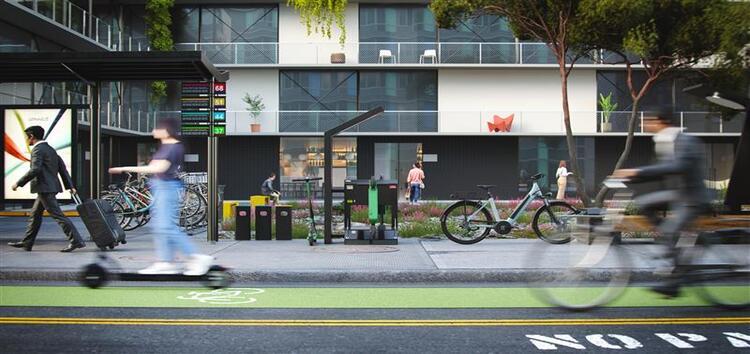
Parallel to ecological upgrades, the city is retrofitting its mobility network to prioritize pedestrians, cyclists, and public transit users. New design standards mandate tactile paving, curb cuts, auditory signals, and gradient-compliant ramps across all renovated streetscapes.
Historic neighborhoods with narrow, irregular streets — previously inaccessible to wheelchair users and elderly residents — are receiving targeted interventions including shared-space treatments and vertical mobility aids.
This shift reflects a broader policy framework that treats accessibility not as retrofitting but as a core design criterion. By embedding universal design into capital projects from inception, Tbilisi avoids the higher costs and social exclusion of piecemeal adaptation.
Climate Adaptation Through Blue-Green Infrastructure
The Mtkvari River corridor, long constrained by concrete embankments, is being re-naturalized with floodplain restoration, wetland reconstruction, and riparian buffer zones. These measures increase the city's capacity to absorb extreme rainfall events — a growing risk under regional climate projections — while creating recreational space and habitat.
Permeable pavements, bioswales, and rain gardens are being integrated into street reconstruction projects, reducing runoff volumes entering the combined sewer system.
Blue-green infrastructure of this type functions as a distributed sponge: vegetation and soil store water during storms, releasing it slowly through infiltration and evapotranspiration. This reduces peak flows, filters pollutants, and recharges groundwater — all without the expense of expanding gray drainage networks.
Governance and Financing Mechanisms
Implementation relies on a dedicated urban transformation agency coordinating across transport, environment, social services, and heritage preservation departments. Funding blends municipal bonds, international climate finance (including Green Climate Fund allocations), and public-private partnerships for commercial frontage improvements. A transparent project pipeline with published milestones enables civic monitoring and adaptive management.
The governance model emphasizes cross-sectoral integration — climate adaptation, social equity, and economic vitality are evaluated through a single decision framework rather than siloed departmental budgets. This prevents trade-offs where, for example, a road widening project undermines both tree canopy and pedestrian safety.
The city plans to extend the model to suburban municipalities within the Tbilisi Functional Urban Area, creating a polycentric green network across the metropolitan region.
Tbilisi's approach demonstrates that mid-sized cities with constrained budgets can pursue ambitious sustainability and inclusion agendas through phased, evidence-based interventions. The integration of ecological function, universal accessibility, and climate resilience into a single urban renewal program offers a replicable template for cities across the Caucasus and Central Asia facing similar developmental and environmental pressures.
Was this clear?
library_booksSource
European Bank for Reconstruction and Development
25 Nov 2026
- funding model
- government funded (member contributions)
- jurisdiction
- International
- owner
- International organization (member states)
Was the source link correct?
topicRelated Articles

Saudi Arabia's Meteorological Center Forecasts Wet January, Warmer-Than-Normal Quarter Across Kingdom
EBRD Commits €3 Billion to Expand Green Cities Programme, Targeting Urban Climate Resilience

Congress MP Asserts Opposition Unity Against Delimitation Bill, Citing Constitutional Defense

Love as Resistance: Dalit-Feminist Anthology Reframes Intimacy as Political Defiance Against Caste

Rajasthan SOG Busts Interstate Racket Selling Forged Medical Degrees; Class 11 Dropout Posed as Doctor at Safdarjung

Four Killed in Rohtak Hotel Shooting; Police Investigate Alleged Honey-Trap Ambush

Delimitation Bill Framed as Trojan Horse to Reshape India's Electoral Map
