
The Long Shadow of Persecution: Tracing the Rohingya Crisis from Colonial Roots to Modern Catastrophe
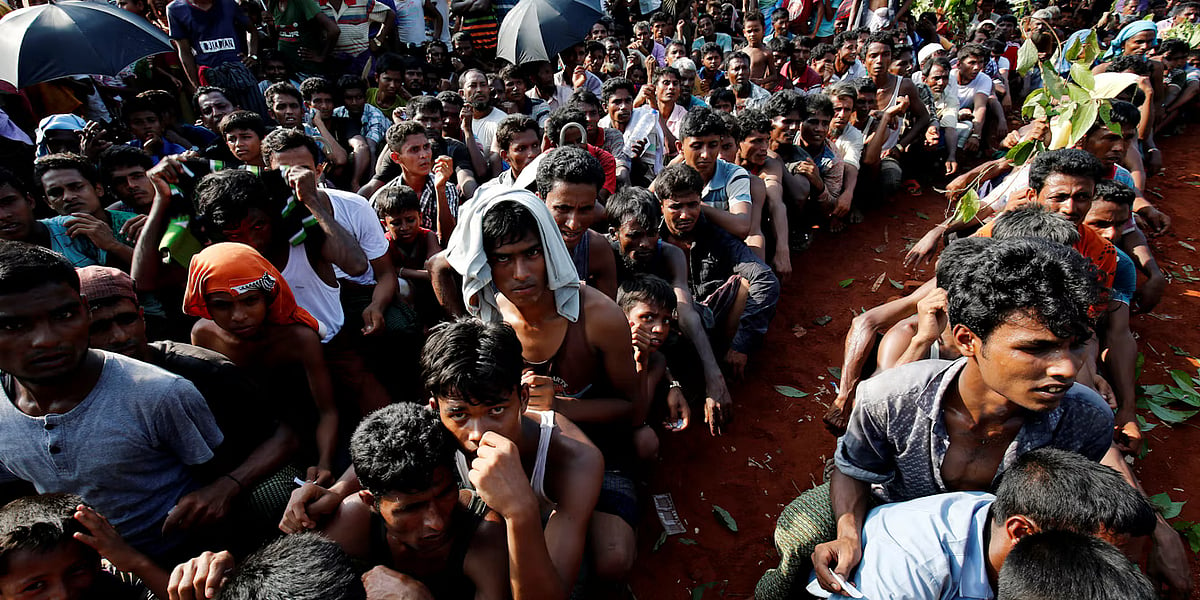
The United Nations has labeled the Rohingya the world’s most persecuted minority, describing the Myanmar military’s campaign as a textbook case of ethnic cleansing. Yet the current humanitarian catastrophe — marked by mass displacement, burned villages, and blocked aid — is not an isolated eruption.
It is the latest chapter in a systematic, seven-decade project of exclusion that began the moment Myanmar gained independence. New historical analysis reveals how colonial-era policies, a 1982 citizenship law, and enduring nationalist myths have engineered a permanent state of statelessness for over a million people.
The Colonial Blueprint for Division
British rule in Burma (1824–1948) laid the demographic and political groundwork for today’s crisis. Colonial administrators encouraged migration from Bengal to expand rice cultivation, tripling the Muslim population in Arakan (now Rakhine State) between 1871 and 1911.
The British also promised the Rohingya a "Muslim National Area" in exchange for loyalty during World War II, when Rohingya fighters backed the Allies while Burmese nationalists aligned with the Japanese. That promise was broken at independence.
In simple terms: The British imported labor and made political promises to a distinct ethnic group to serve imperial interests, then left without resolving the resulting tensions, planting a time bomb in the new nation’s citizenship framework.
The 1982 Citizenship Act
The pivotal moment came in 1982, when General Ne Win’s military junta enacted a Citizenship Law that defined belonging by ancestry. To be a citizen, one’s forebears had to belong to a "national race" present in Myanmar before the first Anglo-Burmese War in 1823. The law arbitrarily excluded the Rohingya, branding them as illegal immigrants brought by the British — despite historical evidence of their presence dating back to the 12th century.
In simple terms: The government rewrote the rules of citizenship to require proof of ancestry from before 1823, a standard the Rohingya could not meet because colonial records classified them as migrants. Overnight, they became foreigners in their own homeland.
The Mechanics of Erasure
Statelessness is not merely a legal technicality; it is a tool of systemic oppression. Without citizenship, the Rohingya are barred from public healthcare, education, and formal employment. The illiteracy rate hovers at 80 percent. Movement is restricted by checkpoints; marriage requires government permission and is capped at two children per couple. Violators face imprisonment, and their children are blacklisted — denied schooling, travel, and property rights.
In simple terms: Being stateless means the government owes you no protection and can deny you every basic right — healthcare, school, a job, the freedom to move or marry — while using your desperate attempts to survive as justification for further persecution.
The military responded with a scorched-earth campaign: satellite imagery and refugee testimony confirm widespread arson, extrajudicial killings, sexual violence, and the mining of border paths. Over 420,000 Rohingya fled to Bangladesh in weeks, joining 200,000 already there. Another 120,000 remained trapped in internment camps inside Rakhine. Humanitarian access was blocked for 250,000 people.
In simple terms: A small militant attack triggered a disproportionate military offensive that drove nearly half a million people across a border in weeks, while the government prevented food and medicine from reaching those left behind.
Aung San Suu Kyi and the Failure of Moral Leadership
Perhaps the most disheartening element for the international community has been the silence of Aung San Suu Kyi, a Nobel Peace laureate and Myanmar’s de facto civilian leader. She has denied the occurrence of "armed clashes or clearance operations," canceled a UN General Assembly appearance, and echoed the military’s "counterterrorism" narrative. Her refusal to acknowledge the atrocities signals that democratic transition alone cannot dismantle the architecture of persecution.
In simple terms: The world’s most famous democracy icon has chosen to protect the military’s impunity rather than defend a defenseless minority, proving that elections do not automatically guarantee human rights.
A Crisis Without End
The persecution of the Rohingya is not a bug in Myanmar’s system; it is a feature — a deliberate, legally codified, and violently enforced project of exclusion that has survived colonial rule, socialist dictatorship, and a flawed democratic opening.
Until the 1982 Citizenship Act is repealed or fundamentally amended, and until the military is held accountable under international law, the cycle of violence, flight, and erasure will continue. The Rohingya remain the world’s largest stateless population, a living indictment of a global order that treats citizenship as a privilege rather than a right.
Was this clear?
library_booksSource
The News Minute
23 Nov 2026
- funding model
- independent commercial media (revenue from subscriptions, advertising and reader contributions)
- owner
- The News Minute, an independent digital newsroom co-founded by Dhanya Rajendran (Editor-in-Chief)
Was the source link correct?
topicRelated Articles

Congress MP Asserts Opposition Unity Against Delimitation Bill, Citing Constitutional Defense

Love as Resistance: Dalit-Feminist Anthology Reframes Intimacy as Political Defiance Against Caste

Rajasthan SOG Busts Interstate Racket Selling Forged Medical Degrees; Class 11 Dropout Posed as Doctor at Safdarjung

Four Killed in Rohtak Hotel Shooting; Police Investigate Alleged Honey-Trap Ambush

Delimitation Bill Framed as Trojan Horse to Reshape India's Electoral Map

Vijay's TVK Labels Stalin 'Savarkar 2.0' in Sharp Delimitation Offensive

Rohit Sharma Reveals Reluctance Behind Mumbai Indians Captaincy Return
