
The Teacher Who Taught Us How to See: Shohini Ghosh Retires After 35 Years at Jamia Millia Islamia
Opinion. This story was written from a named writer’s column in Indian Express — Opinion of 24 November 2026. We report what was argued, not our own view — the publisher’s ownership is shown below.
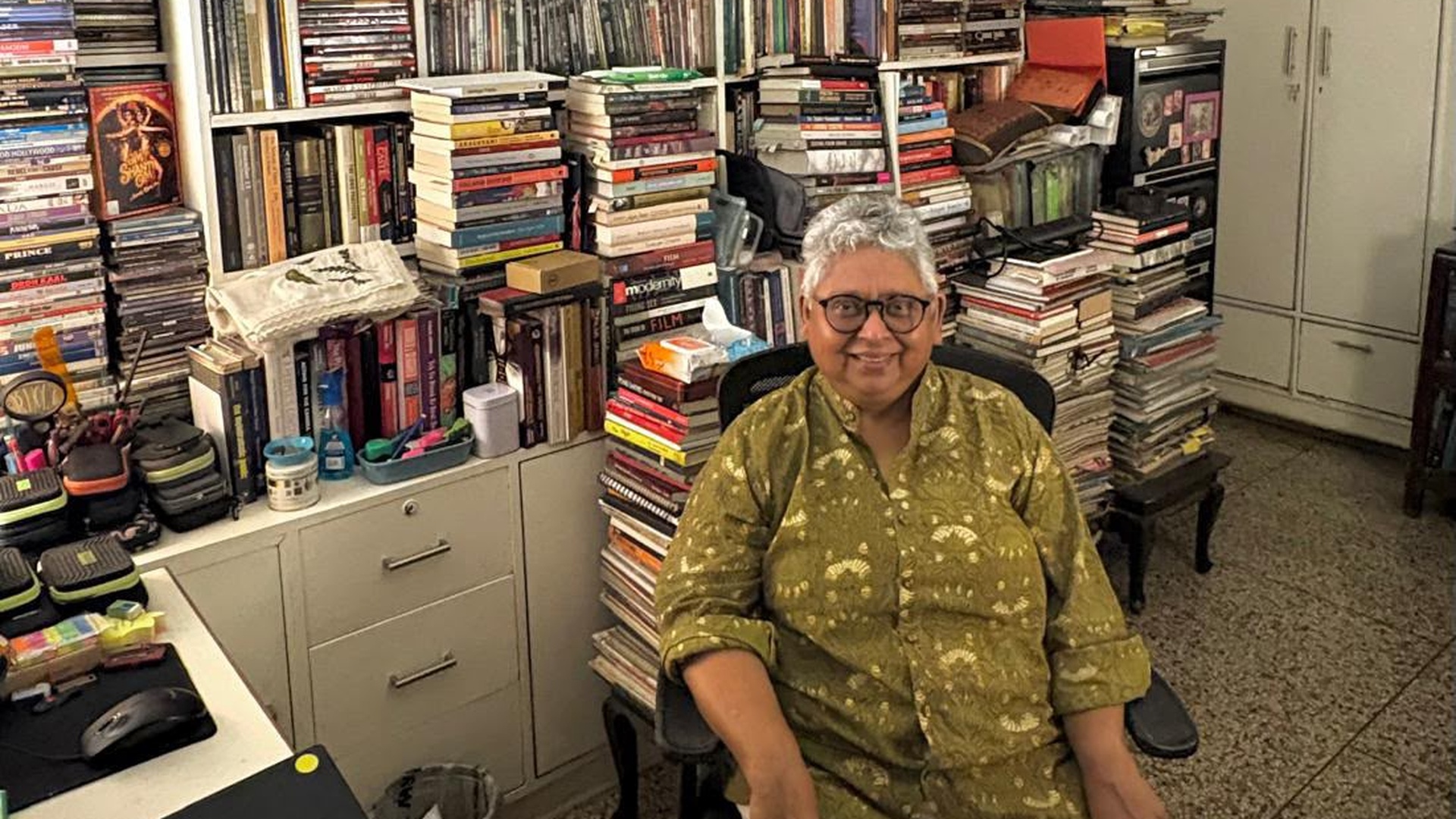
Professor Shohini Ghosh, a foundational figure at the AJK Mass Communication Research Centre (MCRC) at Jamia Millia Islamia, has retired after 35 years of teaching. Her departure marks the end of a pedagogical era defined not by the transmission of technical formulas, but by a rigorous insistence on critical perception.
Former students describe a classroom environment where cinema was treated as an ongoing conversation with reality rather than a mere reflection of it, and where the act of looking closely was framed as both an intellectual and ethical practice.
A Pedagogy of Perception
In her first screenwriting class, Ghosh did not begin with script structure or formatting. She began with Akira Kurosawa’s Dreams, teaching students that no film can be contained within a single reading. This approach centered on connotative reading — the practice of interpreting the cultural, emotional, and symbolic meanings that lie beneath the literal surface of an image.
In plain terms, she taught students to ask not just what a scene shows, but what it suggests, what it hides, and what it demands of the viewer.
The method was put to vivid test during a screening of Capturing the Friedmans (2003). After the film, most students offered straightforward, even simplistic readings. Ghosh then spent 20 minutes unpacking the documentary’s shifting perspectives, contradictions, and layered truths. The lesson was clear: complexity is not a problem to be solved but a condition to be embraced. As one former student, Anas Arif, writes, "It was a lesson in seeing."
Cinema as Conversation, Not Reflection
Ghosh consistently returned to the idea that cinema does not simply mirror the world as it exists. Instead, she positioned it as an active dialogue that questions beliefs, defies assumptions, and imagines futures yet unrealized. This philosophy erased hierarchies between canonical art cinema and popular forms.
In her classes, Andrei Tarkovsky sat alongside Shakti Samanta; Fearless Nadia was discussed with the same enthusiasm as Bruce Lee.
A screening of Abbas Kiarostami’s Ten could open a debate on the art-versus-artist dilemma, while the South Korean thriller Montage became a case study in experimental screenplay structure, and Sujoy Ghosh’s Kahaani a reminder of why certain narrative rules endure.
This breadth was not eclecticism for its own sake. It modeled a way of thinking that refused the comfort of a single critical framework. Students learned that contradictory readings can coexist, and that ambiguity is not a failure of analysis but a feature of the medium itself.
The Classroom as a Site of Nation-Building
Arif describes Ghosh as belonging to "an arguably shrinking generation of educators who made our collegiate spaces feel like homes and our classrooms into sites of nation-building." The phrase "nation-building" here does not refer to overt political instruction. Rather, it points to the quiet, cumulative work of forming citizens capable of nuanced thought, empathy, and self-questioning.
For students arriving at MCRC from far-flung corners of India, the classroom became a space where diverse backgrounds met a shared demand for intellectual rigor. Ghosh ensured that in learning to think critically, students never unlearned how to feel — a balance she saw as essential for practitioners of media.
Legacy of a Thinking Practitioner
MCRC was founded to produce "thinking practitioners" of media. Her retirement leaves a void not easily measured in course outlines or publication counts. It is measured instead in the generations of filmmakers, researchers, and writers who carry forward a simple, demanding lesson: to look closely, to question persistently, and to accept that the most important answers often deepen the questions.
As Arif concludes, "It was a lesson in becoming." That lesson, imparted across three and a half decades, remains the most enduring curriculum.
Was this clear?
library_booksSource
Indian Express — Opinion
24 Nov 2026
- funding model
- family-owned commercial media (revenue from advertising and subscriptions)
- owner
- Indian Express (P) Ltd, controlled by the Goenka family; Viveck Goenka is Chairman & Managing Director
Was the source link correct?
topicRelated Articles

Congress MP Asserts Opposition Unity Against Delimitation Bill, Citing Constitutional Defense

Love as Resistance: Dalit-Feminist Anthology Reframes Intimacy as Political Defiance Against Caste

Rajasthan SOG Busts Interstate Racket Selling Forged Medical Degrees; Class 11 Dropout Posed as Doctor at Safdarjung

Four Killed in Rohtak Hotel Shooting; Police Investigate Alleged Honey-Trap Ambush

Delimitation Bill Framed as Trojan Horse to Reshape India's Electoral Map

Vijay's TVK Labels Stalin 'Savarkar 2.0' in Sharp Delimitation Offensive

Rohit Sharma Reveals Reluctance Behind Mumbai Indians Captaincy Return
