
Tove Jansson’s Hobbit Illustrations Reveal the ‘Ecstatic Truth’ of Childhood in a Vast World
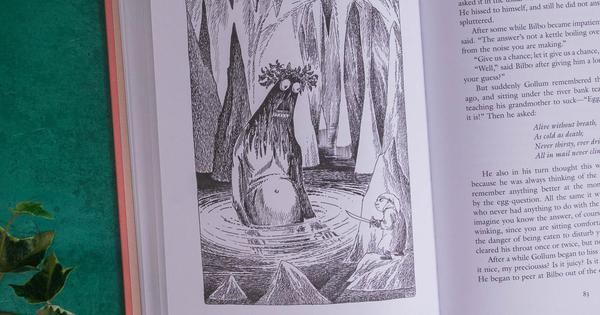
The first English-language edition of Tove Jansson’s illustrations for The Hobbit brings to light a striking, unsettling vision of Middle-earth that predates Peter Jackson’s cinematic benchmark by four decades.
Published in 1962 for the Swedish translation En Hobbit’s Äventyr, these black-and-white drawings have now been collected in The Hobbit: Illustrated by Tove Jansson, offering readers a chance to encounter a Middle-earth shaped not by blockbuster aesthetics but by the singular imagination of the Moomins’ creator.
Jansson’s work captures what the writer Werner Herzog might call the "ecstatic truth" of childhood: the experience of being a small, vulnerable presence in a landscape of overwhelming scale and menace.
A Meeting of Two Mythic Imaginations
Tove Jansson and J.R.R. Tolkien might seem an unlikely pair. Jansson was a Swedish-speaking Finn whose Moomin stories are synonymous with gentle whimsy; Tolkien was an Oxford don who forged a high-fantasy epic. The Kalevala’s influence on Tolkien’s legendarium is well documented — he borrowed the "linguistic aesthetics" of Finnish for his Elvish language Quenya.
Jansson, steeped in the same cultural heritage, brought a Nordic sensibility to her commission that resonated with the ancient, mythic texture of Tolkien’s world.
That shared root gives Jansson’s illustrations an intuitive affinity with Tolkien’s invented mythology.
Illustrating Before the Blockbuster Era
When Jansson accepted the commission in 1961, fantasy had not yet solidified as a distinct publishing genre. The Lord of the Rings would only become a global cultural phenomenon in the late 1960s, spawning the visual tropes — towering citadels, stylized armor, CGI monsters — that now define the genre in the public imagination.
In 1962, artists enjoyed greater license to treat The Hobbit as a standalone children’s book rather than a prequel to an epic masterpiece. Jansson did not use that freedom to soften the material. In a 1961 essay, she argued that "an intense horror sensation" resides in every honest children’s book.
As children’s literature scholar Olga Holownia explains, Jansson found Middle-earth’s scenery "seductive in its macabre ferocity" and saw the project as an opportunity to create horror-infused landscapes.
In simple terms: Before Lord of the Rings became a movie franchise, illustrators could interpret The Hobbit more freely. Jansson chose to make her version scary and intense, believing that real children’s literature should not shy away from darkness.
Horror and the Sublime in Children’s Art
Jansson’s illustrations bear out that intention. They are filled with dynamic movement and a sense of the sublime — the awe mixed with terror that arises when confronting vastness. Her Misty Mountains are as far from the cozy valleys of Moominvalley as possible.
The ruined gates of the Lonely Mountain resemble the monstrous jaws of Smaug himself, framed by plumes of billowing steam and dragon-fire. Characters are literally dwarfed by the landscapes they traverse and the creatures they encounter. This visual strategy conveys a profound psychological truth: the world as experienced by a child is immense, imposing, and often terrifying.
Gollum as Cave-Troll, Bilbo as Snufkin
Nowhere is this distortion more striking than in Jansson’s Gollum. Far from the gnarled, shrunken hobbit of Tolkien’s description, he towers over Bilbo like a slimy cave-troll — a looming predator rather than a pitiable wretch. Conversely, her Bilbo, wrapped in a travelling cloak and outsized hat, carries more than a hint of Snufkin, the free-spirited wanderer of the Moomin stories.
Readers seeking strict fidelity to Tolkien’s text may be disappointed, but Jansson was not aiming for literal illustration. She was capturing the feeling of the story: the vulnerability of the small against the colossal.
In simple terms: Jansson drew Gollum as a giant monster and Bilbo as a tiny wanderer to show how scary the world feels to a child. Accuracy to the text mattered less than emotional truth.
Tolkien’s Ambivalence Toward Visual Adaptation
There is no surviving record of Tolkien’s opinion of Jansson’s work. We do know, however, that he harbored deep reservations about fantasy illustration in principle.
In his seminal 1947 essay "On Fairy-Stories," he wrote that when a story describes a hill and a river, "the illustrator may catch, or nearly catch, his own vision of such a scene; but every hearer of the words will have his own picture." Tolkien feared that a fixed image could displace the reader’s internal imagination.
Yet this stance hardly stopped him from illustrating his own work; since The Hobbit’s 1937 publication, Tolkien’s own pictures have become all but canonical.
In simple terms: Tolkien thought pictures might limit readers’ imaginations, but he drew his own illustrations anyway. His art became the default visual reference for decades.
The Ecstatic Truth of Being Small
Visual media — from Hayao Miyazaki’s Spirited Away to Guillermo del Toro’s Pan’s Labyrinth to Jackson’s Lord of the Rings — possess unique enchantments. So does Jansson’s work.
Her Hobbit illustrations do not replace Tolkien’s words; they refract them through a distinct artistic consciousness, one that understood the "ecstatic truth" of childhood: the simultaneous wonder and dread of navigating a world built for giants.
The new English edition allows a broader audience to witness that refraction, reminding us that the most faithful adaptation may not be the most literal, but the one that honors the emotional core of the tale.
In an era saturated with high-fidelity franchise imagery, Jansson’s stark, expressive line work offers a bracing alternative — a Middle-earth that feels ancient, alien, and alive with the same macabre ferocity that once seduced a Moomin creator to the slopes of the Lonely Mountain.
Was this clear?
library_booksSource
Scroll.in
23 Nov 2026
- funding model
- independent commercial media (revenue from advertising, reader subscriptions and grants)
- owner
- Scroll.in (Scroll Media), an independent digital newsroom founded by Samir Patil
Was the source link correct?
topicRelated Articles

Congress MP Asserts Opposition Unity Against Delimitation Bill, Citing Constitutional Defense

Love as Resistance: Dalit-Feminist Anthology Reframes Intimacy as Political Defiance Against Caste

Rajasthan SOG Busts Interstate Racket Selling Forged Medical Degrees; Class 11 Dropout Posed as Doctor at Safdarjung

Four Killed in Rohtak Hotel Shooting; Police Investigate Alleged Honey-Trap Ambush

Delimitation Bill Framed as Trojan Horse to Reshape India's Electoral Map

Vijay's TVK Labels Stalin 'Savarkar 2.0' in Sharp Delimitation Offensive

Rohit Sharma Reveals Reluctance Behind Mumbai Indians Captaincy Return
