
Vidhi Legal Expert Examines Free Speech Constraints in New Opinion Piece
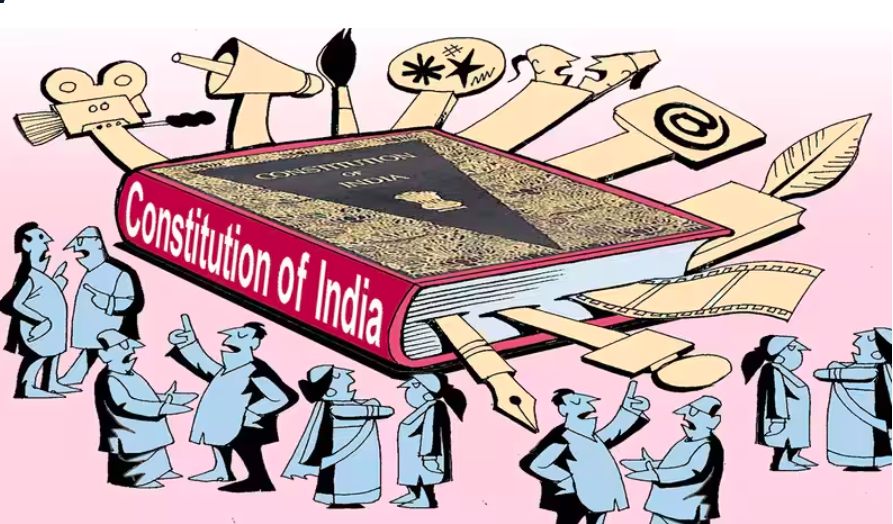
On January 5, 2023, the Vidhi Centre for Legal Policy published an opinion piece titled "How Free Speech is Little Freer," authored by Aditya Prasanna Bhattacharya, who leads the organisation's Bengal chapter. The publication adds to Vidhi's ongoing contribution to public law discourse in India, focusing on the evolving boundaries of constitutional freedoms.
Author Brings Deep Policy and Legislative Experience
Bhattacharya serves as Lead, Vidhi Bengal, and previously held the position of Senior Resident Fellow with the Research Director's Office at Vidhi. In that capacity, he advised multiple Ministries of the Government of India on drafting legislation across a diverse range of sectors. His portfolio included tribunal reforms, cinematography regulation, the regulatory framework for nuclear energy, legislation affecting micro, small and medium enterprises (MSMEs), and the repeal of obsolete laws.
In simpler terms: Bhattacharya has worked directly with the government to write and refine actual laws that govern courts, films, nuclear power, small businesses, and the cleanup of outdated statutes. This means his analysis of free speech is grounded in practical experience of how legislation is crafted and implemented.
Beyond his advisory role, Bhattacharya contributes regularly to national daily newspapers such as the Times of India and Hindustan Times, writing on issues of public law and policy. This public-facing commentary bridges the gap between technical legal drafting and broader civic understanding.
Academic Rigour Anchors Practical Insight
Complementing his policy work, Bhattacharya is a part-time PhD candidate at the University of Cambridge. He holds the distinction of being a Wright Rogers scholar and a Lucy Cavendish Law Enrichment scholar. His doctoral research examines universal adult franchise in India — the constitutional guarantee that every adult citizen has the right to vote regardless of caste, religion, gender, or property ownership.
In simpler terms: Universal adult franchise is the principle that every adult citizen gets one vote. Bhattacharya's PhD studies how this principle developed and operates in India, connecting the right to speak freely with the right to participate in democracy.
His academic credentials are further distinguished by a BA LLB (Hons.) from the National Law School of India University, Bengaluru, and an LLM (First Class) from the University of Cambridge. At Cambridge, he was awarded two Faculty Prizes for Advanced Public Law and Comparative Legal History, as well as the Emmeline Pankhurst Prize for contributions to Lucy Cavendish College.
Vidhi's Role in Shaping Legal Discourse
The Vidhi Centre for Legal Policy functions as an independent think-tank dedicated to improving law and governance in India. By publishing opinion pieces from researchers with direct legislative drafting experience, Vidhi aims to inject evidence-based analysis into public debates. The organisation's work spans judicial reform, regulatory design, and constitutional law, often providing technical assistance to government bodies while maintaining analytical independence.
The Title Signals a Critical Lens
The opinion's title — "How Free Speech is Little Freer" — suggests a critical examination of the current state of free expression in India. Given Bhattacharya's background in cinematography regulation and tribunal reforms, the piece likely engages with how statutory restrictions, regulatory bodies, and judicial interpretation shape the space for public discourse.
In simpler terms: The title hints that free speech in practice is more restricted than the Constitution suggests. The author's past work on film censorship and court systems gives him a strong vantage point to explore why that gap exists.
Context of Ongoing Policy Engagement
Bhattacharya's involvement in the repeal of obsolete legislation reflects a broader policy push to modernize India's statute book. Outdated laws often remain on the books long after their relevance has faded, sometimes creating unintended chilling effects on speech and association. His work on MSME legislation also touches on economic freedoms that intersect with expressive activities, particularly for small publishers, digital creators, and media enterprises.
Bridging Scholarship and Statecraft
The combination of high-level government advisory work, consistent public commentary, and rigorous doctoral research positions Bhattacharya at the intersection of scholarship and statecraft. This dual engagement allows him to identify how legal text translates into administrative action and, ultimately, into the lived experience of rights holders.
The opinion piece published by Vidhi serves as a conduit for these insights, offering readers a perspective informed by both the drafting room and the seminar room.
As debates over digital speech, platform regulation, and sedition laws continue to evolve in India, contributions from practitioners who have operated inside the legislative machinery carry particular weight. They illuminate not just what the law says, but how it is designed, defended, and sometimes diluted in practice.
Was this clear?
library_booksSource
Vidhi Centre for Legal Policy
2 Nov 2026
- jurisdiction
- India
- jurisdiction
- India
- jurisdiction
- India
- jurisdiction
- India
- jurisdiction
- India
- jurisdiction
- India
- jurisdiction
- India
- jurisdiction
- India
- jurisdiction
- India
- jurisdiction
- India
- jurisdiction
- India
- jurisdiction
- India
- jurisdiction
- India
- jurisdiction
- India
- jurisdiction
- India
- jurisdiction
- India
- jurisdiction
- India
- jurisdiction
- India
- jurisdiction
- India
- jurisdiction
- India
- jurisdiction
- India
- jurisdiction
- India
- jurisdiction
- India
- jurisdiction
- India
- jurisdiction
- India
- jurisdiction
- India
Was the source link correct?
topicRelated Articles

FSSAI Authorizes Second Prosecution Against Bisleri in a Week Over Bacterial Contamination

Gemini Rolls Out Enhanced Investor Protections for UK Users Under New FCA Financial Promotions Rules

Crypto Emerges as Decisive Voting Issue in 2024 US Presidential Election, Survey Finds

Gemini Warns of Web3 Talent Exodus as U.S. Regulatory Uncertainty Deepens at Consensus 2024

Gemini's Legal Chief Calls for Clean-Slate Crypto Regulation, Rejects Howey Test and Dual SEC-CFTC Oversight

Trump's Crypto Reserve Plan, SEC Task Force, and Senate Vote Signal Major Shift in US Digital Asset Policy

Haryana Panchayat Cyber Fraud Exposes Systemic Vulnerabilities in Government Digital Payment Infrastructure
