
Viral Video Falsely Links 2024 Farmers' Protest Footage to Recent Sikh Demonstration at Kartarpur Border
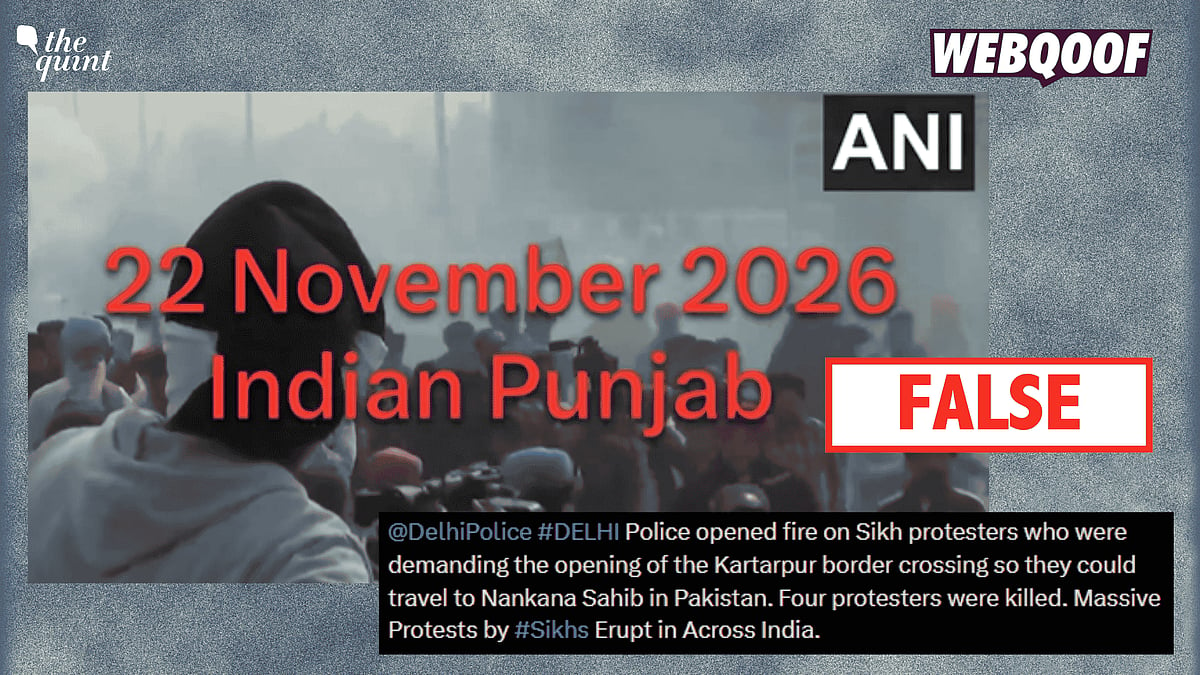
A widely circulated video purporting to show Delhi Police opening fire on Sikh protesters demanding the opening of the Kartarpur corridor has been conclusively debunked. Fact-checking by The Quint's WebQoof unit confirms the footage originates from the 2024 farmers' protests at the Punjab-Haryana Shambhu border, where police deployed tear gas against demonstrators marching toward New Delhi.
The misattribution underscores the persistent challenge of contextual manipulation in digital media, where archival protest footage is routinely repurposed to inflame communal tensions or misrepresent current events.
The Viral Claim and Its Spread
The video gained traction across social media platforms in late November 2026, accompanied by captions alleging that Delhi Police had used live ammunition against Sikh protesters advocating for pilgrimage access to Nankana Sahib in Pakistan via the Kartarpur Sahib corridor.
The claim carried significant emotive weight, invoking both religious sentiment and historical grievances surrounding police action against Sikh demonstrators. Such narratives tend to amplify rapidly in polarized information environments, where verification often lags behind dissemination.
Forensic Verification Through Reverse Image Search
Investigators employed reverse image search tools, including Google Lens, to trace the visual provenance of the clip. The search returned a Reuters report from 2024 containing matching visual sequences at the 1:03 timestamp.
That report documented police firing tear gas canisters at hundreds of farmers marching toward the national capital to press demands for legally guaranteed minimum support prices for crops. The visual correspondence was exact: identical police formations, barrier configurations, and tear gas deployment patterns confirmed the shared source.
Original Context
The original footage was captured on 13 February 2024 at the Shambhu border, a key transit point between Punjab and Haryana. Police used tear gas and water cannons to prevent the column from advancing toward Delhi, resulting in numerous injuries and one fatality. The episode was extensively documented by national and international media at the time.
Official Denial and Platform Accountability
The Delhi Police's official X (formerly Twitter) account intervened directly on 22 November 2026, replying to a viral post with a categorical rebuttal: "This video is an old clip connected to the 2024 farmers' protest and is being shared completely out of context. Please refrain from spreading misleading information.
Suitable legal action will be taken against offenders." The statement reflects a growing trend of law enforcement agencies using social media for real-time fact correction, though critics argue such responses often arrive after false narratives have already cemented in target audiences.
The Mechanics of Contextual Misinformation
This case exemplifies a prevalent misinformation tactic: temporal displacement. Authentic footage from one protest is stripped of its original metadata — date, location, cause — and recontextualized to serve a new, often inflammatory narrative. The technique exploits the visual credibility of real footage while weaponizing the viewer's lack of access to provenance data.
Unlike deepfakes or synthetic media, which fabricate content, contextual misinformation repurposes truth, making it harder to detect through technical analysis alone. Effective countermeasures require both algorithmic provenance tracking and media literacy interventions that encourage source verification before sharing.
Broader Implications for Public Discourse
The recurrence of such disinformation cycles during periods of social unrest raises structural concerns. When archival protest footage is routinely weaponized to depict current state violence against specific communities, it erodes trust in legitimate documentation of human rights violations. For democratic societies, the solution lies not only in reactive fact-checking but in building resilient information ecosystems where provenance is embedded, accessible, and socially valued.
Was this clear?
library_booksSource
The Quint
24 Nov 2026
- funding model
- privately held, founder-backed (revenue from advertising and subscriptions; Bahl previously founded Network18, now separately owned)
- owner
- The Quint (Quintillion Media Pvt Ltd), founded by Raghav Bahl and Ritu Kapur
Was the source link correct?
topicRelated Articles

Congress MP Asserts Opposition Unity Against Delimitation Bill, Citing Constitutional Defense

Love as Resistance: Dalit-Feminist Anthology Reframes Intimacy as Political Defiance Against Caste

Rajasthan SOG Busts Interstate Racket Selling Forged Medical Degrees; Class 11 Dropout Posed as Doctor at Safdarjung

Four Killed in Rohtak Hotel Shooting; Police Investigate Alleged Honey-Trap Ambush

Delimitation Bill Framed as Trojan Horse to Reshape India's Electoral Map

Vijay's TVK Labels Stalin 'Savarkar 2.0' in Sharp Delimitation Offensive

Rohit Sharma Reveals Reluctance Behind Mumbai Indians Captaincy Return
