
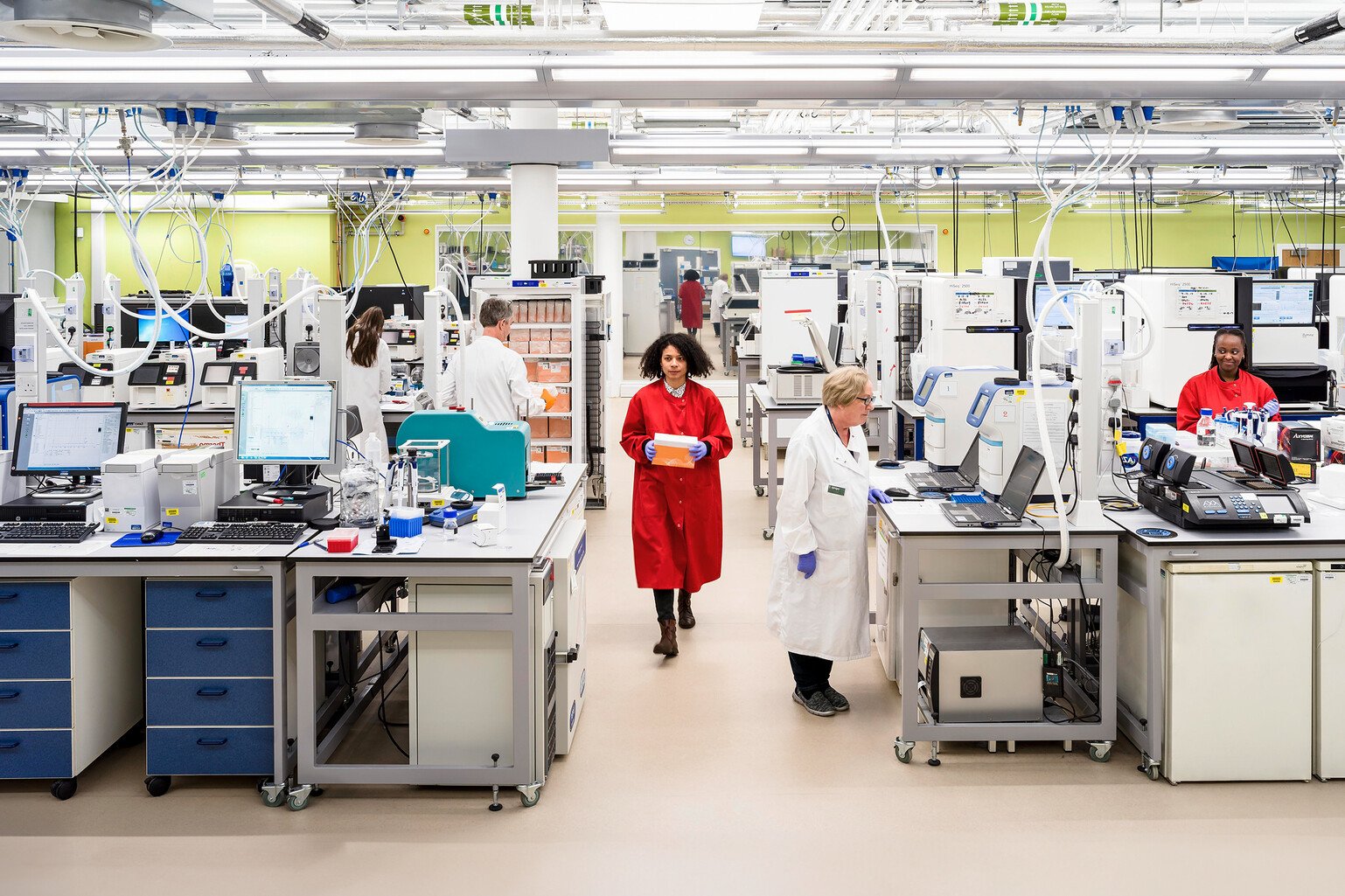
Two decades after the Human Genome Project delivered the first complete human sequence, Wellcome is convening a forward-looking workshop series to shape the next 25 years of genomics research. The initiative confronts critical gaps — in data diversity, regulatory readiness, and ethical frameworks — that threaten to limit the field's promise for global health equity.
From Reference Genome to Global Resource
Wellcome's involvement in genomics traces back to 1992, when it opened the Wellcome Sanger Institute near Cambridge to participate in the Human Genome Project. Completed in 2003 after 13 years, that project was a landmark: it provided the foundational reference sequence that made all subsequent genomic medicine possible. Wellcome was a major funder and insisted the data remain publicly accessible — a principle that still guides its strategy.
In simple terms: The Human Genome Project was like writing the first complete instruction manual for building a human. Wellcome helped fund it and made sure everyone could read it for free.
Since then, the institute has seeded or supported nearly every major population-scale genomics effort: the Wellcome Trust Case Control Consortium (2005) for common disease genetics; UK Biobank (2006), now holding genetic and health data from 500,000 volunteers; the Global Alliance for Genomics and Health (2013) to enable responsible data sharing across borders; the Human Cell Atlas (2016) mapping every cell type; and the Darwin Tree of Life (2020) sequencing thousands of eukaryotic species.
In 2024, Wellcome joined the Ancient Environmental Genomics Initiative for Sustainability, applying paleogenomics to climate resilience.
The Diversity Deficit
Despite this progress, a persistent blind spot undermines the field: the vast majority of genomic data comes from people of European ancestry. This bias stems from early large-scale sequencing projects being concentrated in high-income countries. The consequence is not merely academic — it directly limits clinical utility.
Polygenic risk scores, which estimate disease susceptibility from genetic variants, lose accuracy when applied to underrepresented populations. Drug targets discovered in one group may not translate to others.
In simple terms: If you only study the genetics of one group of people, the medical insights you get won't work as well for everyone else. It's like developing a drug tested only on men and then giving it to women — the dosing and side effects might differ.
Wellcome acknowledges its responsibility as a global funder to correct this imbalance. It supports the H3Africa initiative (launched in 2012 with the NIH and African Society of Human Genetics) and the African Bioinformatics Institute to build local research capacity.
A commissioned landscaping report found wide variation in genomics maturity across countries and recommended concrete steps: integrating socioeconomic data into collection, deepening community engagement, and expanding bioinformatics training and genetic counseling in underserved regions.
Engineering Biology and the Policy Gap
Technological change is outpacing governance. Engineering biology — the application of engineering principles to redesign biological systems — is advancing rapidly, enabling synthetic genomes, novel therapeutics, and biosurveillance tools. Yet regulatory frameworks differ dramatically between countries, creating uncertainty for researchers and risks for public trust.
In simple terms: Scientists can now rewrite DNA code like software, but the laws governing what's allowed haven't caught up. Different countries have different rules, which makes collaboration hard and raises safety concerns.
Wellcome is engaging the UK government to develop coherent policy backed by ethical guidance. The goal is not just permissive regulation but a framework that ensures safety, equity, and public confidence. Simultaneously, the funder is pushing to deploy genomic technologies in under-resourced settings — both to diversify data generation and to address urgent challenges like climate-driven disease spread and greenhouse gas mitigation through microbial engineering.
Ethics, Trust, and the Social Contract
Genomics is uniquely personal: it reveals information about ancestry, disease risk, and traits that affect not just individuals but families and communities. Consent, privacy, and trust are not peripheral — they are prerequisites for participation. Yet there is no universal ethical playbook. Cultural norms around data ownership, communal consent, and benefit-sharing vary widely.
In simple terms: Your genome isn't just yours; it shares information with your relatives and community. Different cultures have different ideas about who controls that information and who benefits from it. Science needs to respect those differences.
Wellcome's near-term goal is to develop practical guidance for researchers navigating these contexts. The approach is trans-disciplinary and multi-geographic: bringing together ethicists, social scientists, legal scholars, and community representatives from diverse regions to co-create solutions. The funder argues that without this groundwork, even technically brilliant science will stall at the implementation stage.
Looking Ahead
In 2025, the Wellcome Sanger Institute and Wellcome will launch the Sanger Genomics Futures series — a program of workshops imagining the field's trajectory over the next 25 years. The exercise is deliberately speculative: identifying emerging opportunities, from real-time pathogen surveillance to in vivo genome editing, and stress-testing them against the diversity, policy, and ethical challenges outlined above.
In simple terms: They're gathering experts to play out "what if" scenarios for the future of genomics — not just what's scientifically possible, but what's socially responsible and globally equitable.
The series reflects a broader shift in Wellcome's strategy: from funding discrete projects to stewarding the ecosystem. As Director of Discovery Research Michael Dunn and colleagues oversee three recurring award schemes — Early-Career, Career Development, and Discovery Awards — the emphasis is on bold, creative research that can translate into health gains for all populations.
The message is clear: the next reference genome won't be a single sequence. It will be a diverse, dynamic, and ethically grounded global resource.
Was this clear?
library_booksSource
Wellcome Trust
18 Nov 2026
- funding model
- commercial / government
- jurisdiction
- International
- owner
- Organization (Wellcome Trust)
Was the source link correct?
topicRelated Articles

Nifty Gateway's Summer 2020 Drops Signal Maturation of Blockchain-Based Art Market

Gemini Engineers Dynamic 3D NFT Badges for Employee Onboarding Using Three.js

Gemini Security Analyst Reveals How AiTM Phishing Bypasses MFA and How Simple Fixes Stop Attackers

Gemini's Hyperdrive Architecture Unifies Blockchain Wallet Infrastructure for Speed and Security

Gemini Unveils Low-Latency WebSocket API to Court Institutional Crypto Traders

Cryptocurrency Wallets Decoded: The Cryptographic Infrastructure Securing Digital Assets

Congress MP Asserts Opposition Unity Against Delimitation Bill, Citing Constitutional Defense
