
Why India Inc Refuses to Invest: The Certainty-Surprise Paradox
Opinion. This story was written from a named writer’s column in Indian Express — Opinion of 23 November 2026. We report what was argued, not our own view — the publisher’s ownership is shown below.
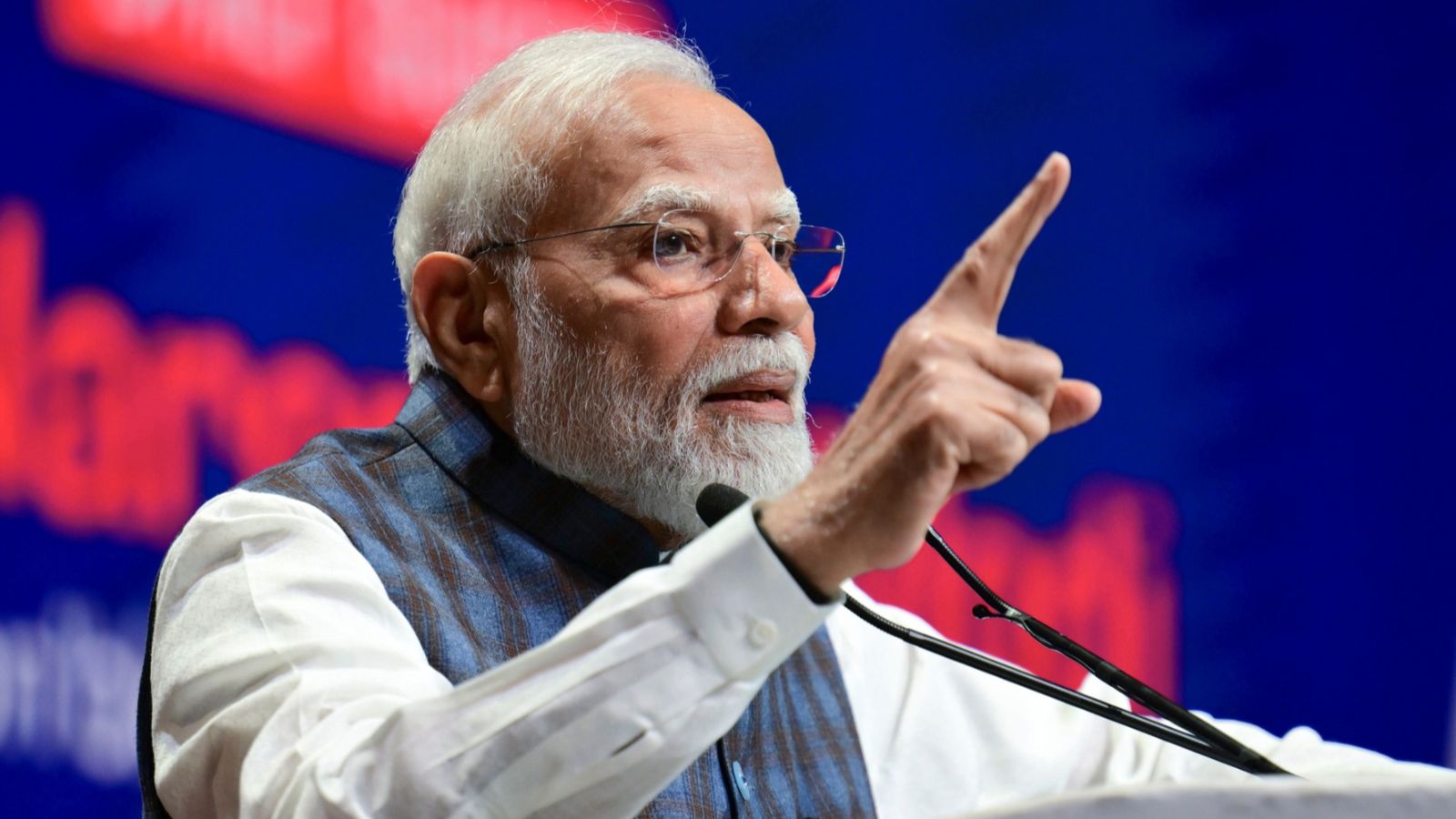
Prime Minister Narendra Modi used his address at the FICCI annual conclave to deliver a blunt rebuke to India’s corporate leaders.
For 33 minutes, he listed the concessions his government had granted — a sharp cut in corporate tax rates, a higher income-tax threshold for individuals — and demanded to know why private investment remained stagnant, why salaries had not risen, and why manufacturing quality lagged.
The data backs his frustration: since the 2019 tax cut, corporate retained profits have climbed to 11.2 per cent of GDP from 10.5 per cent, while private investment has flatlined at around 12 per cent of GDP. The manufacturing share of GDP has actually fallen since the launch of the Make in India initiative. Yet the prime minister’s diagnosis misses the cause.
Corporate India is not on strike; it is shell-shocked.
The $100 Billion Tax Cut That Failed to Spur Investment
The centrepiece of the government’s supply-side strategy was the September 2019 reduction in the corporate tax rate, a move that has foregone roughly $100 billion in revenue — nearly equal to the Union government’s total education spending over the same period.
The logic was classic trickle-down economics: lower taxes would leave firms with more cash, which they would deploy into new factories, equipment, and hiring. Instead, companies pocketed the savings. Retained earnings rose, but capital formation did not.
The middle class, meanwhile, now pays more in personal income tax than the entire corporate sector contributes, effectively subsidising boardroom caution.
Trickle-down economics, the theory that benefits to corporations and the wealthy will eventually "trickle down" to everyone else through investment and job creation, has not materialised in this case. The cash stayed on balance sheets.
A History of Policy Shocks
The reluctance to invest did not begin in 2019. It is the accumulated scar tissue of a decade of governance by surprise. The sudden demonetisation crippled cash-dependent supply chains, devastated small enterprises, and signalled that the rules of the game could be rewritten overnight.
Four years later, a nationwide lockdown was imposed with a four-hour warning, stranding migrant workers and forcing businesses to slash payrolls and shelve expansion plans. Each episode taught promoters the same lesson: long-term bets are irrational when the policy environment can shift in a midnight address.
The Perception of a Rigged Game
Uncertainty is compounded by the perception that enforcement is selective.
The Enforcement Directorate has filed three times as many corporate cases as in the previous administration, creating a climate where "the process is the punishment." Promoters watch one conglomerate grow its market value fifteen-fold, triple its share of ports, enter eight new sectors, and capture a disproportionate slice of state-owned bank lending — all while enjoying apparent political patronage.
When the leadership of a respected business group is summoned to the home minister’s residence with the finance minister in attendance, the message to every other boardroom is unmistakable: no company is too large to be summoned, and a Delhi sign-off is implicitly required for major decisions. In such an environment, the rational strategy is not to compete but to exit — or to park capital abroad.
Indian firms now invest three times more overseas than they did before.
The Fundamental Mismatch
A steel plant takes five years to build and twenty-five to pay back. A semiconductor fabrication facility, a port, or a refinery each represents a wager that today’s regulatory, tax, and legal framework will still hold in 2045.
When the rulebook can be rewritten by a press conference in Goa, a four-hour lockdown notice, or a tax demand exceeding a company’s revenue, no spreadsheet can price that risk.
The chief financial officer who learnt of the 2019 tax cut at a surprise press conference — two months after the Budget, where such announcements belong — did not hear a promise of stability; he heard confirmation that anything can change, anytime, without warning.
Businesses plan in decades; this government governs by surprises. The two cannot coexist. Economic advisers know this, but fear or servility keeps them silent. A middle-school student could explain why the picnic invitation is declined after the host pushed the guest off a cliff. Sermons do not unlock capital; credibility does.
Until the prime minister can credibly promise — and deliver — an end to overnight bans, midnight knocks, and anointed favourites, corporate India will continue to applaud publicly and tighten its wallet privately.
Was this clear?
library_booksSource
Indian Express — Opinion
23 Nov 2026
- funding model
- family-owned commercial media (revenue from advertising and subscriptions)
- owner
- Indian Express (P) Ltd, controlled by the Goenka family; Viveck Goenka is Chairman & Managing Director
Was the source link correct?
topicRelated Articles

Congress MP Asserts Opposition Unity Against Delimitation Bill, Citing Constitutional Defense

Love as Resistance: Dalit-Feminist Anthology Reframes Intimacy as Political Defiance Against Caste

Rajasthan SOG Busts Interstate Racket Selling Forged Medical Degrees; Class 11 Dropout Posed as Doctor at Safdarjung

Four Killed in Rohtak Hotel Shooting; Police Investigate Alleged Honey-Trap Ambush

Delimitation Bill Framed as Trojan Horse to Reshape India's Electoral Map

Vijay's TVK Labels Stalin 'Savarkar 2.0' in Sharp Delimitation Offensive

Rohit Sharma Reveals Reluctance Behind Mumbai Indians Captaincy Return
