
AI Agent Theorizer Launches in Asta, Helping Scientists Generate Hypotheses Across Cancer, Neuroscience, and Climate Research
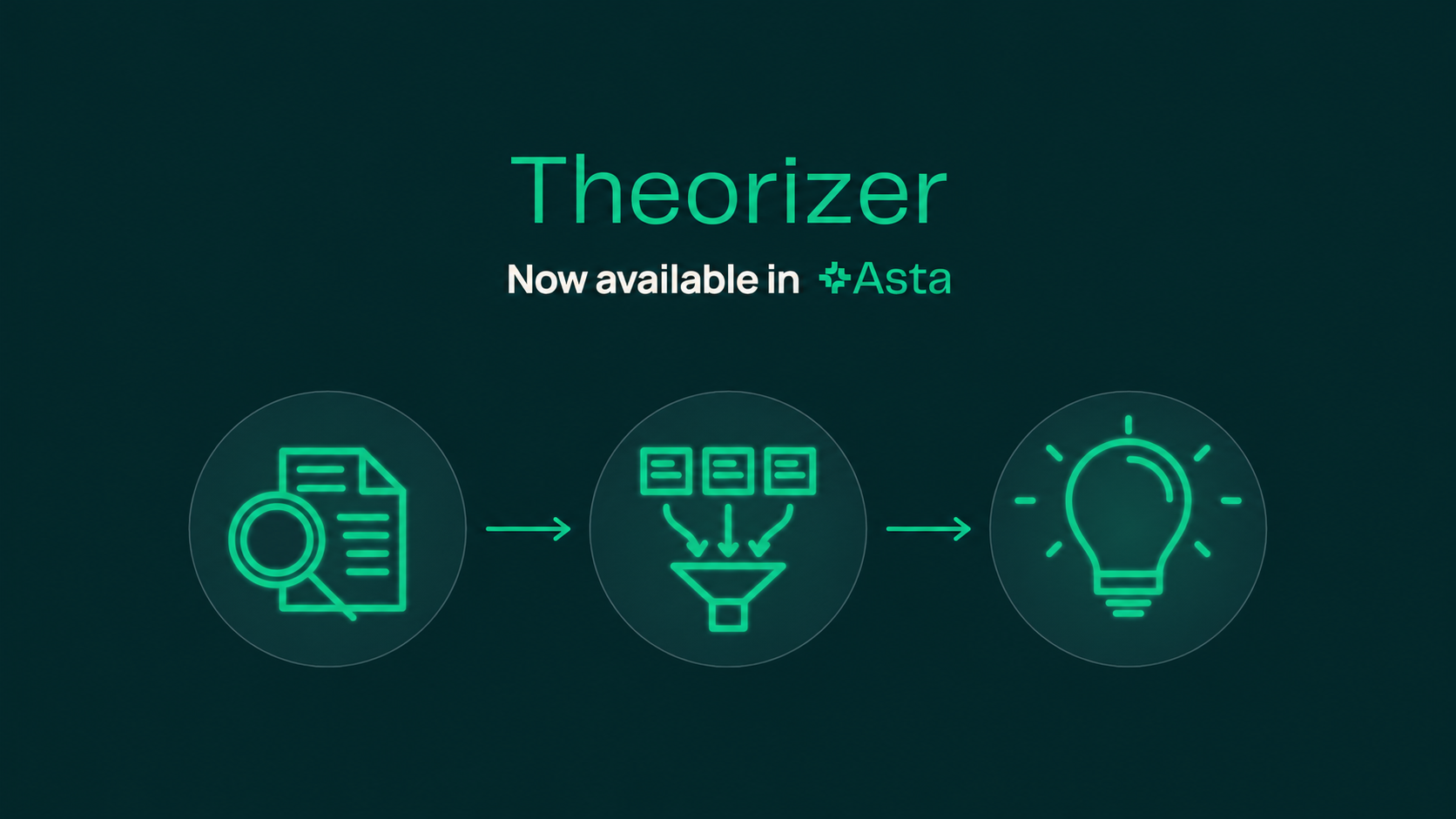
The Allen Institute for AI (Ai2) has launched Theorizer, an AI agent designed to synthesize scientific literature and propose testable explanations for unexplained observations, making it available through the Asta research platform and releasing its code as open source.
The tool has already assisted researchers in formulating hypotheses for driver-negative lung adenocarcinoma, mapping the function of VIP interneurons in the visual cortex, diagnosing anomalies in Peru's climate records, and analyzing a century of native potato diversity in the Andes.
While Theorizer accelerates the path from puzzling data to concrete hypotheses, its developers and early users emphasize that human expertise remains essential for evaluating evidence, designing validation experiments, and allocating scarce research resources.
Theorizer
Theorizer operates by searching the research literature in response to a scientist's question, then creating a structured template to extract specific findings from each paper — such as which genes were studied, how their activity was measured, and what happened when they were perturbed.
It compares these extracted findings across studies to generate candidate theories, each linked to the publications supporting its claims. Researchers can inspect the cited evidence, assess whether studies examined comparable conditions, and flag claims the tool considers novel.
However, the system can miss relevant papers and misjudge originality; a theory that appears new within the analyzed set may already exist elsewhere in the literature.
In simple terms, Theorizer acts like a research assistant that reads thousands of papers, pulls out the key experimental details, and suggests possible explanations for a puzzling result — complete with citations so the scientist can verify the evidence. It does not run experiments or analyze raw data; instead, it helps frame the questions that experiments should address.
From Lung Cancer to Neuroscience
Cracking the Driver-Negative Lung Cancer Puzzle
Dr. Sid Devarakonda, medical director of thoracic oncology at Providence Swedish Cancer Institute, used Theorizer to investigate why 20–30% of lung adenocarcinomas lack a recognized genetic driver despite comprehensive sequencing. Most such tumors harbor alterations that activate the RAS signaling pathway, which drives cell growth. In driver-negative cases, the growth mechanism remains unknown.
Devarakonda asked Theorizer, "What's happening in these tumors?" After several iterations, the agent proposed three hypotheses: an undetected genetic change activating RAS signaling; an alternative mechanism allowing cell division without RAS; or a shift in cellular identity causing the tumor to behave like a different cell type. Theorizer helped transform a broad clinical mystery into specific, testable hypotheses.
Devarakonda then employed AutoDiscovery, a companion tool that writes and runs code to test hypotheses against datasets. Using The Cancer Genome Atlas and lab-grown cancer cell data, AutoDiscovery highlighted disruption of the DREAM complex — a protein group that normally restrains cell division — as a potential explanation.
Further analysis suggested some cancers with low RAS activity may depend on CDK2, a protein involved in cell division. If validated, blocking CDK2 could offer a therapeutic strategy. Devarakonda likens working with such tools to wearing Iron Man's suit: powerful, but still requiring a pilot to allocate resources and interpret results.
Mapping the Brain's Inhibitory Circuits
At the Allen Institute, associate investigator Jérôme Lecoq evaluated Theorizer on VIP interneurons, a class of brain cells that suppress other inhibitory neurons, thereby amplifying activity in local circuits. Lecoq expected one or two candidate theories; Theorizer returned 50.
One proposed that VIP interneurons modulate the brain's visual response strength based on attention — a concept already in the literature, but which Theorizer linked across computational and experimental studies in a synthesis matching Lecoq's own understanding.
The value, Lecoq said, lay in assembling disparate strands of evidence into a coherent, literature-backed explanation he could evaluate against his expertise. He pushed the Asta team to ensure theories retain the experimental conditions under which observations were made — a critical nuance in biology, where a finding may hold in one behavioral context but reverse in another.
Beyond Biomedicine
Tracing a Climate Anomaly in Peru
At the International Potato Center (CIP) in Peru, data scientist Piero Palacios and systems officer Henry Juarez used Theorizer to investigate implausibly high dew-point values — exceeding 35°C — in a reconstructed climate dataset called PISCO. The anomaly clustered in November and in regions northeast of the country.
Theorizer proposed a seasonal humidity rise as the Amazon transitions from dry to wet conditions. Testing this hypothesis against the data ruled it out for the study area, but the exercise prompted Palacios and Juarez to examine how the original dataset estimated conditions far from weather stations.
"Having a specific, falsifiable mechanism on the table is what drove us to measure the November spike by distance from the stations in the historical record," they said. That analysis traced the implausible values to the dataset's interpolation methods for station-sparse regions. Published work located via Asta Paper Finder documented similar problems. Theorizer's contribution was a testable explanation that, though incorrect, directed the researchers to the true source of the error.
A Century of Potato Diversity in the Andes
Most period transitions showed net gains in recorded native potato varieties, but the 1941–60 to 1961–80 transition was an exception: more varieties disappeared than appeared. Hualla then used Theorizer to generate explanations, drawing on literature about Peru's 1969 agrarian reform, shifts toward commercial production, and potential artifacts from changing historical sources.
Theorizer helped move the team from pattern detection to hypothesis generation, providing directions for further research while the cause remains unresolved. The work also highlighted how farmer seed-exchange networks sustain crop diversity — networks that conservation programs risk disrupting if overlooked.
Human Judgment Remains Essential
Across all cases, a consistent theme emerges: Theorizer excels at synthesizing literature and proposing falsifiable mechanisms, but it cannot replace the scientist's role in evaluating evidence, designing validation, and deciding which leads merit scarce experimental resources.
The tool can miss studies, misjudge novelty, and generate theories that prove wrong — yet even incorrect hypotheses can be productive by focusing investigation. As Devarakonda put it, the suit is fantastic, but you still need somebody inside it.
Ai2 is hosting a webinar for scientists on December 10 at 10 a.m. PT to demonstrate Theorizer and discuss what it will take for AI to reliably contribute to the scientific process. The open-source release allows researchers to examine the method, adapt it to their domains, and run it on their own infrastructure.
Was this clear?
library_booksSource
Allen Institute for AI
19 Nov 2026
- funding model
- philanthropic (non-profit, endowed by Paul Allen estate)
- owner
- Allen Institute for AI (founded by Paul Allen) (Founded by Paul Allen 2014)
Was the source link correct?
topicRelated Articles

Gemini Launches BitcoinBuzz: A Composite Sentiment Indicator for Bitcoin Markets

Prediction Markets Emerge as Real-Time Forecasting Engines for Finance, Policy, and Sports

Cryptocurrency Mining in 2026: Emerging Strategies for Zero-Cost Operations
Square Expands Subscription Management Tools for Merchants with New Dashboard Controls

Canadian Robotic Exoskeleton Enables First Steps for British Boy with Rare Epilepsy

Congress MP Asserts Opposition Unity Against Delimitation Bill, Citing Constitutional Defense

Love as Resistance: Dalit-Feminist Anthology Reframes Intimacy as Political Defiance Against Caste
