
AI Tools Reshape U.S. Primary Care as Physician Burnout Hits Crisis Levels
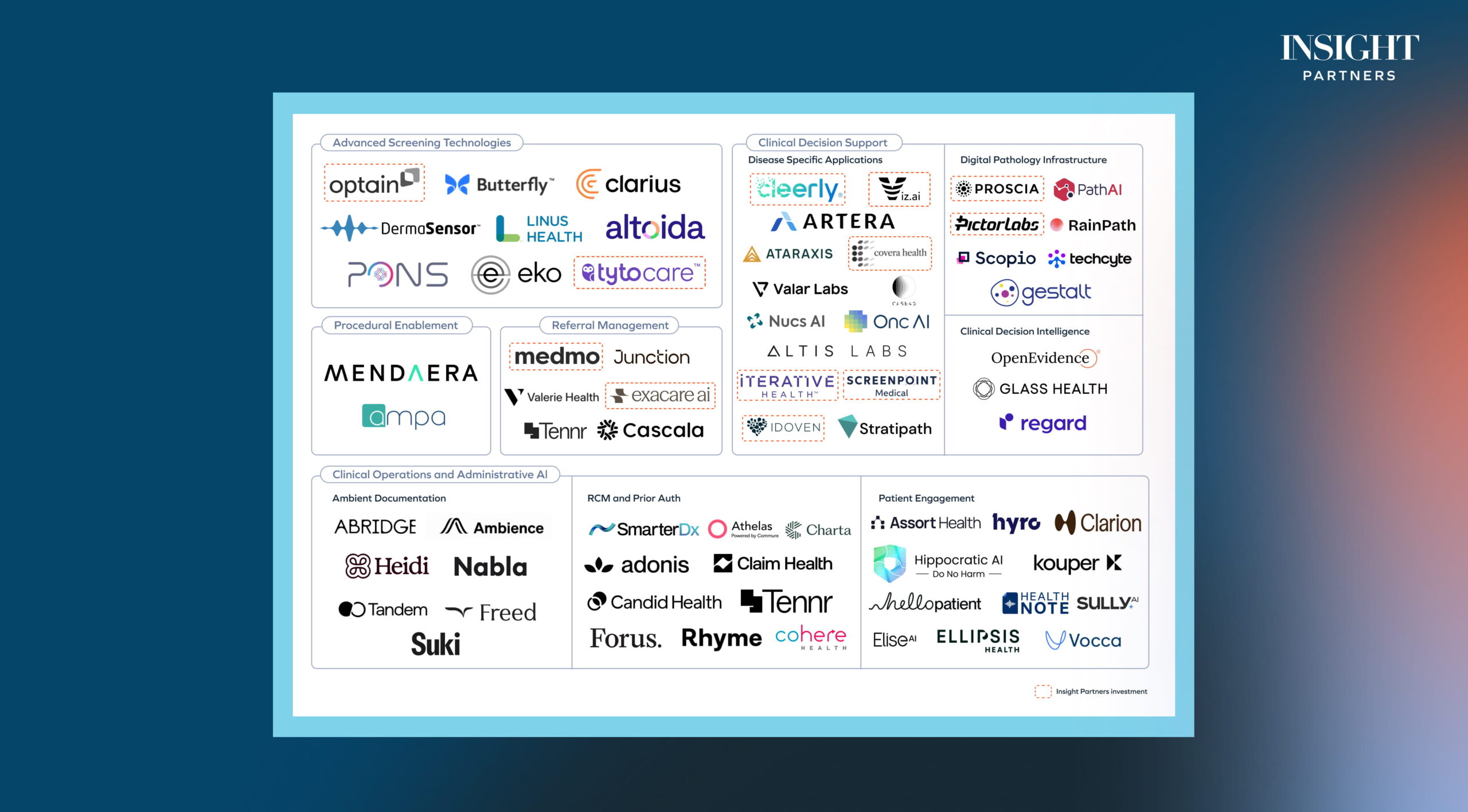
A new analysis from venture capital firm Insight Partners argues that artificial intelligence, paired with creative care delivery models, represents the most viable lever to reverse a deepening crisis in American primary care.
Nearly half of U.S. primary care physicians report burnout — among the highest rates in high-income nations — driven largely by administrative overload that would require a 27-hour workday to complete. The result is a shrinking workforce: 40% of practicing PCPs are considering leaving medicine, while 80% of internal medicine residents now choose subspecialties over primary care.
As the population ages and demand surges, AI tools are moving from experimental pilots to essential infrastructure, automating documentation, guiding diagnostics, and enabling procedures once reserved for specialists.
The Primary Care Crisis
The economics of primary care have inverted. Medical school debt has ballooned from roughly $90,000 in 2000 to over $200,000 today, while inflation-adjusted primary care salaries have declined. Meanwhile, the supply pipeline is structurally capped: Medicare-funded residency slots, frozen since the Balanced Budget Act of 1997, left nearly 6,500 medical graduates without training positions in 2026.
Patient wait times for new appointments have doubled from 20 days in the early 2000s to over a month today.
In plain terms: The job has become financially irrational for new doctors, and the training system cannot produce enough replacements even if they wanted to join. The result is a widening gap between the care Americans need and the workforce available to deliver it.
Structural Roots
Fee-for-service reimbursement, dominant since the 1930s, pays providers for each discrete service — an incentive to maximize volume rather than health outcomes. Under this model, PCPs routinely see 20 to 30 patients daily in 15-minute slots, leaving little time for preventive coordination or complex chronic disease management.
The digitization of health records, intended to streamline care, has instead expanded documentation burdens, with physicians spending hours on electronic health records and prior authorization requests.
In plain terms: Doctors are paid for doing things to patients (tests, procedures, visits), not for keeping them healthy. The computer systems meant to help have become a second full-time job of data entry.
Value-Based Care's Incomplete Promise
Policy shifts — notably the Affordable Care Act (2012) and MACRA (2015) — introduced value-based care models that tie payments to quality metrics and cost savings. The Centers for Medicare and Medicaid Services (CMS) rolled these out in three phases: first measuring quality, then managing care gaps through accountable care organizations, and now pressing for active prevention.
This progression spawned companies building longitudinal record linkage (Innovaccer, Datavant), care coordination platforms (Aledade), and remote monitoring for chronic disease (Cadence Care).
Yet better reimbursement alone cannot fix daily practice friction. As the Insight analysis notes, "Value-based care has meaningfully shifted the financial logic around prevention, but better reimbursement doesn't fix a primary care practice's day-to-day issues."
AI's Expanding Role
Automating the Administrative Layer
Agentic AI systems — software that can execute multi-step tasks autonomously — are now tackling the documentation burden. AI scribes from Abridge and Ambience Healthcare have seen some of the fastest adoption rates in healthcare technology history. Beyond transcription, purpose-built agents handle prior authorization (Tennr), revenue cycle coding (SmarterDx), and front-office scheduling (Assort, Hyro). These tools aim to restore the economics of independent practice by reclaiming physician time.
In plain terms: Think of these as highly capable digital assistants that don't just take notes but actually navigate insurance bureaucracy, billing codes, and appointment calendars on the doctor's behalf.
Democratizing Specialist-Grade Diagnostics
New devices bring specialist-level screening into the primary care office. Dermasensor enables PCPs to evaluate skin lesions; Optain Health screens for diabetic retinopathy via retinal imaging. Both catch disease earlier and enrich referral pipelines so specialists see only the patients who truly need them.
Point-of-care ultrasound from Butterfly and Clarius, AI-guided needle procedures from Mendaera, and neuropsychiatric transcranial magnetic stimulation from Ampa further expand what a PCP can do without referring out.
In plain terms: A family doctor can now perform an ultrasound, screen for eye disease, or administer advanced depression treatment in their own exam room — no specialist appointment, no months-long wait.
Fixing the Broken Referral Loop
Up to 50% of specialist referrals are never completed, lost to fax failures, network confusion, or patient scheduling inertia. Companies like Medmo (radiology) and Junction (lab testing) automate end-to-end referral management, closing the loop between PCP and specialist.
Clinical Decision Support at Scale
The digitization of records and the plummeting cost of genomic sequencing — from $10 million per genome in 2005 to under $1,000 today — have created rich longitudinal datasets. Clinical decision support platforms now leverage this data for precision oncology and chronic disease stratification. Pictor Labs enables virtual staining from a single tissue sample; Proscia digitizes pathology workflows.
Disease-specific models from Artera (prostate cancer) and Ataraxis (breast cancer) predict treatment response, while Tempus builds broad patient stratification toolkits used in both care and clinical trials.
In plain terms: Algorithms can now spot patterns across a patient's history, genes, and imaging that no human could synthesize in a 15-minute visit — flagging risks earlier and matching treatments more precisely.
The Road Ahead
The Insight Partners thesis is that AI does not replace physicians; it expands the scope of what primary care can deliver.
By offloading administrative drudgery and embedding diagnostic intelligence, PCPs and specialists alike can "spend more time practicing at the top of their licenses." The ACCESS Model from CMS signals continued policy pressure toward outcome-based payment, which will further reward the prevention and early intervention that AI enables.
For a system spending more per capita than any peer nation while achieving the lowest life expectancy and highest maternal mortality, the stakes could not be higher.
Was this clear?
library_booksSource
Insight Partners
24 Jun 2026
- funding model
- venture capital / growth equity (LP/GP)
- jurisdiction
- USA
- owner
- Insight Partners (venture capital / growth equity)
Was the source link correct?
topicRelated Articles

Gemini Launches BitcoinBuzz: A Composite Sentiment Indicator for Bitcoin Markets

Prediction Markets Emerge as Real-Time Forecasting Engines for Finance, Policy, and Sports

Cryptocurrency Mining in 2026: Emerging Strategies for Zero-Cost Operations
Square Expands Subscription Management Tools for Merchants with New Dashboard Controls

Canadian Robotic Exoskeleton Enables First Steps for British Boy with Rare Epilepsy

Congress MP Asserts Opposition Unity Against Delimitation Bill, Citing Constitutional Defense

Love as Resistance: Dalit-Feminist Anthology Reframes Intimacy as Political Defiance Against Caste
