
Andreessen Horowitz Leads Series B for Tutor Intelligence, Betting on Human-in-the-Loop Robotics Deployment
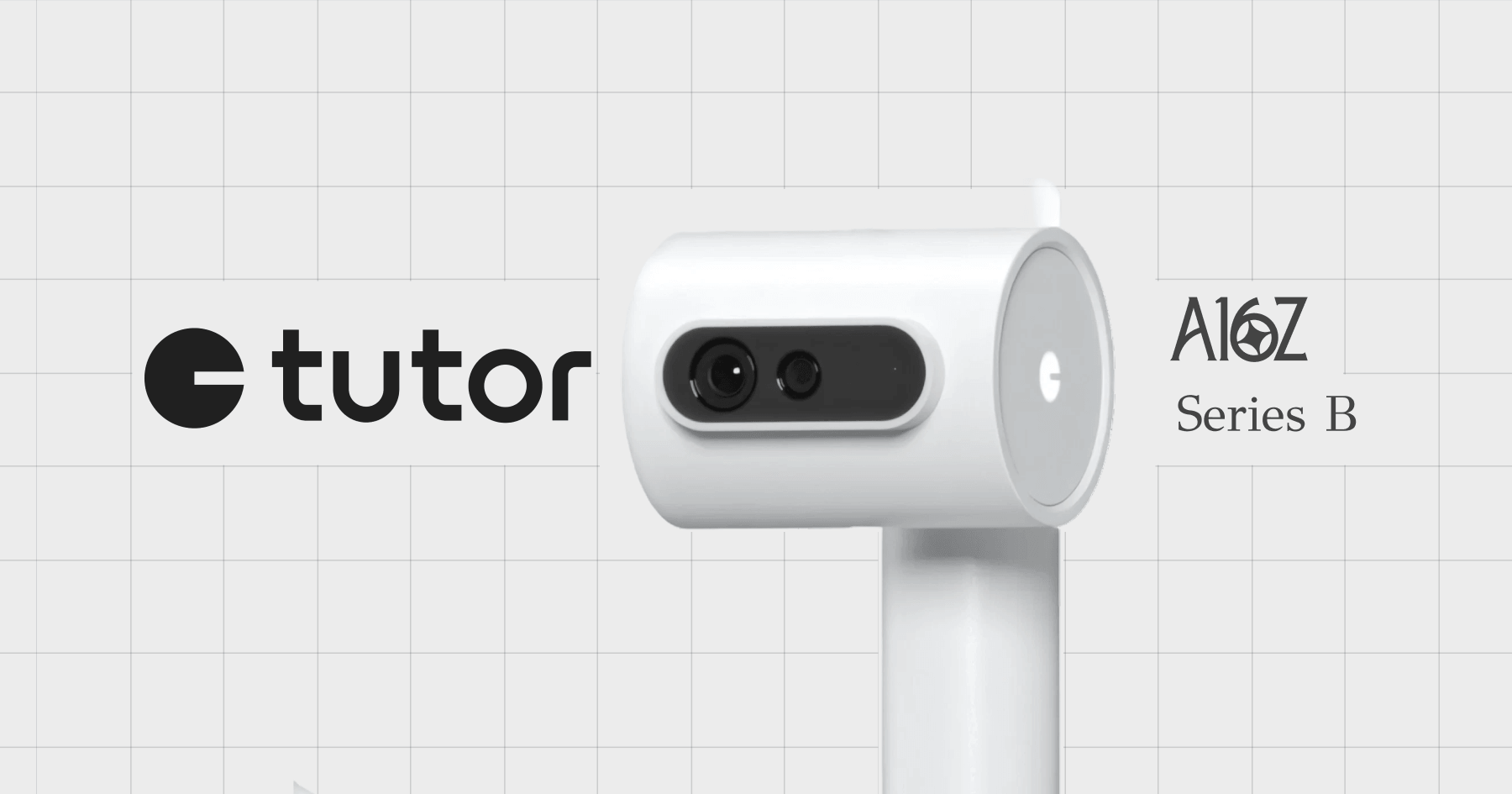
Venture capital firm Andreessen Horowitz has led a Series B investment in Tutor Intelligence, a robotics company that has inverted the traditional development playbook by deploying hardware into live production environments before achieving full autonomy.
The investment signals growing confidence in a model where human teleoperators — dubbed "tutors" — remotely guide robots through real-world tasks, generating the high-fidelity training data needed to build general-purpose foundation models while delivering immediate commercial value.
The Deployment-First Strategy
Most robotics startups follow a linear path: amass massive datasets, train a general model in the lab, then search for a commercial use case. Tutor Intelligence has reversed that sequence. The company first identified concrete operational needs in warehousing and logistics, then placed physical robots on-site under the control of remote human operators. Those operators perform the work with such skill that customers cannot distinguish their output from that of on-site employees.
In practical terms, this means a warehouse can hire robotic labor on an hourly basis today, without waiting for a perfected AI brain. The robot executes the task; the human tutor handles edge cases, exceptions, and nuanced judgment. Every hour of operation produces labeled, real-world data that flows back into Tutor's model training pipeline. The next robot deployed is incrementally smarter, cheaper, and faster to onboard.
Hardware Embodiments
Tutor's current fleet comprises two form factors built on a shared software stack. Cassie is a single-armed unit designed for case picking, palletizing, and de-palletizing — the heavy, repetitive backbone of warehouse throughput. Sonny adds a second arm and greater dexterity, targeting each-pick workflows common in e-commerce fulfillment where items vary wildly in shape, size, and packaging.
Both robots leverage the same foundation model, a product of Tutor's vertical integration across hardware design, control software, and data infrastructure. By owning the full stack, the company can co-optimize mechanical compliance, sensor placement, and model architecture — a luxury pure software players lack.
Business Model
Robotics adoption has historically been gated by seven-figure upfront capital expenditures and months-long integration timelines. Tutor's hourly pricing model converts that capex into operating expense, opening the door to small and mid-sized manufacturers that constitute the bulk of U.S. industrial capacity. Implementation times as low as eight hours further lower the barrier.
The land-and-expand metrics are striking: nearly one-third of customers who received robots in the past twelve months were existing clients adding more units. That retention signal, combined with a pipeline targeting more than 1,000 robots under contract by the end of 2027, suggests the model is resonating across both enterprise logistics giants and the long tail of American manufacturing.
The Human-in-the-Loop Data Flywheel
The core technical insight is that foundation models for robotics require data that is both diverse and grounded in the physics of actual work. Simulated data and teleoperated demonstrations in lab settings lack the distributional richness of production environments — variable lighting, worn fixtures, unexpected object orientations, and the long tail of corner cases that only emerge at scale.
By keeping humans in the loop during commercial deployment, Tutor captures exactly that distribution. The tutors are not merely labeling data; they are performing the job, and their interventions become high-value training examples. As model competence rises, the tutor-to-robot ratio can shift from one-to-one toward one-to-many, improving unit economics without sacrificing reliability.
Founders and Investor Thesis
Co-founders Josh Gruenstein and Alon Kosowsky met as undergraduates at MIT and combine deep robotics research credentials with an enterprise-software pragmatism focused on return on investment. The a16z Growth partners leading the deal — Raghu Raghuram, Martin Casado, and Jamie Sullivan — argue that the next decade of robotics value creation will accrue to teams that solve the full product experience: hardware reliability, software usability, sales simplicity, and post-deployment support.
In their view, cutting-edge research alone is insufficient. The winners will be product-focused organizations that can deliver a compelling customer experience from day one, then compound advantage through a data flywheel that improves every deployed unit. Tutor's early traction across diverse manufacturing and logistics networks suggests they are executing on that thesis.
Implications for the Robotics Landscape
If the deployment-first, human-in-the-loop approach proves scalable, it could reshape how venture capital flows into the sector. Capital intensity may shift from massive pre-revenue R&D rounds toward incremental fleet expansion funded by operating revenue. The model also offers a template for other physical AI domains — construction, agriculture, healthcare — where full autonomy remains elusive but semi-autonomous teleoperation can deliver immediate ROI.
For the workforce, the tutor role introduces a new category of skilled remote labor: operators who leverage robotics as a force multiplier rather than being displaced by it. As foundation models mature, those tutors will increasingly supervise fleets rather than pilot single units, potentially creating a career ladder from manual operation to fleet management.
The Series B capital will accelerate fleet deployment, model training compute, and hardware iteration. The critical test ahead is whether the data flywheel can sustain compounding improvement rates as the fleet scales from hundreds to thousands of units across heterogeneous environments. If it does, Tutor Intelligence may demonstrate that the fastest path to general-purpose robotics runs not through the lab, but through the loading dock.
Was this clear?
library_booksSource
Andreessen Horowitz
2 Nov 2026
- funding model
- venture capital (LP/GP fund structure)
- jurisdiction
- USA
- owner
- Andreessen Horowitz (a16z, founded by Marc Andreessen and Ben Horowitz)
Was the source link correct?
topicRelated Articles

Gemini Launches BitcoinBuzz: A Composite Sentiment Indicator for Bitcoin Markets

Prediction Markets Emerge as Real-Time Forecasting Engines for Finance, Policy, and Sports

Cryptocurrency Mining in 2026: Emerging Strategies for Zero-Cost Operations
Square Expands Subscription Management Tools for Merchants with New Dashboard Controls

Canadian Robotic Exoskeleton Enables First Steps for British Boy with Rare Epilepsy

Congress MP Asserts Opposition Unity Against Delimitation Bill, Citing Constitutional Defense

Love as Resistance: Dalit-Feminist Anthology Reframes Intimacy as Political Defiance Against Caste
