Beyond Livelihoods: How India's Rural Mission Is Rewriting Women's Place in Democracy
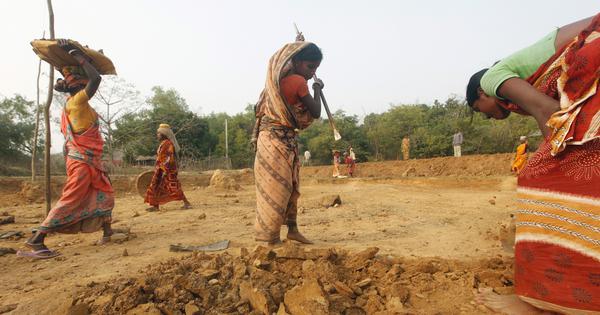
Yet a new analysis argues that the programme's true test lies not in these enrollment figures, but in whether it can convert institutional presence into a fundamental shift in gender power structures.
The book Claiming Our Skies, edited by former rural development secretary Nagendra Nath Sinha and development practitioner Neelima Khetan, contends that without confronting patriarchal norms, the mission risks becoming a "leaking bucket" — full of administrative success but empty of transformative change.
The Numbers Behind the Movement
Launched in 2011, the NRLM — now operating as the Deendayal Antyodaya Yojana-NRLM — has saturated rural India with a three-tier federation architecture. As of February 2025, 100.06 million women participate in 9.8 million SHGs, which are federated into 504,000 village organisations and 34,000 cluster-level federations. These groups serve as platforms for savings, credit access, livelihood support, and collective bargaining.
This fund allows members to take small loans for emergencies or income-generating activities, reducing dependence on predatory moneylenders. The federation structure links these groups upward, giving them collective voice in local governance and market negotiations.**
The programme's reach is unprecedented. But the editors warn that scale alone cannot guarantee that women move from economic participants to autonomous decision-makers.
Lessons from Kerala's Laboratory
The NRLM's design draws heavily on Kudumbashree, Kerala's pioneering women's collective launched in 1998. Kudumbashree demonstrated that poor women could be organised at massive scale and linked to local governance. Yet its trajectory also revealed structural vulnerabilities.
Over time, vested interests infiltrated the federations: bookkeeping deteriorated, transparency eroded, and internal democracy gave way to hierarchical control. A critical challenge emerged — preventing the women's collectives from being absorbed into panchayat (village council) structures, which would strip them of autonomy.
Panchayats are constitutionally mandated local self-government bodies in India. While they provide a platform for citizen participation, they are also arenas of entrenched political power. The risk was that women's groups would become mere implementation arms of panchayats rather than independent forces holding them accountable.
Kudumbashree responded with two institutional fixes: uniform byelaws for all community organisations and mandatory elections within the federation network. The results were striking. By 2020, 73.2% of Kerala's 10,177 elected women representatives in local government came from the Kudumbashree network.
As former panchayat member Laly Baby observed, neighbourhood groups became "workshops to catapult women into public life" — transforming women who once panicked at public speaking into executive office-holders.
The "Leaking Bucket" Paradox
The book's central metaphor captures a paradox: institutional achievements may not translate into substantive gender transformation if core norms remain unchallenged. Women's economic participation, while necessary, is insufficient.
The analysis insists that empowerment requires engaging men as "co-responsible partners" — sharing domestic labour, reducing women's unpaid care burdens, and supporting their right to mobility, dignity, and public visibility. Without this shift, the transformative potential of the NRLM remains "partial and fragile."
Unpaid care work — cooking, cleaning, childcare, elder care — falls disproportionately on women globally. In rural India, this "time poverty" limits women's ability to participate in SHG meetings, pursue livelihoods, or engage in governance. Addressing it requires not just women's groups but a renegotiation of household labour dynamics.
Roadmap for Gender-Transformative Change
The book distills five strategic recommendations to move the NRLM from a "gender-specific" programme (targeting women) to a "gender-transformative" one (restructuring power relations):
Institutionalise Gender Mainstreaming
Gender goals, indicators, and accountability must be embedded across every programme vertical — livelihoods, finance, skills, governance — not siloed in a separate Gender Unit.
Overhaul Gender Training
Current modules must be revamped to address the "ideological and structural roots of patriarchy." New sessions should cover sexuality, bodily autonomy, household bargaining power, and caste-gender intersectionality. Crucially, special modules for men and adolescent boys are needed to reshape masculinities and cultivate male allies.
Strengthen Gender Resource Centres
Standard operating procedures for referrals to police, legal aid, crisis centres, and shelters must be implemented. Centres should expand into legal literacy, property rights support, and campaigns on time poverty. Sustainable budgetary allocations for trained counsellors are essential.
Shift from Access to Control
Financial interventions must be redesigned so women exercise control over resources, not merely access. This means addressing intra-household dynamics that allow male relatives to capture loans or assets nominally held by women.
Mandate Equitable Leadership
Leadership structures at all federation levels — SHG, village organisation, cluster federation — must ensure representation of SC/ST/OBC, minority, and differently-abled women. Rotational quotas and mentoring programmes can prevent elite capture within marginalised communities.
From Visibility to Liberation
The book's closing argument reframes the NRLM's legacy. Women today sit across from bank managers as clients, negotiate with traders as entrepreneurs, audit government accounts as social auditors, and contest elections as community representatives. These are not isolated anecdotes; they represent a systemic alteration in the "grammar of development."
The mission's ultimate promise is captured in its titular metaphor: enabling millions of rural women to "claim their skies" — to see themselves in positions of authority once deemed unattainable, and to insist they belong at the heart of India's democratic journey. In their collective flight lies the prospect of a more just, inclusive, and humane nation.
Whether the NRLM fulfills this promise depends on whether its next phase treats gender transformation not as an add-on, but as the core metric of its success.
Was this clear?
library_booksAll 2 sources
Scroll.in
25 Nov 2026
- funding model
- independent commercial media (revenue from advertising, reader subscriptions and grants)
- owner
- Scroll.in (Scroll Media), an independent digital newsroom founded by Samir Patil
Scroll.in
25 Nov 2026
- funding model
- independent commercial media (revenue from advertising, reader subscriptions and grants)
- owner
- Scroll.in (Scroll Media), an independent digital newsroom founded by Samir Patil
Was the source link correct?
topicRelated Articles

Gemini Rolls Out Enhanced Investor Protections for UK Users Under New FCA Financial Promotions Rules

Crypto Emerges as Decisive Voting Issue in 2024 US Presidential Election, Survey Finds

Gemini Warns of Web3 Talent Exodus as U.S. Regulatory Uncertainty Deepens at Consensus 2024

Trump's Crypto Reserve Plan, SEC Task Force, and Senate Vote Signal Major Shift in US Digital Asset Policy

Haryana Panchayat Cyber Fraud Exposes Systemic Vulnerabilities in Government Digital Payment Infrastructure
International Consortium Funds Mongolia's First Sanitary Landfill and Recycling Plant in Ulaanbaatar
Bruges Colloquium Urges Action to Protect Wounded, Sick, and Dead in Conflict