
From Offshore Mechanic to Industry-Defining Platform: How Kabal Digitized Global Energy Logistics
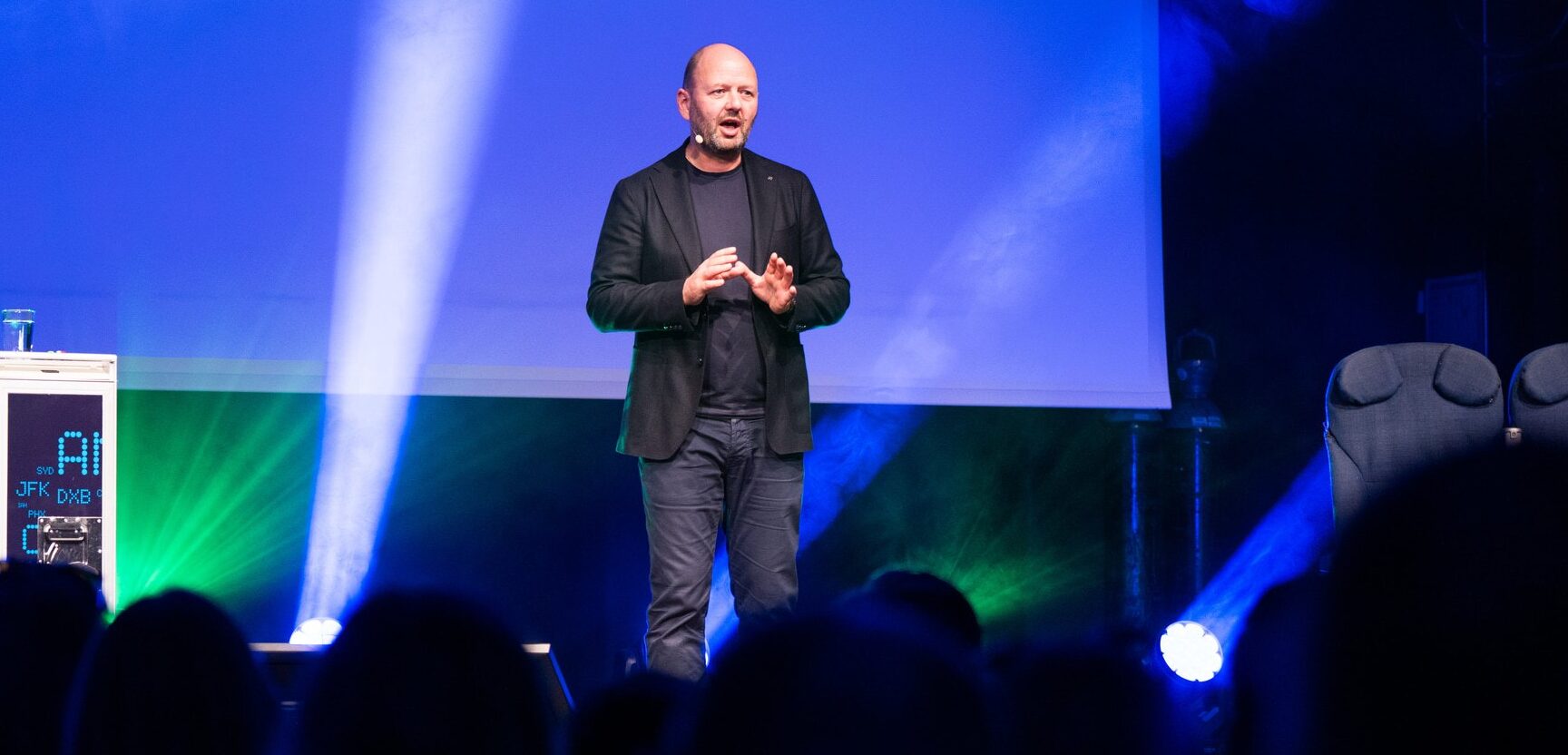
Jan Inge Pedersen’s journey from cleaning oil-and-gas equipment on a scooter at age 17 to founding Kabal, the digital backbone of global energy logistics, reads like a masterclass in domain-driven entrepreneurship.
Today, Kabal’s platform connects 7,500 companies and 58,000 users across 30 countries, streamlining the movement of vessels, helicopters, personnel, and equipment for supermajors like BP and ExxonMobil. In May 2023, Insight Partners acquired a majority stake, betting on Kabal’s ability to capitalize on a $477.2 billion energy-logistics market still in the early stages of digital transformation.
The deal also unlocked a proactive M&A strategy, with acquisitions of Trackit Energy (2024) and IronSight (2025) extending Kabal’s reach from offshore drilling into onshore operations and personnel logistics.
Now, the company is layering artificial intelligence onto its proprietary operational dataset to predict optimal routes and automate complex decisions — turning decades of analog chaos into a predictive, platform-driven advantage.
The Mechanic Who Saw the Problem
Pedersen’s epiphany came not in a boardroom but on the heaving decks of the North Sea. After rising from mechanic to senior logistics coordinator for BP, LUKOIL, and Equinor, he spent his days juggling vessels, helicopters, personnel rosters, and equipment manifests — all tracked through a tangled web of email, Excel spreadsheets, and phone calls.
"Kabal comes from working in offshore logistics, from seeing that the extensive use of email, Excel spreadsheets, and phone had become an almost impossible game," he says. In plain terms: the industry was running critical, high-stakes operations on tools built for office admin, not for coordinating millions of dollars of assets moving through hostile environments.
The breakthrough arrived when Pedersen met Fredrik Larsen, a software developer at BP who could translate those operational nightmares into code. "Many software companies have a customer asking them to make something, but they don’t always have the domain knowledge themselves," Pedersen explains. "You need to understand what you are solving." That insight — that the builder must live the problem — became Kabal’s founding principle in 2011.
Building the Platform
While rivals chased feature bloat, Pedersen set a different standard: seven core features, unchanged since launch. He compares the philosophy to Snapchat: "You just want to take a picture and send it to somebody you know. Do you really need all the other stuff? No, you don't." In practice, this meant refusing customization requests that would degrade the product.
"If they want to change anything in our software that we believe will degrade it, we say no," Pedersen states. "Then you need to come back when you are ready to work the way we work." This discipline forced customers to adopt best practices rather than replicate their messy analog workflows in digital form.
Winning the first supermajor took verve. With 15 employees, Pedersen pitched BP by declaring, "If you don’t do this, you’re working in the Stone Age." He avoided disclosing headcount, saying only, "More than enough." BP signed in 2015, triggering a global rollout across its drilling operations and a bid for a 10-country contract that Kabal won. The network effect kicked in: when an operator adopts Kabal, its entire supply chain follows.
Bootstrapped to Global Scale
Kabal grew on its own terms, bootstrapped with 50% margins — a rarity in enterprise SaaS. "We never needed money to invest in Kabal," Pedersen says. "We have always had around 50% margin on the business we do. We still have 50% margin." Financial independence let the founders reject distraction.
Expansion into the U.S. took five years of persistence, but by 2019, the company attracted Norwegian private equity firm Norvestor, which bought a majority stake to accelerate international growth while de-risking the founders.
By 2023, the metrics were undeniable: 7,500 companies, 58,000 users, and a market still largely analog. Insight Partners, after tracking Kabal for years, saw a "special opportunity" at the intersection of rising energy demand and emissions pressure.
Managing Director Rachel Geller notes, "Kabal sits in the middle of those needs, driving cost savings and connecting operators and suppliers on a single platform. Insight’s team flew to Stavanger repeatedly until trust cemented. Pedersen reinvested alongside them, signaling conviction.
The Insight Partnership and Strategic Acquisitions
With Insight’s backing, Kabal shifted from organic growth to strategic M&A. "If somebody should come with something that is fantastic… I will buy it," Pedersen says. Insight helped structure deals and advised on pricing. The 2024 acquisition of Trackit Energy and 2025 purchase of IronSight filled critical gaps: onshore logistics and personnel management.
"Now we see the total logistics as one thing," Pedersen explains. "Offshore and onshore are the same customer space, with similar challenges." Geller calls them "two vital pieces of the puzzle for a complete energy logistics solution."
AI and the Future of Energy Logistics
The next layer is artificial intelligence. Kabal’s platform has accumulated a unique, growing dataset from real-world operations — the fuel for meaningful AI. "Together with our customers, we have access to a unique and growing dataset built from real-world operations," Pedersen says. "That data is what makes AI valuable.
By applying AI to it, we can deliver smarter insights, automate complex tasks, and help customers predict and prepare for what comes next." Instead of a human deciding whether a $10-million-per-year vessel should sail or which route to take, AI can identify the most efficient path and adapt in real time as weather, congestion, or equipment availability shift.
But Pedersen is cautious. "If the foundation of the data put into that AI model is not right, it’s worthless. If we send a vessel that costs $10M a year to the wrong rig or without the right equipment, because the computer didn’t get it right, we have a problem." This pragmatism — grounding AI in verified operational truth rather than hype — mirrors the discipline that built the core platform.
As macroeconomic headwinds buffet the energy sector, Kabal’s position hardens. "It isn’t that many years ago that COVID was here, oil and gas were dead, and everyone was going green," Pedersen reflects. "And now we understand where we are needed." Geller agrees: "For Kabal, the best is yet to come. The culture and leadership truly stand out.
When you look at the next waves of digital transformation, the pressure to reduce emissions, and the global demand for energy, we expect those needs to continue to grow. Kabal is well‑positioned to serve them." As long as a rig operates somewhere, needing people, equipment, and support, Kabal intends to be the platform that makes it happen.
Was this clear?
library_booksSource
Insight Partners
21 Jul 2026
- funding model
- venture capital / growth equity (LP/GP)
- jurisdiction
- USA
- owner
- Insight Partners (venture capital / growth equity)
Was the source link correct?
topicRelated Articles

Gemini Launches BitcoinBuzz: A Composite Sentiment Indicator for Bitcoin Markets

Prediction Markets Emerge as Real-Time Forecasting Engines for Finance, Policy, and Sports

Cryptocurrency Mining in 2026: Emerging Strategies for Zero-Cost Operations
Square Expands Subscription Management Tools for Merchants with New Dashboard Controls

Canadian Robotic Exoskeleton Enables First Steps for British Boy with Rare Epilepsy

Congress MP Asserts Opposition Unity Against Delimitation Bill, Citing Constitutional Defense

Love as Resistance: Dalit-Feminist Anthology Reframes Intimacy as Political Defiance Against Caste
