Nvidia's Swift Reversal: Jensen Huang's Reinstatement Exposes AI Economy's Fragile Governance
Opinion. This story was written from a named writer’s column in Indian Express — Opinion of 24 November 2026. We report what was argued, not our own view — the publisher’s ownership is shown below.
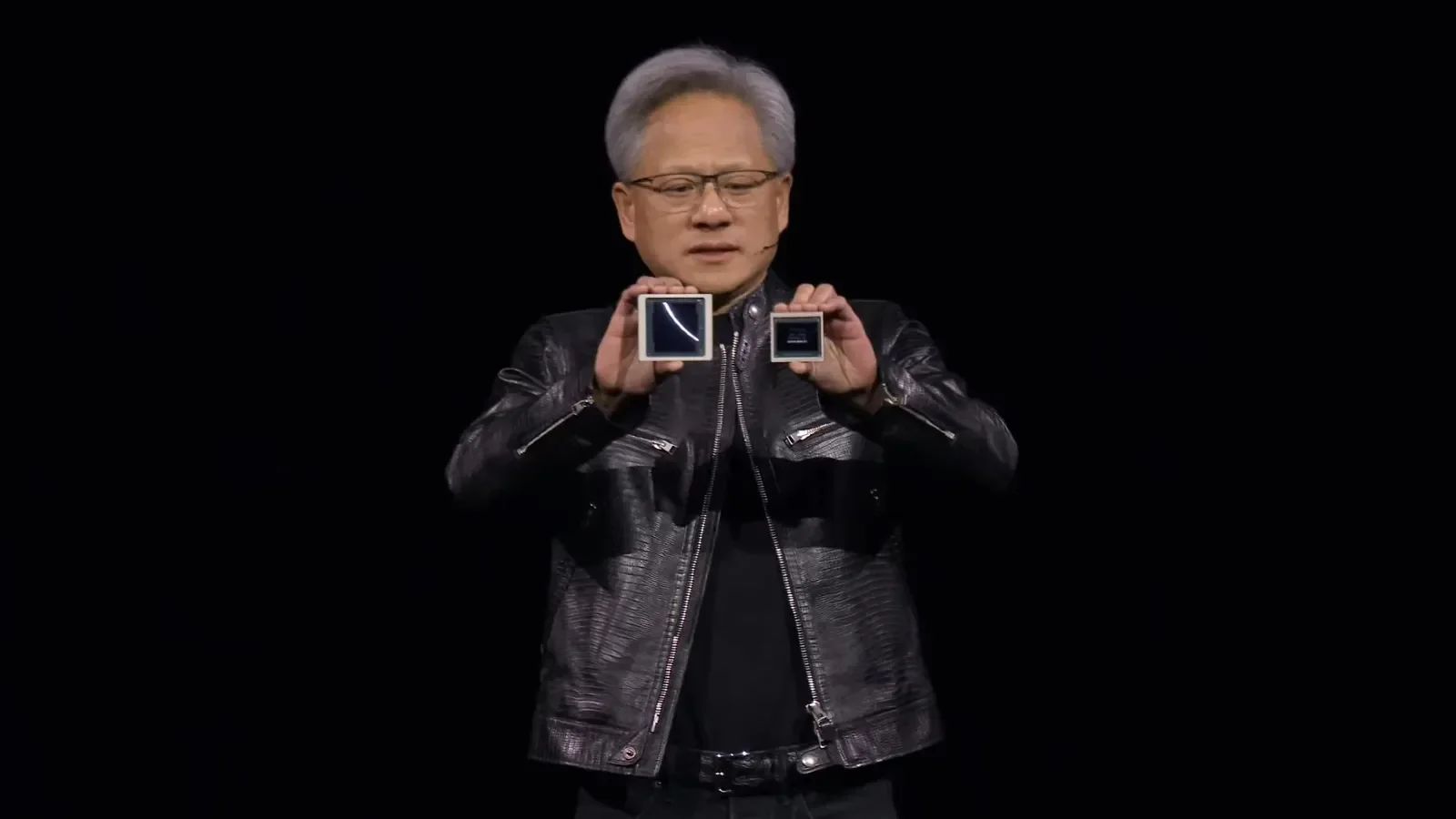
Nvidia's board reinstated CEO Jensen Huang just 11 days after his abrupt departure, a decision driven by market panic and direct White House intervention that underscores how deeply the AI economy's stability rests on a single executive amid unresolved governance and national security concerns.
The Market's Verdict
When Huang resigned on November 12, Nvidia's stock plummeted 14.35% at the open, briefly wiping out roughly $600 billion in market value. The Nasdaq was already in correction territory, down 10% from its October peak, and Nvidia had tumbled 30.5% from its own high. The speed of the reversal — Huang was back by November 23 — reveals a market that views him not merely as a chief executive but as the linchpin of the entire AI investment thesis.
Why one executive matters so much: Over three years, Huang transformed Nvidia from a chip vendor into the architect of the AI economy. He committed more than $40 billion to AI equity investments in the first four months of 2026 alone, with $30 billion flowing to OpenAI and the rest to cloud providers like CoreWeave, IREN, and Nebius.
Many of those recipients use the capital to buy Nvidia hardware, creating a self-reinforcing loop that the IMF and the Bank for International Settlements have flagged as a systemic risk. Huang dismissed the charge as "ridiculous," but the structure holds together only while belief holds — and Huang supplied much of that belief.
The Circular Financing Engine and Systemic Risk
During Huang's 11-day absence, interim CFO Colette Kress delivered a blockbuster quarter: $115.8 billion in revenue, up 103% year-on-year, with guidance of $130 billion for the next period. Orders were never the problem. Yet the market's reaction exposed a deeper fear. On the day Huang left, CoreWeave fell nearly 12%, Nebius 17%, and IREN 8%, while rivals AMD and Broadcom rose.
Investors were not pricing in weaker chip demand; they were pricing in a potential unwind of the financing ecosystem that Huang personally championed.
How the loop works: Nvidia invests in AI startups and cloud builders, who then purchase Nvidia's GPUs with that capital. This circular flow amplifies revenue and locks in customers, but it also concentrates risk. If confidence in Nvidia's leadership falters, the entire chain of funding and procurement could seize up, opening the door for competitors.
India's High Stakes in the Nvidia Ecosystem
The anxiety reached Mumbai and Bengaluru, where data-centre operators questioned whether a successor would maintain the aggressive financing model.
India's data-centre capacity has surged from 375 megawatts in 2020 to 1.57 gigawatts in 2026, and the country's digital infrastructure — spanning the IndiaAI Mission, engineering conglomerates, and a booming startup base — depends heavily on Nvidia GPUs. A leadership vacuum at Nvidia threatened to disrupt multi-year build-out plans calibrated to Huang's roadmap.
Why India is vulnerable: Indian firms have aligned their capital expenditure and technical architectures around Nvidia's product cadence and financing commitments. A shift in strategy under a new CEO could strand investments, delay sovereign AI initiatives, and force a costly diversification toward alternatives that are not yet at parity.
Governance Lapses vs. Geopolitical Imperatives
The charges against Huang are serious and unresolved. Alice Huang, an executive at Singapore-based Megaspeed, is under criminal investigation by the US Department of Justice for allegedly channeling advanced chips to China. US intelligence agencies remain divided on whether she acted as a spy, but agree she used her influence to move restricted technology.
Separately, Nvidia's board concluded that Huang misled directors about his relationship with her and failed to disclose at least two affairs with staffers. A week before reinstating him, the board chair publicly stated there was no intention to bring him back.
What changed was political pressure: A petition backed by Elon Musk gathered over 180,000 signatures in Silicon Valley. Then the White House intervened directly: President Donald Trump tasked Vice President JD Vance to work with Huang and the board. The board's reinstatement statement cited "input from senior levels of the US government" that Huang's return posed no national security risk.
Crucially, that assurance came from the administration that enforces export controls, not from a completed investigation. Washington treats Nvidia's chips as instruments of national power; a founderless Nvidia shedding value as the AI race with China intensifies was deemed a strategic liability. Huang's protection was never proven innocence — it was his indispensability to American interests.
Unresolved Investigations and Lingering Risks
The California Department of Justice investigation continues, and three US House committees are scheduled to hold hearings in December. Huang's personal conduct is now a disclosed risk factor for the company. Every Asian sales channel Nvidia uses will face heightened scrutiny, and rivals urging customers to diversify their semiconductor supply now possess a potent argument.
The board, meanwhile, hit the limit of its leverage: it had no credible replacement that markets would accept in the time allowed, and had barely begun hiring a search firm. With Nvidia accounting for roughly 6% of the S&P 500, its leadership crisis had become a problem for millions of retirement savers.
Governance principles are easy to uphold until enforcing them costs hundreds of billions of dollars a week. For now, the AI economy has chosen its top salesman. Whether that choice proves prudent or reckless will depend on what the investigators ultimately uncover.
Was this clear?
library_booksSource
Indian Express — Opinion
24 Nov 2026
- funding model
- family-owned commercial media (revenue from advertising and subscriptions)
- owner
- Indian Express (P) Ltd, controlled by the Goenka family; Viveck Goenka is Chairman & Managing Director
Was the source link correct?
topicRelated Articles

Gemini Launches BitcoinBuzz: A Composite Sentiment Indicator for Bitcoin Markets

Prediction Markets Emerge as Real-Time Forecasting Engines for Finance, Policy, and Sports

Cryptocurrency Mining in 2026: Emerging Strategies for Zero-Cost Operations
Square Expands Subscription Management Tools for Merchants with New Dashboard Controls

Canadian Robotic Exoskeleton Enables First Steps for British Boy with Rare Epilepsy

Scientists Define Red Lines for Autonomous AI Agents Amid Growing Capability Concerns

Polygon's Open Money Stack Redefines Wallet Security for Everyday Payments