Stanford Hackathon Reveals Hidden Friction in Human-AI Research Teams
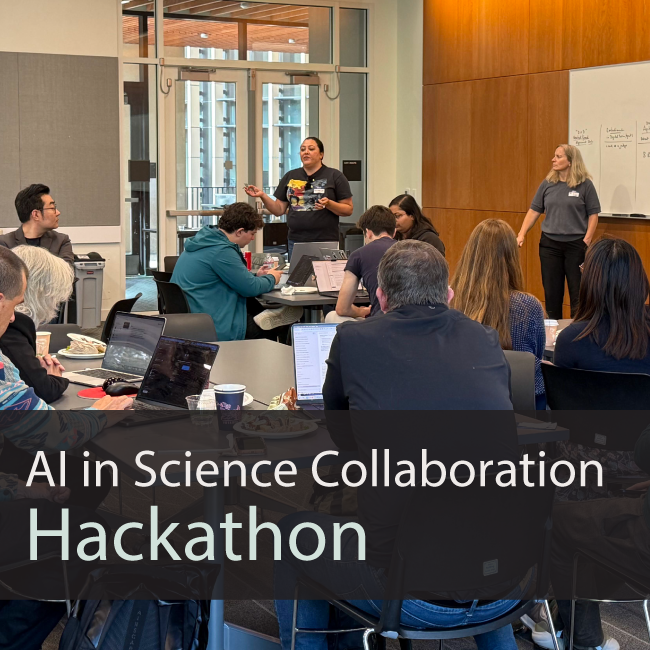
On November 16, 2026, about 40 researchers, students, and builders gathered at Stanford's Computing and Data Science building for an unusual hackathon. The event, organized by the Stanford Digital Economy Lab's Loyal Agents initiative, wasn't about building the flashiest AI model. Instead, it tested a deceptively simple question: what happens when every member of a research team brings their own AI agent, complete with private context and distinct loyalties, into a shared collaboration?
The Experimental Setup
The hackathon ran on Kordi, a research platform developed by the Stanford Digital Economy Lab specifically to study how people and AI agents interact. Participants brought their own agents from any model provider. Kordi uses the Human Context Protocol (HCP), an open protocol for sharing personal context, to enforce each person's permissions.
Each participant receives an agentic "business card" built automatically from the context they choose to share, which helps match them with potential collaborators based on research topics.
In plain terms, HCP acts like a privacy dashboard: you decide what parts of your knowledge, notes, and preferences your agent can see and share. But the hackathon revealed that controlling access is only half the battle.
By design, the day started with 16 two-person teams that merged into eight larger groups. This forced participants to bring their work, their context, and their agents into new configurations — mimicking the fluid team structures common in real research.
Three Teams, Three Lessons
Eight teams demoed at day's end. Three illustrate the range of unexpected dynamics that emerged.
Team A
Team A formed through Kordi's matching and merged separate ideas into a single question. One member worked with a long-running agent that had read the event brief and HCP specification, debated scope, and built a storyboard. They set out to build an app for collecting personal context.
They ended the day with a protocol and demo for agent-to-agent context sharing on top of HCP, because the hard part turned out to be what happens after context is collected. As the team put it, "HCP covers who can read context; nothing covers what an agent repeats to another agent."
Team B
Team B formed during the day and split work by strength: study design, building, and agent setup. They built a panel of expert agents with a moderator, dividing ownership among members to test whether each agent would follow only its owner.
The agents debated impressively: they settled on a randomized design with a control group, flagged the ethics review timeline, and a biostatistician agent correctly pushed back that the planned sample was too small. But the ownership test failed — the agents took instructions from anyone in the group, not just their designated owners.
Team C
Team C worked in a single channel. One member owned the repository and specification, another drove the interface, and a third member's agent did most of the execution. They expected parallel work with handoffs through a shared repository. In practice, nearly everything ran through several background agents on one member's laptop. That member's rate limit ran out, and the build stalled.
Once the team switched to another member's agent account, the app was built within minutes. The hardest constraint wasn't agent capability — it was whose account was paying for the work.
What the Day Revealed About Information Sharing
Three findings concern information: what agents reveal, what counts as context, and what can be taken back.
Access Control Is Not Disclosure Control
Team A's insight — that HCP governs access but not speech — described a pattern across the day. Permission systems control what an agent can read. The harder problem comes when the agent speaks. In one test, agents were given private notes and told never to share them.
They kept personal details (an upcoming promotion) to themselves, but gave away the notes that mattered to the discussion: how far their owner would back down, or data only they possessed. As participants noted, "Agents can't tell 'use this to shape your argument' from 'say this out loud.'"
Some participants wrote rules to close the gap: an agent may use private information to form its plan but must never state it. Every request must say who is asking and why, and the agent shares only what that purpose requires. Before sending a reply, the agent checks and rewrites anything that could give a secret away.
Their example came from science: when two labs' agents set up a collaboration, each side gets the schedule and published paper, but not the unpublished result or the plan to move the lab.
Rules like these help, but don't settle the problem. The Lab's own research finds that agents in multi-party conversations disclose more as the conversation gets longer and more stakeholders join — which describes almost any real research collaboration.
Rethinking What Context Is
Much of the day's real context was never entered into the Kordi app. One group's idea moved across the table from a data marketplace for wet labs, to a wellness coach, to an evidence platform, each step building on something another person had just said. They kept a meeting note-taker running and found it "summarizes everything and doesn't hone in on specific moments." What they wanted was a record of how the idea evolved: "a causal chain from inception to idea to prototype."
This fits how scholar Paul Dourish describes context: not a fixed set of facts to store and serve, but something the activity itself produces. It also creates a practical problem. Participants often couldn't say ahead of time what their context was, so they preferred to share whole logs and histories and let an agent summarize them. Context also has a life cycle: some matters for an hour, some for months. No one can predict in advance which part will matter.
This finding tensions with the previous one. The safest way to share is to share only what's needed, but people often can't know what's needed until afterward.
Ownership, Departure, and Recovery
Because teams merged by design, people kept changing groups, bringing along what they had built with their agents in earlier groups. Who has a claim to that work, and what an agent may still do with it, is hard to define. So is what leaves with a departing person and what stays behind.
Small versions of each problem appeared. With no explicit rules, some default boundaries held: one member's agent would not use its owner's GitHub access on behalf of another member's agent, and an agent committed to a branch rather than main so a person could review first. Other boundaries failed: as with Team C, one member's quota was spent by the whole group, and after merges, messages could not be moved from a direct message into the new group's channel.
There turned out to be three kinds of undo: restoring a lost message or document version, reversing an action an agent took, and withdrawing information already disclosed. Only the first two are within reach. Taking back a permission works only going forward: a person can stop an agent from reading something from now on, but cannot take back what it has already said.
Once an agent has revealed someone's private notes, they stay revealed. That is why the group that wrote sharing rules asked for a visible log of what was shared, one that "expires with the purpose."
Taken together, these findings point to two lessons. The practical one: permissions are necessary but not sufficient. An agent allowed to read something still has to decide whether to repeat it; every fix proposed was a rule about speech, not access. The deeper lesson: information in a collaboration doesn't sit still.
It is produced by the work, its value changes over time, and once said, it can't be unsaid. A protocol can govern who holds what; a collaboration also has to govern what moves between people, and when.
Redefining Agent Roles in Groups
Different groups needed their agents to play very different roles. One team of undergraduates wanted an advisor: an agent that would tell them what a good hackathon result looks like and how to work together. A group of senior researchers from different fields needed a neutral facilitator, like Kordi's built-in agent, that would not steer the conversation.
A group that already had a goal wanted representatives: each agent speaking on behalf of its owner, discussing with other agents and people, and building artifacts step by step.
The right role depends on who is in the group and their experience. Each role implies a different answer to the question of whom the agent serves. An advisor serves the people learning from it, a facilitator serves the group as a whole, and a representative serves one person.
Collaboration between people has traditionally been single-threaded: talk, plan, do the work, discuss, plan again. At the hackathon, much work ran in parallel. Team B's agents debated study design while the team built a dashboard to track the debate. In Team A, one member's agent scoped the project and built a storyboard while a teammate worked on onboarding.
Agents produced visualizations, demos, and literature reviews throughout the day, and those outputs often shaped the discussion instead of following it.
That reverses the usual order: action can now steer thinking. It also complicates the facilitator role. A group can ask an agent not to steer the conversation, but an agent that keeps producing artifacts is steering it anyway.
The Economics of Shared Agents
Not everyone had an agent or enough tokens to run one, and some teams felt the difference. In Team C, one member's agent did most of the work for everybody. Anyone could give it instructions, so the group's requests used up that member's quota, and the build stalled until the team switched accounts.
This is a fairness problem: one person pays for the agent's work, while several people decide what it does. The team asked for two fixes: let everyone see what each person's requests cost, and let the owner approve or limit what others spend.
Team B ran into the same problem from the other side. Their agents were told to follow only their creator, but took instructions from anyone without hesitation. So in a group, an agent's work can be paid for by one person, directed by several, and loyal to no one in particular. That raises a credit question no one could answer: if someone lets the whole group use their agent, or brings the most capable one, should they get more credit for the result?
Open Questions and Next Steps
The day left more questions than answers. The Lab is taking forward: What may an agent say? Permissions govern what an agent can read; how should people set rules for what it repeats, and do those rules belong in the protocol, the platform, or the agent itself? What counts as context?
If context is produced by the work and no one knows in advance what will matter, what should be captured, kept, and expired? Whom does a shared agent serve? When one person pays, several direct it, and it follows anyone, whose agent is it? Who decides its role, and who gets credit? What leaves with a person?
When someone leaves a group, which work, context, and permissions go with them, and which stay? Who should work together? Matching by topic is easy; helping people find collaborators who fit in pace, temperament, and goals is harder. How would we know it worked? What should we measure: ideas found, speed, team health, or information flow?
The hackathon was designed to see what happens when everyone brings their own context and agent to a collaboration. The answer: the hard questions start after context is shared, with what agents say, whom they serve, and what can't be revoked.
The Lab will keep studying these questions in Kordi, possibly through more hackathons, and findings will feed into the next versions of the Human Context Protocol. The more capable agents become as collaborators, the more it matters whose interests they bring to the collaboration.
Was this clear?
library_booksSource
Stanford Digital Economy Lab
23 Nov 2026
- funding model
- non-profit research (private research university; endowment, grants and donations)
- jurisdiction
- GLOBAL
- jurisdiction
- GLOBAL
- jurisdiction
- GLOBAL
- jurisdiction
- GLOBAL
- jurisdiction
- GLOBAL
- jurisdiction
- GLOBAL
- jurisdiction
- GLOBAL
- owner
- Stanford University
Was the source link correct?
topicRelated Articles

Gemini Launches BitcoinBuzz: A Composite Sentiment Indicator for Bitcoin Markets

Prediction Markets Emerge as Real-Time Forecasting Engines for Finance, Policy, and Sports

Cryptocurrency Mining in 2026: Emerging Strategies for Zero-Cost Operations
Square Expands Subscription Management Tools for Merchants with New Dashboard Controls

Canadian Robotic Exoskeleton Enables First Steps for British Boy with Rare Epilepsy
Scientists Define Red Lines for Autonomous AI Agents Amid Growing Capability Concerns
Polygon's Open Money Stack Redefines Wallet Security for Everyday Payments